
Review · GERMANY
Stuttgart: Outdoor Escape Game – exciting puzzle tours about the city’s history
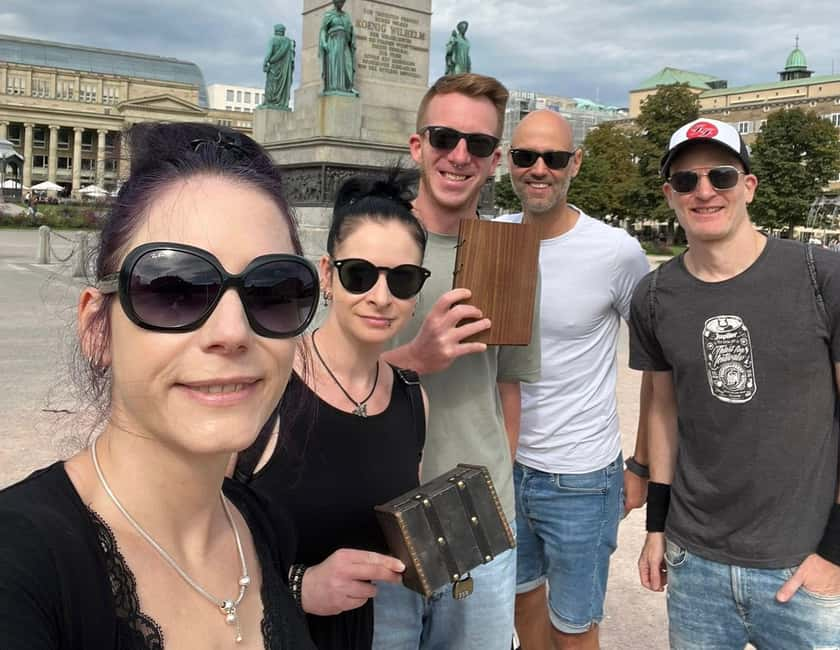
Stuttgart becomes your game board in this outdoor puzzle tour, where clues lead you through historic streets, squares, and overlooked corners of the city. I like the personal welcome from historian Michael Mezger, and the fact that you can stop for coffee, cake, or ice cream without racing a clock.
I also like the choice of two games: The Wilhelm Case is a gentle starting point for families, while The Case of Max von Bulsenberg asks more of experienced puzzle solvers. The main consideration is language: the activity is conducted in German, so it suits you best if your group can follow German instructions and historical text.
Key points at a glance
- Two levels of play: Choose The Wilhelm Case for an easier introduction or The Case of Max von Bulsenberg for a tougher puzzle route.
- A historian leads the experience: Michael Mezger welcomes you at Schlossplatz, explains the game, and returns for a final discussion.
- Stuttgart supplies the scenery: The route combines famous central sights with lesser-known places and clues found on buildings and squares.
- No forced finish time: You can pause for a drink, take a break, and continue at your own pace.
- Good for groups: Play alone, as a pair, with family, or in teams of up to 30 people.
- Practical setup: Bring comfortable shoes, weather-ready clothing, and a charged smartphone with internet access.
Starting at the Jubilee Column on Schlossplatz
Your meeting point is the Jubilee Column in Stuttgart’s Schlossplatz, a central spot that is easy to reach by public transport. Several parking garages are close by, though parking costs are not included.
Michael Mezger gives you a personal introduction before handing over the puzzle book and game materials. This small human touch matters. You are not simply given an envelope and sent off to figure things out alone. You get a clear explanation of how the activity works, what to look for, and how the clues connect to the city.
The start and finish at the same place also make the outing easy to plan. You can leave coats or extra plans in mind for after the game, and you do not need to arrange a taxi or navigate back from an unfamiliar neighborhood.
The experience lasts about two to three hours, but that is not a strict race. You can pause when your group needs a break. That makes the tour easier to fit around a day of sightseeing, particularly if you want time for a café stop in central Stuttgart.
More Outdoor Escape Games in Germany
- Bamberg: Outdoor Escape Game with a Puzzle Backpack
★ 4.8 · 101 reviews - Bremen: Outdoor Escape Game in the Old Town
★ 4.4 · 41 reviews - Outdoor Escape Game with Mystery Backpack in Nuremberg: Dürer’s Legacy
★ 4.7 · 29 reviews
Choosing between the two Stuttgart cases
The two adventures are designed for different kinds of groups.
The Wilhelm Case is the better choice for beginners, families, teenagers, and anyone who wants a manageable first taste of outdoor escape games. The puzzles include logic tasks, codes, and creative challenges, but the game is intended to be approachable. Families can work through the clues together without turning the afternoon into a test.
This option also makes sense if your group has mixed puzzle experience. One person may enjoy spotting visual details, another may prefer numbers or word clues, and children can take part without needing to solve every step alone.
The Case of Max von Bulsenberg is described as the more demanding game. Choose it if your group already enjoys escape rooms or puzzle trails and wants a challenge with more depth. You will need a smartphone for this game, so charge it before you arrive and make sure you have an internet connection.
The choice is important because the wrong level can change the mood of the afternoon. Beginners may find the harder case frustrating, while experienced solvers could find The Wilhelm Case too gentle. If you are unsure, the family-friendly option is the safer introduction.
Following clues through Stuttgart’s center
After the briefing, you head into Stuttgart’s city center with the puzzle book in hand. The route takes you through streets, alleys, and squares, linking present-day Stuttgart with events and stories from Württemberg and the city’s past.
The exact sequence of stops is part of the game, so the appeal is not simply ticking off famous sights. At some points, a clue may sit in the puzzle book. At others, you may need to look closely at a building, square, or feature in the street around you.
That changes the way you walk through the center. Instead of passing a building only to photograph it, you have a reason to inspect it. A detail that normally slips past your eye may become the key to a code or a logic problem.
The route includes well-known places as well as less obvious local points. That balance is useful if you have already seen Stuttgart’s main center and want something more active than a standard sightseeing walk. You still get the central landmarks, but the game gives you a reason to notice details and side streets.
The activity does not provide a long guided lecture at every stop. Its history arrives in shorter pieces through the book, the clues, and the objects around you. I find that format easier to remember than a string of dates delivered while you stand still.
Puzzles that use the city itself
The puzzle book is more than a set of instructions. It combines clues, tasks, and historical facts in a designed format that you use throughout the route.
Expect a mix of:
- Logic problems
- Codes to crack
- Creative tasks
- Clues hidden in the book
- Tasks connected to buildings and public squares
This variety helps keep the group involved. A person who does not enjoy code-breaking may still contribute by reading the historical notes or spotting something in the surroundings.
The challenge is collaborative rather than purely competitive. You solve the tasks together, compare ideas, and decide what deserves another look. That works well for families and groups of friends because no one needs to remain silent while one expert solves everything.
There is also no unnecessary time pressure. You can stop for coffee and cake, take photographs, or let children catch their breath. The trade-off is that the experience may feel less intense than a timed indoor escape room. If you want the sharp pressure of a countdown clock, this relaxed format may seem mild. If you want to enjoy Stuttgart without watching the minutes, it is a strong advantage.
Same streets, a different puzzle:
- Hamburg: Treasure Hunt Game through HafenCity
★ 4.7 · 364 reviews - Hamburg: Scavenger Hunt Self-Guided Tour for Children
★ 4.5 · 319 reviews - Treasure Hunt through Hamburg’s Hafencity
★ 5.0 · 234 reviews - Escape Room Adventure in Berlin Solve the Mystery
★ 5.0 · 222 reviews
A history lesson without a lecture hall
The historical material focuses on Stuttgart and Württemberg, including stories and facts that are often overlooked. You learn as part of the puzzle rather than as a separate classroom exercise.
That approach suits me because it gives each fact a place and a purpose. You are standing in the city where the clue matters, looking at the surroundings and using the information immediately. The past is tied to a street, square, or building instead of floating free in a long explanation.
The final conversation with Michael Mezger adds another useful layer. When you return to Schlossplatz, he discusses the solved puzzles, hears your impressions, and answers questions about Stuttgart’s history.
This closing meeting is particularly helpful if your group had a disputed answer or wants to understand the background behind a clue. It also gives the outing a clear ending. You do not simply hand back the book and walk away wondering if you missed something.
Since Michael is a historian, the ending can add context that the puzzle format cannot always provide. Still, remember that the activity is conducted in German. Some content is shown in its original language, so your enjoyment will depend on how comfortably your group handles German instructions and text.
Why the relaxed pace works for families
Families often have a harder time with fixed walking tours. A child may need a break, someone may want a snack, and the group may not want to hurry from one stop to the next.
This activity allows you to pause and continue. That flexibility is one of its best practical features. The outdoor setting gives children room to move, while the puzzle book gives the group a shared task instead of asking them to listen quietly for two or three hours.
The puzzles are designed to be solvable with children, especially in The Wilhelm Case. Younger participants may not understand every historical detail, but they can still help search for clues, spot patterns, and suggest answers.
You should still bring comfortable shoes and weather-appropriate clothing. This is an entirely outdoor activity, and the two to three hours can feel long if your shoes are poor or the weather turns unpleasant. There is no indoor replacement described, so check the forecast before you book.
Access, group size, and the physical route
The route is mostly barrier-free and suitable for strollers. Individual steps can be bypassed, which makes the activity more practical for families with young children and for people who need a route with fewer obstacles.
It is listed as wheelchair accessible, though the route is still outdoors and includes movement between different public spaces. If your group has specific mobility needs, it is sensible to confirm the current route details before arrival.
You can play alone, as a pair, or in a larger private group. Groups of up to 30 people can take part at once. For a large booking, the group is divided into teams, with everyone working on the same adventure at the same time.
That arrangement can work well for a company outing or school class because people have a shared activity without being packed into one cluster. It also creates a little friendly competition between teams, even though the main focus remains solving the case.
For a small group, you get more direct discussion among the people you know. For a large group, the experience becomes more social and energetic, but you may need to organize yourselves well so every team reads the clues and makes decisions together.
What the $17 price covers
At about $17 per person, the price is reasonable for a two to three-hour private activity, particularly because it includes more than the printed puzzle book.
The fee covers:
- A personal introduction from Michael Mezger
- The puzzle book
- All required game materials during the activity
- A final discussion with the historian
The value depends on how your group uses the format. If you want a standard walking tour with continuous guiding, this is not that. Much of the time is spent solving tasks among yourselves, with the city serving as the setting.
If your group enjoys puzzles, the price buys a full afternoon activity with a clear theme and a personal beginning and ending. You also avoid the usual pressure to buy a separate snack stop, since you can pause for a drink or dessert during the game.
Travel to Schlossplatz, parking, food, and drinks cost extra. Public transport is the simplest choice if you are staying in Stuttgart, while drivers should allow for garage fees nearby.
Who should book this outdoor escape game?
I would recommend it most strongly to:
- Families with teenagers or older children
- Friends who enjoy solving puzzles together
- Visitors who want history in an active format
- Company groups and school classes
- People who prefer a flexible pace to a timed challenge
- Experienced puzzle fans choosing The Case of Max von Bulsenberg
It is less suitable if you want a conventional guided tour with a guide speaking at every stop. It is also not ideal for groups that dislike reading clues, discussing answers, or walking outdoors in uncertain weather.
Language deserves serious thought. German is the activity language, and some content remains in its original language. A group with only limited German may struggle with the puzzle wording even if the city route itself is easy to follow.
Useful preparation before you meet Michael
Bring a fully charged smartphone. It is required for The Case of Max von Bulsenberg, and a phone with internet access is listed as part of the general preparation.
Wear shoes you can comfortably walk in for several hours. Pack clothing that matches the forecast, since the entire activity takes place outside. You receive the puzzle book and materials on site and return them after the game.
Do not plan a tight appointment immediately after the stated end time. The activity usually takes two to three hours, and the relaxed format means your group may spend longer at a clue, take a break, or stop for coffee.
The meeting point is the Jubilee Column on Schlossplatz, and the same spot is used for the final discussion. That simple arrangement makes this one of the easier city activities to add to a Stuttgart day.
Should you book it?
Book this experience if you want to see central Stuttgart while doing something active, social, and a little playful. The strongest reasons are the two difficulty levels, the no-rush format, and the personal contact with historian Michael Mezger at both ends.
Choose The Wilhelm Case for a first outing, a family group, or mixed puzzle skills. Choose The Case of Max von Bulsenberg if your group already knows its way around codes and logic tasks and wants more work.
Skip it if your German is too limited for detailed clues, if you want a fully narrated walking tour, or if outdoor plans are a poor fit for the weather. For the right group, though, $17 buys a well-paced way to see Stuttgart with your eyes open and your attention fixed on details you might otherwise pass by.
FAQ
Where does the Stuttgart outdoor escape game begin and end?
The experience begins and ends at the Jubilee Column on Schlossplatz in Stuttgart.
How long does the activity take?
Plan on two to three hours. You can pause during the game and continue at your own pace.
Which game is best for beginners and families?
The Wilhelm Case is designed as an introduction and is suited to beginners, families, and groups that enjoy approachable puzzles.
Which game is the harder option?
The Case of Max von Bulsenberg is the more challenging game and is intended for experienced puzzle lovers.
What language is the activity in?
The instructor language is German, and some content is shown in its original language.
What should I bring?
Bring a charged smartphone, comfortable shoes, and clothing suitable for the weather. A smartphone with internet access is needed for The Case of Max von Bulsenberg.
Is the activity suitable for wheelchairs and strollers?
The route is mostly barrier-free, suitable for strollers, and listed as wheelchair accessible. Individual steps can be bypassed.
History tours to book around Germany
- The Anatomist – Award Winning Historical Escape Room Experience
★ 5.0 · 151 reviews - Private city discovery tour – A Historical Treasure Hunt
★ 5.0 · 146 reviews - Queer Lisbon – A Treasure Hunt in LGBT History
★ 5.0 · 71 reviews - Fort Worth Stockyards History, Food, and Puzzle Tour
★ 5.0 · 38 reviews
New puzzles around Germany
- Self Guided Scavenger Hunt and Tour in Heidelberg★ 4.0 · 7 reviews
- Heidelberg Self Guided Sherlock Holmes Murder Mystery Game★ 5.0 · 3 reviews
- Heidelberg Scavenger Hunt and Highlights Self Guided Audio Tour★ 4.0 · 9 reviews
- Störtebeker city puzzles in Hamburg with the smartphone★ 5.0 · 5 reviews
- Adventure Breakfast and Escape Game in Braunschweig★ 4.5 · 2 reviews
- Hamburg Scavenger Hunt and Sights Self-Guided Tour★ 4.5 · 10 reviews
- e-Scavenger hunt Hamburg: Explore the city at your own pace★ 4.0 · 4 reviews
- Hamburg Scavenger Hunt and Highlights Self Guided Audio Tour★ 4.5 · 10 reviews
Outdoor Escape Games, head to head.
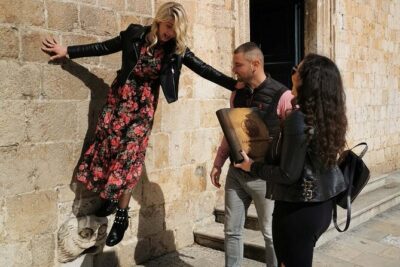
Game of Thrones Private Outdoor Escape Game in Dubrovnik
Read our review →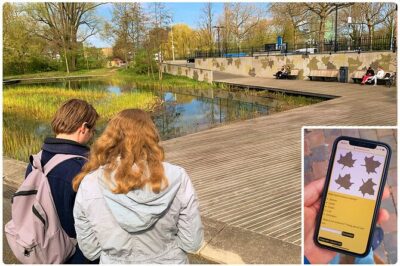
Discover Utrecht with a self-guided Outside Escape city game tour
Read our review →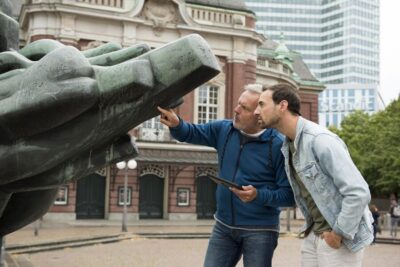
Outdoor Escape Game Dubrovnik – The Spy And The Traitor (History theme)
Read our review →
Other lists this game appears in