
Review · LISBON
Queer Lisbon – A Treasure Hunt in LGBT History
Lisbon’s queer story is far more than a list of bars. On this three-and-a-half-hour walk, Alex links dictatorship, censorship, nightlife, art, HIV activism, and constitutional rights through places you could easily pass without a second glance. You’ll hear about Josephine Baker, lesbian nuns, early drag, cruising parks, and the first Portuguese homosexual manifesto.
I especially like the small maximum group of 15, which gives you room to ask questions, and the useful PDF guide to LGBTQ Lisbon included in the price. Finishing at Late Birds Hotel, with a pub quiz and the option of a drink, gives the tour a friendly social finish.
The main drawback is simple: you will walk a lot. The route covers many stops, and one person noted that the tour stretched close to four hours. Wear good shoes, bring water, and do not plan a tight appointment afterward.
Key points to know before you book
- Alex tells the story through real streets and old venues, not just dates and political facts.
- The route covers 24 stops, from Principe Real to Late Birds Hotel.
- You learn about both past and present Lisbon, including Pride, HIV services, clubs, bars, and legal rights.
- The walking pace includes rest and questions, but the route still calls for moderate physical fitness.
- The included LGBTQ Lisbon PDF normally sells for 15 euros, adding useful value for the rest of your visit.
- The tour ends socially, with a pub quiz, prizes, and the chance to have a drink at a gay hotel.
Why this Lisbon walk is different from a standard city tour
Most Lisbon sightseeing tours focus on tiled churches, viewpoints, explorers, and grand squares. This one asks a different question: where did queer people meet, hide, organize, perform, love, and fight for legal protection?
That focus changes the way you see the city. A bar becomes part of a story about survival. A square becomes the start of Pride. A church becomes a place where records of same-sex desire and gender defiance survived centuries of religious control.
Alex leads in English and brings a personal, lively approach to the subject. The stories are not presented as a dry lecture. They move between serious moments, political turning points, scandal, humor, and nightlife. You will need to listen closely, since several stops last only about six minutes and the route covers a lot of ground.
The group size is limited to 15 people. That matters here. The tour deals with personal and sometimes painful subjects, so a smaller group makes it easier to ask questions and follow the thread. One especially useful feature is Alex’s willingness to pause and explain a point in more detail when the group shows interest.
More Treasure Hunts in Portugal:
- Sintra: Treasure Hunt & Walking Tour “The King’s Secret”
★ 5.0 · 3 reviews - Hamburg: Treasure Hunt Game through HafenCity
★ 4.7 · 364 reviews - St. Augustine: Treasure Hunt Cruise with Onboard Show
★ 4.4 · 315 reviews
Starting at Principe Real: Pride, loss, and public space
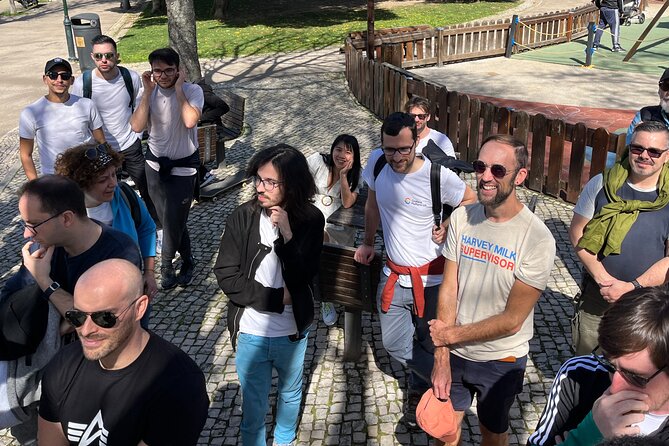
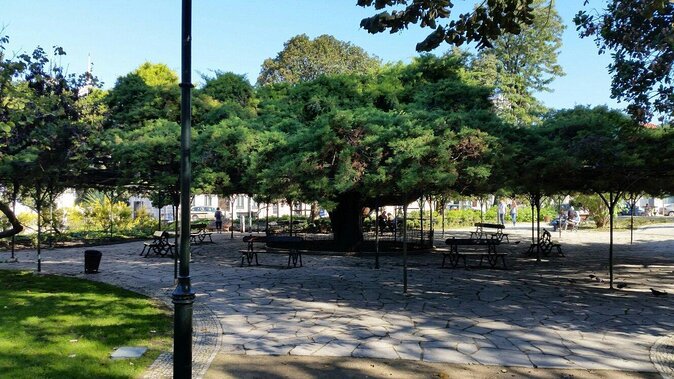
Meet at the Principe Real playground at 10:00 in Jardim do Principe Real. The gardens provide a calm place for introductions before the walk moves into Lisbon’s queer past.
The first nearby stop is the monument to victims of homophobia. It is a sober moment, and rightly so. The tour does not treat queer history as one long party. It acknowledges violence, exclusion, and the cost of living openly, then connects that past with Lisbon’s present-day queer scene.
At Praça do Principe Real, you learn about Lisbon Pride and EuroPride. The square is linked to the city’s Pride celebrations, and the discussion explains why Lisbon’s event has its own character. This is also a useful early lesson in how public space can change meaning. A square used for ordinary city life becomes a place where queer people claim visibility.
The route then reaches GAT Checkpoint LX, where Alex discusses HIV and AIDS in Portugal. This stop has practical value as well as historical weight. You receive information about health services for queer men and women, so the tour is not limited to stories about the past.
Clubs, cruising, and the nightlife that survived
Construction Lisbon Club introduces Lisbon’s long-running queer dance scene. Alex also points toward nearby lesbian venues and explains how nights out developed across the city. You are not simply given a list of places to visit. You learn what different venues have meant to different parts of the community.
The Botanical Garden brings a very different kind of story. Here, the subject turns to cruising in the 1950s, police efforts to control men’s behavior, and the clever ways people avoided arrest. The details are funny in places, but the underlying point is serious. When public acceptance is limited, parks and other shared spaces can become essential meeting places.
At Trumps, Lisbon’s major queer nightclub, the focus shifts to a venue that has operated since 1980. The club has two floors with different moods, making it useful to know before you plan a night out. This stop helps you connect the historical discussion with the city’s current nightlife.
The old address of O Gato Verde, Lisbon’s first lesbian bar, adds another important piece. Lesbian history can disappear easily when nightlife records focus mainly on men. Hearing about this institution helps correct that imbalance and gives you a better sense of how women created their own spaces.
Drag, bars, and the people who made room for themselves
At Praça das Flores, Alex tells the story of Lisbon’s first drag bar. The 1974 revolution brought a burst of freedom and enthusiasm, but that freedom did not move in a straight line. The story includes the rise and fall of Lisbon’s first drag queen, showing how quickly public tolerance could shift.
Bar 106 is a short stop with a practical purpose. You can leave a message for friends and note the bar as a place to return later. It is a small touch, but it helps turn the walk into a guide to Lisbon now, not only a history lesson.
Shelter Bar Lisboa and Bar TR3S cover the bear scene in two parts. The second stop widens the subject to Bear Pride, beach clubs, party nights, a sauna, and sports sponsorship. These details show how many identities and social groups exist within Lisbon’s LGBTQ community.
At Finalmente Club, the focus is drag again, this time at what is described as the city’s oldest and best-known drag venue. Alex explains that different shows run at different times, which is the sort of information you need if you plan to return. This is one place where the PDF guide should prove useful, since nightlife schedules can matter more than a general recommendation.
History tours to book around Portugal:
- Historical Outdoor Game in Lisbon “The Cryptex of Pombal”
★ 4.7 · 5 reviews - Roman Heritage of Braga: Self-Guided Puzzle Adventure
★ 4.0 · 3 reviews - The Anatomist – Award Winning Historical Escape Room Experience
★ 5.0 · 151 reviews - Private city discovery tour – A Historical Treasure Hunt
★ 5.0 · 146 reviews
Courts, protest, and the end of legal silence

The Constitutional Court stop gives the walk its political backbone. Portugal’s shift from dictatorship values toward constitutional protection for LGBTQ rights did not happen by accident. Alex explains the legal challenges and the long process behind the protections queer people have today.
At Rua Luz Soriano, the subject turns to the first homosexual manifesto and the early efforts behind it. The work was suppressed at first, but eventually helped push public discussion forward. This stop is especially valuable because it shows that legal change begins with people willing to speak before it is safe or popular.
Rua do Trombeta brings a more scandalous chapter. The story of the Two Fernandes moves from nineteenth-century love nests to luxury apartments and modern saunas. It is an entertaining stop, but it also shows how private relationships, property, reputation, and public morality have long collided.
Purex adds another angle: a dance floor run by women, along with the tour’s memorable reference to vagina jewellery. This is the sort of unexpected detail that keeps the walk from feeling like a university seminar. Lisbon’s queer story includes serious politics, but it also includes odd, playful, and wonderfully human bits.
At Maria Caxuxa, Alex tells the story of a woman who challenged convention in the 1940s and dismissed intrusive journalists. The stop adds a strong female figure to the route and shows that queer and gender-nonconforming lives did not begin with the modern rights movement.
Nineteenth-century scandal and Josephine Baker
Rua Travessa da Espera brings one of the tour’s most dramatic episodes: the Marquis of Valada found naked in the arms of a common soldier. The story involves disgraced politicians, political blackmail, and eventual survival. It is a reminder that social rank could protect someone in one moment and expose them in the next.
At Teatro da Trindade, the focus moves to Josephine Baker. The bisexual jazz star performed in wartime Lisbon while avoiding secret police and spy networks. This is one of the route’s most striking stops because it connects entertainment, sexuality, international politics, and wartime secrecy.
The story is not presented as a detached celebrity anecdote. It helps you see Lisbon as a place where performers, refugees, spies, and officials crossed paths. It also gives the tour a broader European frame.
At Rua da Misericórdia, the subject becomes women in love with women, queer fiction, and censorship. The story includes compromised censors, which makes the point that suppression is rarely as clean or complete as authorities hope. Books, coded language, and private reading can keep ideas alive.
The Inquisition and queer stories inside São Roque
Igreja de Sao Roque is the longest stop, at about 15 minutes. That extra time is well used. Alex discusses the Portuguese Inquisition through stories from the sixteenth, seventeenth, and eighteenth centuries.
The material includes sex in church, lesbian nuns, a demonic penis, and a transgender love story. The subject matter is startling, but the value is in seeing how records from religious courts can reveal lives that official society tried to control or erase.
This stop may be uncomfortable for some people, especially because it deals with religion, punishment, and intimate details. Still, it gives the walk historical depth. You are not only hearing about modern clubs and Pride marches. You are seeing how queer lives appear, often indirectly, in old documents and institutions.
The church itself also makes a useful setting. A grand religious building can feel distant from modern LGBTQ rights, yet the stories told here show that questions of desire, gender, and identity have always existed inside ordinary institutions.
Pessoa, the final quiz, and Late Birds Hotel
Near Hospital St. Louis, Alex discusses Fernando Pessoa and the line between private life, literary interpretation, and later recognition. Pessoa is now connected with gay writing and queer readings of his work, adding one of Portugal’s major literary figures to the route.
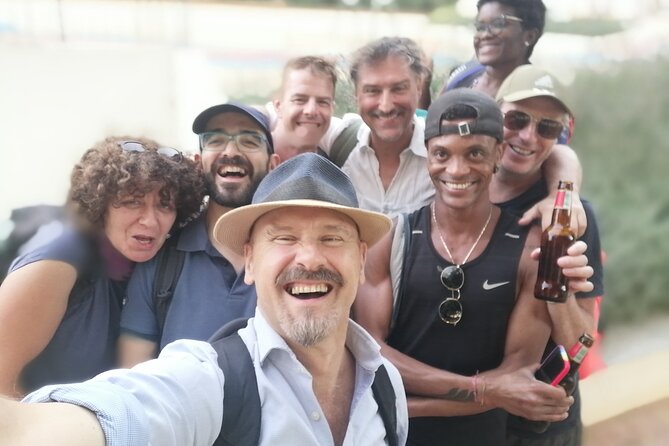
The final stop is Late Birds Hotel on Travessa André Valente. The hotel has a lounge, bar, garden, and pool, and the experience ends with a pub quiz and prizes. If the weather is good, you may want to bring a swimming costume, although swimming is not presented as a required part of the tour.
Ending here is a smart choice. After several hours of walking and listening, you get a place to sit, talk with the group, and continue the evening if you wish. You can also use the stop to ask Alex about bars, clubs, and other places to visit during your stay.
How much walking and time should you expect?
The advertised duration is about three hours and 30 minutes, but you should leave closer to four hours in your schedule. The route has 24 stops, and the walking between them adds up.
One person described feeling the distance after a nine-day cruise, even though the tour was rewarding. That is useful advice. The tour is not a quick neighborhood stroll with one café stop. You need moderate physical fitness and comfortable shoes.
Alex does build in rest opportunities and makes room for questions. Still, Lisbon’s streets can be tiring, and the route’s many short stops mean you are often standing outdoors while listening. Check the weather before you leave. During poor weather, Alex has provided umbrellas, but a rain jacket and sensible shoes will make the day easier.
There is no private transportation. You meet at Principe Real and finish at Late Birds Hotel, so you should be comfortable walking from one place to the next. The start is near public transportation, and service animals are allowed.
Is the $60.34 price good value?
At $60.34 per person, this costs more than a casual self-guided walk but includes far more than a basic orientation. You receive about three and a half hours of guiding, access to a carefully assembled set of stories, a small group, nightlife suggestions, and the LGBTQ Lisbon PDF, normally valued at 15 euros.
The PDF matters because it can help you plan after the tour. It includes recommendations and free activities, and one person found it useful for locating places they would not have found alone. If you use even a few of its suggestions, the cost becomes easier to justify.
The strongest value is the focus. General city tours may mention Portugal’s dictatorship, revolution, or famous writers, but they rarely connect those subjects to queer lives. Here, the same city becomes more personal and more complete.
I would not book it solely for cheap nightlife tips. The price is justified by the historical storytelling and the guide’s ability to connect old scandals with current venues. If you only want a short bar crawl, this is too long and too history-focused.
Who will enjoy this experience most?
I recommend it most strongly to LGBTQ visitors who want context for Lisbon beyond its current nightlife. It also suits allies, history fans, and anyone interested in how social change happens.
You do not need to know Portuguese queer history before arriving. Alex explains the key events as you go, and the stories range from light and strange to serious and emotional.
The age minimum is 16, while the legal drinking age is 18. The tour is offered in English and accepts up to 15 people. Because the route deals with sex, discrimination, censorship, HIV, and religious persecution, it is best for older teens and adults who are comfortable with mature subjects.
I would think twice if you have limited mobility, dislike long walks, or need to leave by a fixed time. The tour involves many stops and a fair amount of standing. It is also not the best choice if you want a private experience, since it is designed as a small shared group.
Should you book Queer Lisbon?
Book it if you want Lisbon to make more sense through the lives of the people who challenged its rules, built its bars, wrote its books, organized its protests, and claimed its public spaces.
I especially recommend it early in your stay. The PDF, venue tips, and neighborhood knowledge can shape the rest of your visit. Give yourself plenty of time, wear good shoes, and arrive ready for both laughter and difficult history.
Skip it if you want a short, effortless sightseeing loop. This is a serious walking tour with a social ending, not a simple nightlife sampler. For the right audience, though, the combination of Alex’s storytelling, unusual locations, and practical Lisbon advice makes the $60.34 fee a fair price.
FAQ
Where does Queer Lisbon begin?
The tour begins at the Principe Real Playground in Praça do Príncipe Real, Lisbon.
Where does the tour end?
It ends at Late Birds Hotel at Travessa André Valente 25. The final area includes the hotel lounge, bar, garden, and pool.
What time does the tour start?
The start time is 10:00 am.
How long does the experience last?
The advertised duration is approximately three hours and 30 minutes. You should allow close to four hours, since the walking and questions may extend the day.
How many people can join?
The group has a maximum of 15 people.
Is the tour suitable for younger visitors?
The minimum booking age is 16. The legal drinking age in Portugal is 18.
What happens if I need to cancel?
You can cancel for a full refund up to 24 hours before the start time. Cancellations or changes made less than 24 hours before the start are not accepted for a refund.
New puzzles around Portugal
- Faro Self Guided Private Sherlock Holmes Murder Mystery Game★ 5.0 · 2 reviews
- Romantic Faro: Whisper of Love Exploration Game and Tour★ 3.0 · 3 reviews
- Spy Nest in Estoril: Self-Guided Cold War Puzzle Adventure★ 4.0 · 4 reviews
- Cascais Scavenger Hunt and Sights Self-Guided Tour★ 5.0 · 10 reviews
- Roman Heritage of Braga: Self-Guided Puzzle Adventure★ 4.0 · 3 reviews
- Museum Heist Escape Game★ 5.0 · 28 reviews
- Survival Instinct Escape Game★ 5.0 · 20 reviews
- Silves Scavenger Hunt and Sights Private Self-Guided Tour★ 5.0 · 2 reviews
Treasure Hunts, head to head.

Fun, Flexible Treasure Hunt Around Manchester with Cryptic Clues & Hidden Gems
Read our review →York Treasure Hunt Adventure: The Mystery of The Gunpowder Snitch
Read our review →
Black Diamond Treasure Hunt Excursion with Backcountry Dining
Read our review →
Amsterdam Treasure Hunt: The Mystery of a Secret Sender
Read our review →
Private city discovery tour – A Historical Treasure Hunt
Read our review →
Mostra Leonardo Da Vinci: Rome Treasure Hunt Game
Read our review →Other lists this game appears in