
Review · FRANCE
Louvre Guided Treasure Hunt for Families and Kids
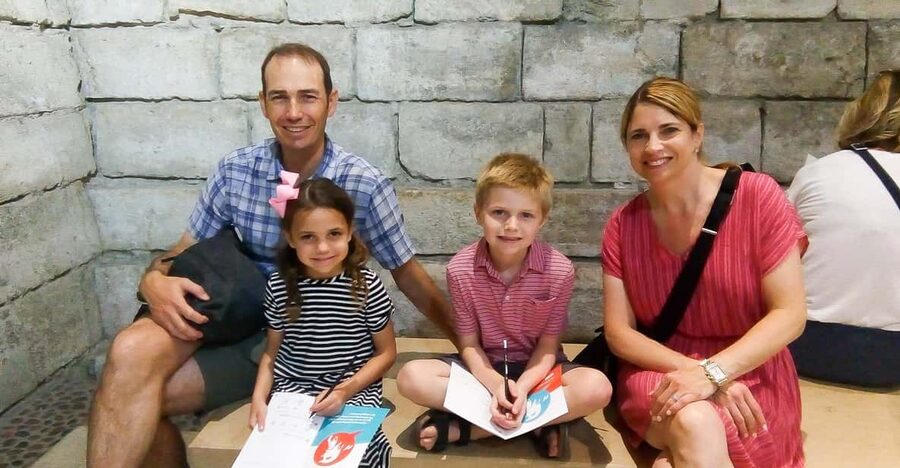
The clever part of this Louvre visit is that the museum becomes a game rather than a test of endurance. Your children receive age-appropriate booklets, answer questions about the art, collect clue cards, and solve a final puzzle while your guide leads the way through famous works such as the Mona Lisa, Venus of Milo, and Victory of Samothrace.
I like the private family format, which lets the guide adjust the pace and explain art in language children can follow. I also like the skip-the-line entry and the practical two-hour length, especially when families have only enough energy for a focused look at the Louvre. The main drawback is the price: $743 for up to four people is a serious investment, and the activity can mean spending longer at fewer works.
Key points to know before booking
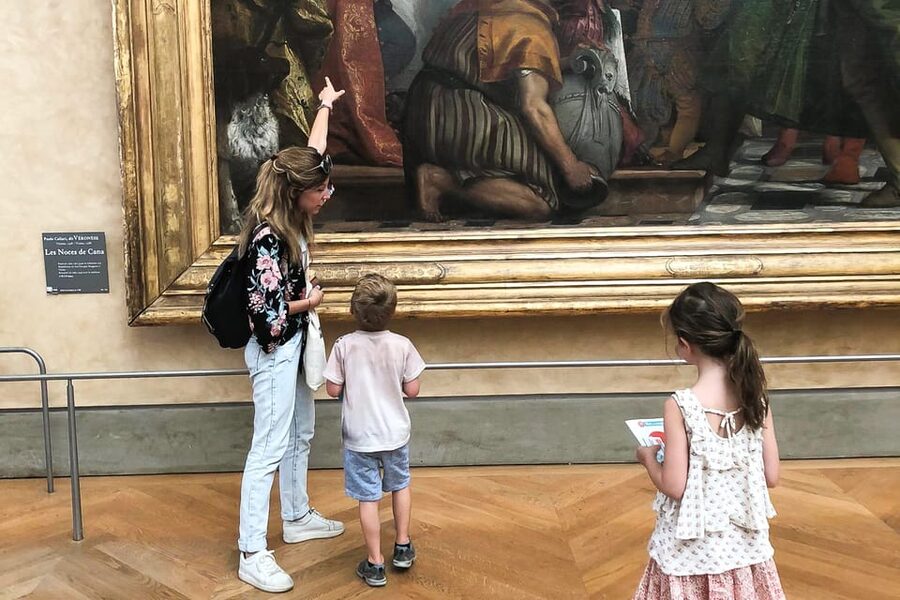
- The treasure hunt gives children a job: They answer questions, collect clue cards, and work toward a final puzzle instead of simply walking behind an adult.
- Two age ranges shape the booklet: Children receive activities designed for ages 3 to 6 or 7 to 12, with drawing and coloring for younger children.
- The route focuses on major Louvre sights: Expect the Mona Lisa, Venus of Milo, Victory of Samothrace, and other selected works rather than an attempt to see the whole museum.
- The guide matters greatly: Marcella, Justine, Amy, Sebastian, Marine, and others have been praised for patience, energy, and their ability to hold children’s attention.
- Skip-the-line entry saves family energy: You avoid spending part of your Louvre morning in an entrance queue, though museum security and crowd conditions still apply.
- The price favors families who value help: At $743 for up to four people, it makes the most sense when navigating the Louvre alone would feel stressful or unproductive.
Why a treasure hunt works inside the Louvre
The Louvre is not a normal museum stop. It is enormous, crowded, and packed with famous objects competing for your attention. With children, the challenge is not simply getting inside. It is keeping everyone moving in the same direction once you are there.
This experience gives the children a clear purpose. They are not asked to admire every painting or listen to a long lecture. Instead, they look closely, answer questions, and earn clues. That small change matters. A child who might lose interest during a history talk may pay close attention when asked to spot a detail or solve a puzzle.
The guide also translates the museum into manageable pieces. You receive stories about selected works, along with time to look and respond. For younger children, coloring and drawing activities help them stay involved. Older children can work through more demanding observation challenges.
The activity is in English and lasts two hours. That is a sensible limit for most families. You get a clear introduction to the Louvre and its major sights without turning the visit into an all-day march.
More Treasure Hunts in France
- Louvre Museum Guided Family Treasure Hunt
★ 5.0 · 78 reviews - “Old Marseille” district tour and treasure hunt
★ 5.0 · 74 reviews - Louvre Museum – Private Family Tour with Da Vinci Treasure Hunt
★ 5.0 · 38 reviews
Meeting by the Louis XIV statue
The meeting point is by the equestrian statue of Louis XIV near the Louvre glass pyramid, at 8 Place du Carrousel. Look for the statue and the pyramid area rather than expecting to meet inside the museum.
This is an important detail with children. Give yourself enough time to reach the Carrousel area, gather everyone, and handle last-minute bathroom or snack needs before meeting your guide. The tour does not include hotel pickup or drop-off, food, or drinks.
You should also travel light. Bags larger than 55 by 35 by 20 centimeters are not permitted in the museum, and large luggage or oversized bags are not allowed. Bring comfortable clothes and your ID, or a photocopy of it. These are small preparations, but they prevent an avoidable problem at the entrance.
Skip-the-line entry and what it really saves
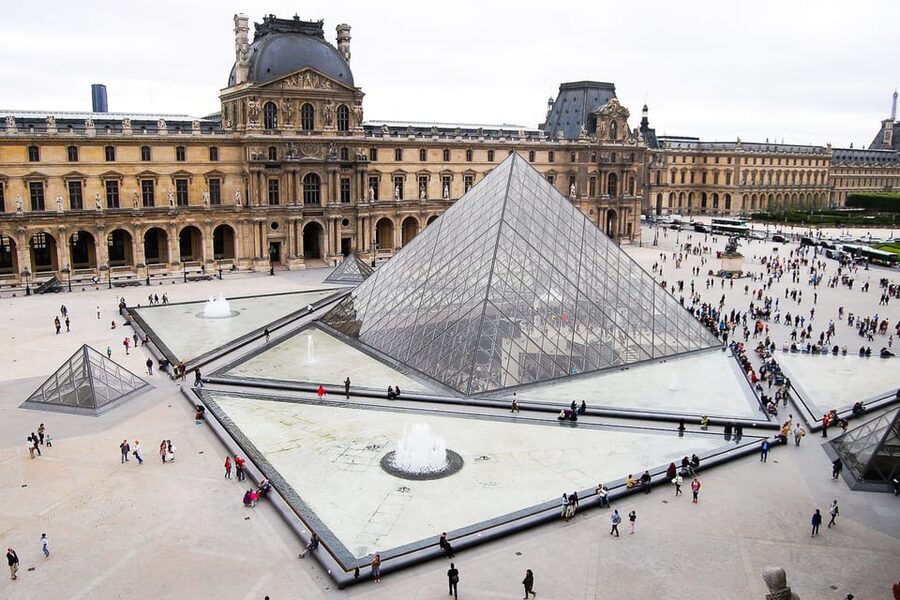
Skip-the-line Louvre tickets are included. For a family, this can be worth more than it first sounds. Waiting in an entrance queue with tired children is a poor use of your limited Paris time, and it can drain enthusiasm before the art even begins.
The tickets do not mean you can ignore all entrance procedures. You still need to follow museum security rules, and busy conditions inside the Louvre can affect the pace. Still, getting past the initial line gives your guide a better chance to start the activity promptly.
One family reported that the faster entry saved about an hour and helped the guide reach the Mona Lisa efficiently. That should not be treated as a guaranteed waiting-time saving on every date, but it shows the practical value of having the tickets arranged and a guide leading the process.
The activity booklets for ages 3 to 6 and 7 to 12
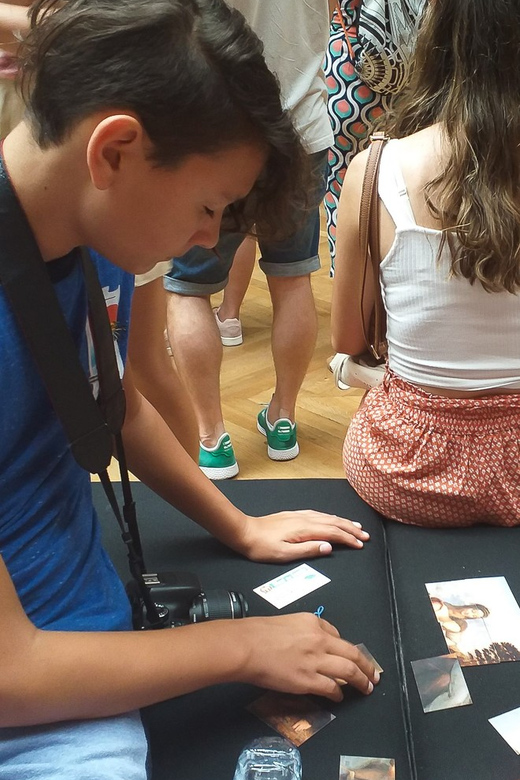
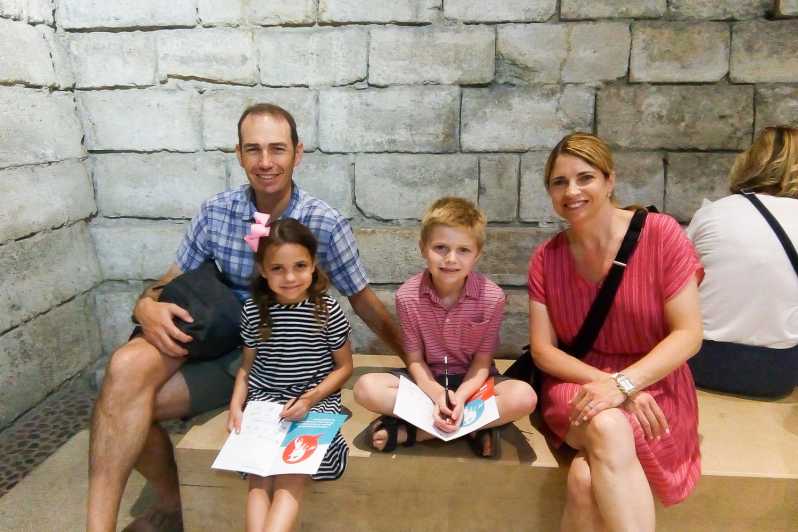
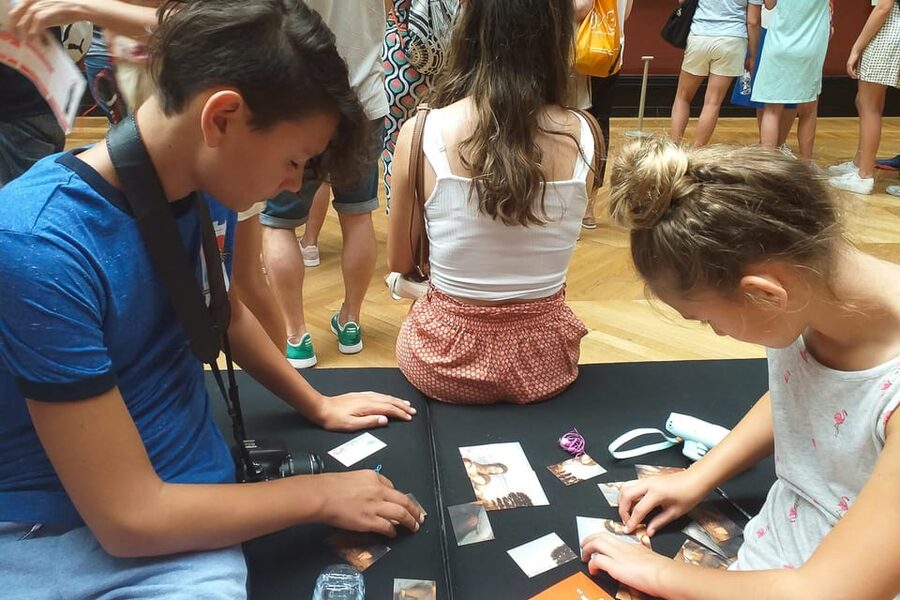
At the start, each child receives an activity booklet matched to an age range. The supplied choices are ages 3 to 6 and ages 7 to 12. The children follow the same general route, but the tasks are adjusted to their abilities.
For the younger group, expect coloring, drawing, and simple observation activities. These give small children something physical to do while the guide talks about a sculpture or painting. A three-year-old will not process the same explanation as a ten-year-old, so this flexibility is useful.
The older group gets challenges that ask for closer looking and more thought. The guide can use the booklet to turn details in the artwork into questions. Children are not merely being told what to see. They are encouraged to find it themselves.
The booklets also give the adults a break. You can listen to the guide without constantly inventing distractions or negotiating the next stop. Parents still need to stay involved, but the booklet carries some of the work.
There is one tradeoff. Every challenge takes time. One family felt that the quiz activities made the tour slower and reduced the number of artworks they could see. That is a fair concern. If your children already enjoy museums and your main goal is to see as much as possible, a standard highlights tour may cover more ground.
Same streets, a different puzzle:
- Saw2 vs Squid Game – Escape Game Montpellier
★ 5.0 · 752 reviews - Prison Break – Escape game in Montpellier
★ 5.0 · 583 reviews - School of Magic – Escape game Montpellier
★ 4.5 · 536 reviews - Mission Possible – Escape game Montpellier
★ 5.0 · 437 reviews
Following the clues through the Louvre
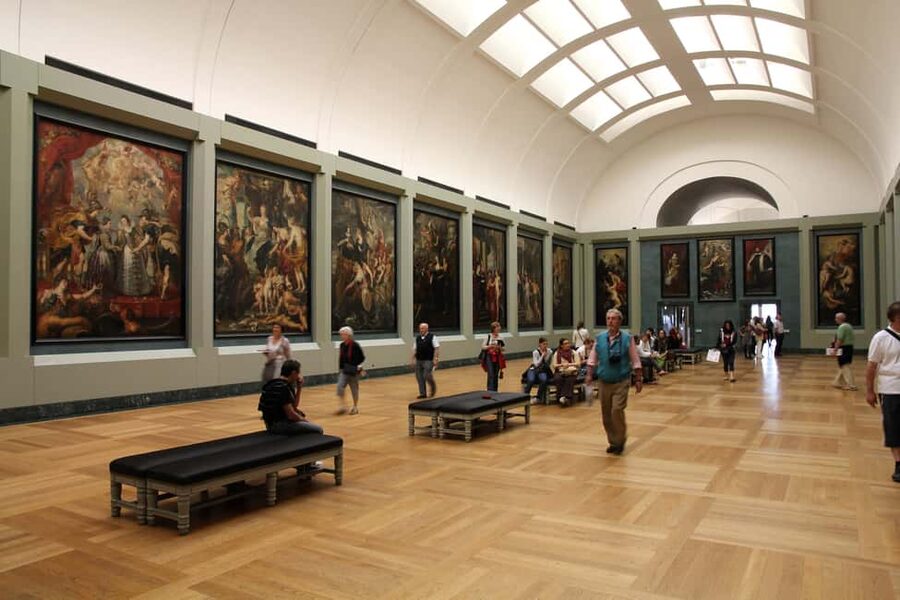
The treasure hunt is built around a series of answers. Each successful answer earns a clue written on a card. Once the children have collected all the cards, they use them to solve the final puzzle.
That structure gives the two-hour visit a beginning, middle, and end. At the beginning, children are learning how the game works. In the middle, they are building confidence as they spot details and collect clues. At the end, they have a reason to keep going because the puzzle is not yet complete.
This is especially helpful for siblings of different ages. A five-year-old can take part through pictures, colors, and simple observation. An older child can focus on more complex questions. The guide may still need to shift attention between children, but the format is more flexible than one explanation delivered to everyone in the same way.
The activity is not a race. You will stop at selected artworks, listen to stories, and answer questions. Families who want a quiet, slow examination of each piece may find the game structure a little active. Families who worry about children losing interest will probably appreciate the momentum.
The Mona Lisa, Venus of Milo, and Victory of Samothrace
The tour includes the Louvre’s best-known sights. You can expect to see the Mona Lisa, Venus of Milo, and Victory of Samothrace, along with other works chosen by the guide.
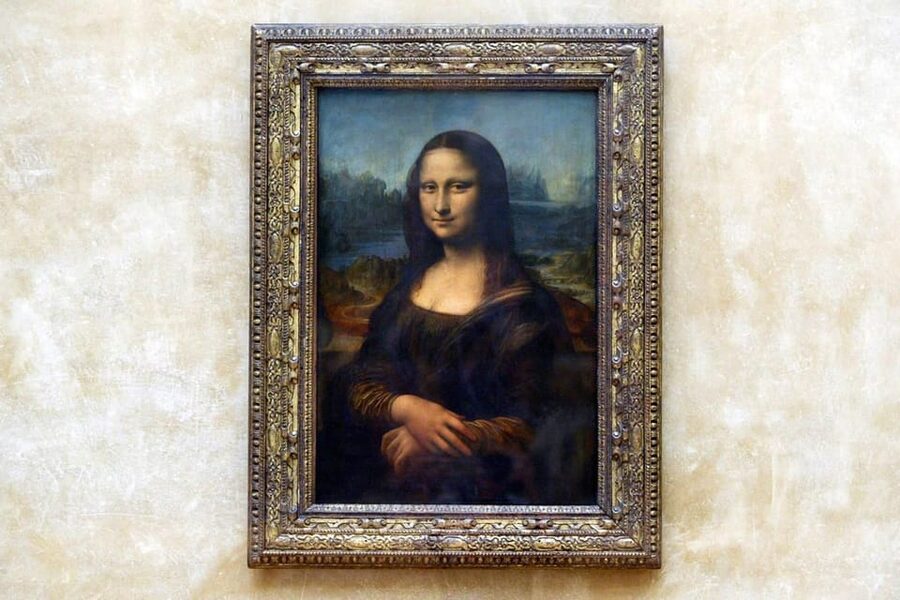
The Mona Lisa is the most predictable crowd magnet. The guide can help you reach it as part of the planned route, but the room may still be busy. Children may find the painting itself less exciting than the surrounding excitement, which is one reason the booklet activity can help them look more carefully.
A spot-the-difference task has been used around the Mona Lisa. One family found that activity a little silly when the original painting was only a short distance away and felt that it took time from seeing other works. That criticism is worth considering. The activity is designed for children, so some tasks may feel simplified or artificial to adults.
The Venus of Milo offers a strong chance to discuss sculpture, posture, and the missing arms without requiring a long lecture. The Victory of Samothrace gives the guide another memorable work to explain through observation. These large, famous pieces are useful anchors for children because they are visually striking and easy to remember later.
You should not expect to cover every department or see the Louvre in full. The museum is too large for that in two hours. The value lies in receiving a focused route through major highlights, with stories and games that make the selected works easier to remember.
The guide can make or break the experience

This is a guide-led activity, and the guide’s approach matters as much as the booklet. The strongest reports describe guides who were patient, lively, and able to explain art in short, clear sections.
Marcella has been praised for keeping three children focused while making history concise. Justine has been singled out for helping children enjoy and learn from the museum. Amy was credited with combining strong subject knowledge with a playful approach and guiding a family efficiently to the Mona Lisa.
Families have also had positive experiences with Sebastian, Marine, Roseane, Valerie, Yaelle, Quinten, and others. Sebastian was especially effective with groups containing children from ages 5 to 13, a difficult spread to handle. Marine worked well with older children, including ages 10 and 13, while still keeping the treasure hunt moving.
These examples point to the experience’s main strength: the guide is not simply reciting facts. The guide watches the children, changes the explanation, and keeps the activity moving. That personal attention is hard to reproduce with an audio guide or a family booklet you use alone.
The quality can vary by individual guide, as it can with any guided tour. The experience is designed for families, but that does not guarantee every child will be fully engaged. One family found that their children were less interested than expected. Consider your child’s personality. A child who likes puzzles, drawing, and finding details is a natural fit. A child who resists any planned activity may need extra encouragement.
A practical two-hour pace
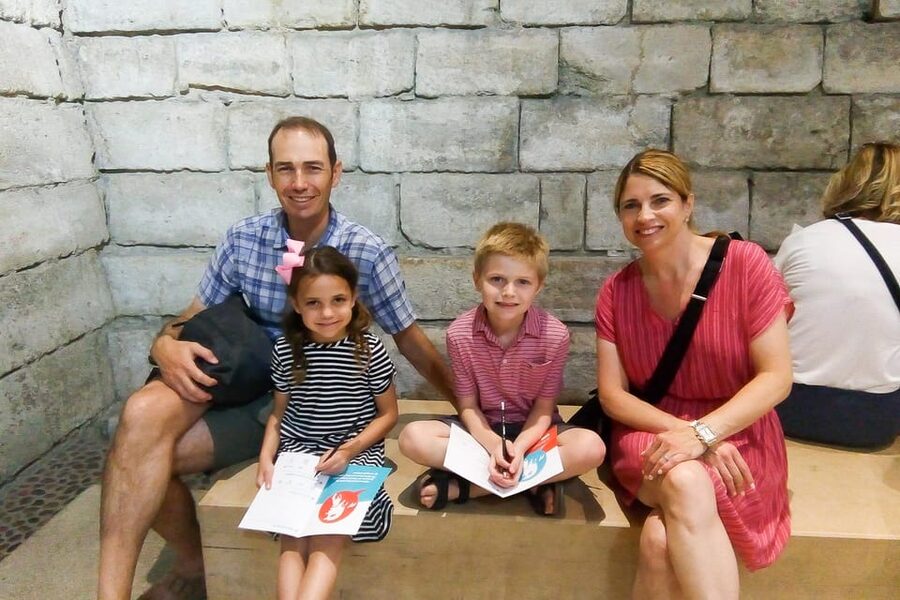
Two hours is long enough to see major sights and short enough to protect the rest of your day. Several families found the timing right for children, while one family wanted a faster pace and more artworks.
The route is likely to feel active rather than leisurely. You will move between selected works, pause for questions, hear short explanations, and complete booklet tasks. If your family wants to return later and explore independently, the tour leaves you with some orientation and a sense of the museum’s scale.
The private format helps here. You do not have to follow another family’s pace, and the guide can spend more time on a child’s question or move on when attention fades. The group size is private, with the listed price covering up to four people. If you have more than four, confirm the current pricing before booking because the quoted rate is specifically for a group of up to four.
The tour is wheelchair accessible, which is useful for families who need that feature. The supplied information does not promise a specific route or every gallery’s conditions, so discuss any detailed mobility needs when booking.
Is $743 good value for a family of four?
At $743 per group of up to four, this is not a budget Louvre visit. It costs roughly $186 per person for a full group of four, before tips. A smaller group pays more per person, so the value improves when four people share the booking.
What are you paying for? You are paying for skip-the-line museum tickets, a private English-speaking guide, children’s booklets, the treasure hunt kit, and help navigating a very large museum. You are also paying for the guide to adjust the experience to your children instead of delivering the same talk to a large mixed group.
I think the price is easier to justify if you have one Louvre visit in Paris and want it to go well. It can also make sense if your children are young, your time is tight, or you would otherwise spend much of the visit trying to manage crowds and directions.
The price is harder to justify if you have a flexible schedule, enjoy planning museum routes yourself, or mainly want to see a large number of works quickly. In that case, you may prefer a less expensive admission option and your own family game.
Tips are not included. Food and drinks are not included either, so plan those separately. The tour is refundable if canceled at least 24 hours ahead, and you can reserve now and pay later, which helps if your Paris schedule is still changing.
Who should book this Louvre treasure hunt?
I would choose this for families with children roughly 3 to 12 who want a guided introduction rather than an exhaustive museum visit. It is particularly useful for first-time Louvre visitors who feel unsure about choosing a route.
It also suits grandparents traveling with children. One family with two granddaughters ages 10 and 13 found that the guide kept both the history and the masterpieces accessible. The format can work across age groups, although a 13-year-old may find the younger booklet style less appealing depending on the child.
Families with several children may get especially good value from the private setup. A family of four with six-year-old twins and an eight-year-old found the treasure hunt useful for keeping everyone occupied in heavy crowds.
I would think twice if your children strongly dislike puzzles or if the adults want a serious, slow art study. The booklet and questions are the heart of the experience, not a side feature. You should also accept that you may see fewer works than you would on a fast adult-focused route.
Final verdict: book it for focus, not for maximum coverage
This Louvre treasure hunt solves the biggest family problem: how to make a huge museum feel possible for children. The clues, booklet, and final puzzle give the visit shape, while a patient guide can turn major masterpieces into stories your children understand.
The price is high, and the two-hour route does not attempt to show you everything. Some activities may feel too basic for adults, and the questions can slow the pace. But if your priority is a calm, focused family visit with skip-the-line entry and a guide who can keep children involved, the cost may be worth it.
Book it for a family-friendly introduction to the Louvre, especially if this is your only visit. Skip it if you want broad museum coverage, a quiet art seminar, or the cheapest possible way inside.
FAQ
How long does the Louvre treasure hunt last?
The activity lasts two hours, including the guided visit through the Louvre.
What artworks will we see?
The route includes the Mona Lisa, Venus of Milo, and Victory of Samothrace, along with other selected Louvre works.
What ages are the activity booklets designed for?
Booklets are prepared for children ages 3 to 6 or ages 7 to 12. Younger children receive coloring and drawing activities, while older children complete adapted observation challenges.
Is the tour private?
Yes. It is offered as a private group experience, and the listed price covers up to four people.
Where do we meet the guide?
Meet by the equestrian statue of Louis XIV near the Louvre glass pyramid, at 8 Place du Carrousel.
Are Louvre tickets included?
Yes. Skip-the-line Louvre tickets, an activity booklet for each child, and the treasure hunt kit are included. Food, drinks, hotel transportation, and tips are not included.
More Family and Kids Games in France
- Kids/teens escape game in Montmartre
★ 5.0 · 68 reviews - Paris Sweet & Chocolate Family Treasure Hunt
★ 5.0 · 37 reviews - Paris Louvre : Private Treasure Hunt for Families or groups
★ 3.9 · 14 reviews - Family-friendly treasure hunt at Opera Garnier
★ 3.8 · 5 reviews
New puzzles around France
- Honfleur Outdoor Escape Game★ 4.5 · 19 reviews
- e-Scavenger hunt Honfleur: Explore the city at your own pace★ 4.5 · 5 reviews
- Discover Grenoble while playing! Escape game – The alchemist★ 3.5 · 2 reviews
- Grenoble Self Guided Sherlock Holmes Murder Mystery Game★ 3.5 · 2 reviews
- Grenoble Scavenger Hunt and Sights Self-Guided Tour★ 3.0 · 4 reviews
- Metz Scavenger Hunt and Highlights Self Guided Audio Tour★ 4.5 · 3 reviews
- Discover Saint-Etienne by playing! Escape game – The alchemist★ 4.0 · 2 reviews
- Escape Game Outdoor The Walking Dead in Valencia★ 3.0 · 2 reviews
Family and Kids Games, head to head.




Greek Mythology Treasure Hunt for Kids – Athens Private Tour
Read our review →
Private Venice Family Tour with Saint Mark’s & Doge’s Palace
Read our review →
Best of Florence Treasure Hunt Tour for Kids & Families
Read our review →Other lists this game appears in