
Review · FRANCE
“Old Marseille” district tour and treasure hunt
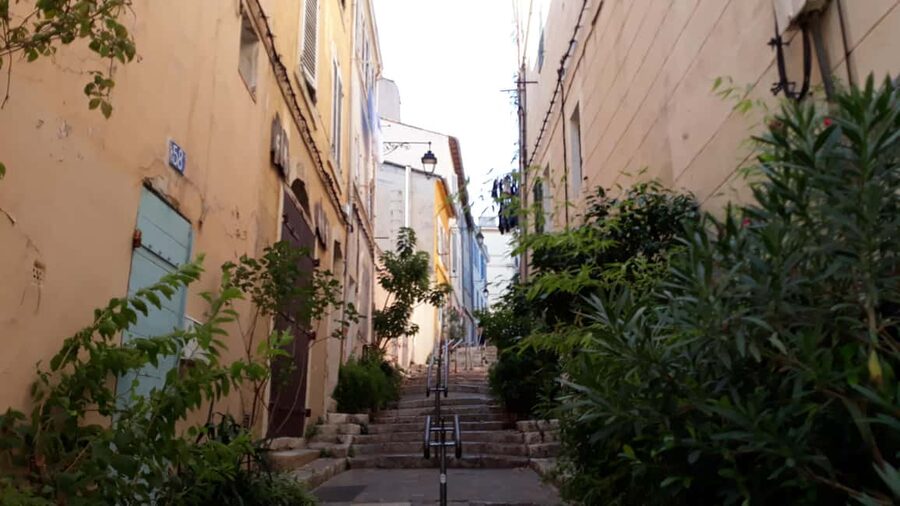
Marseille’s oldest quarter becomes a giant puzzle box on this walking treasure hunt through Le Panier. You follow a booklet of original riddles from City Hall toward Fort Saint-Jean, using street names, building details, monuments, and bits of urban furniture to work out where to go next. It turns a history walk into a game, which is a smart way to keep younger walkers moving.
I like the small groups of no more than 10 people, since a puzzle works better when everyone can see the clues and take part. I also like the route’s mix of famous sights and less obvious corners, with local guide Eric D. adding stories about Marseille’s 2,600-year past. The main drawback is the 4.5-kilometre walk and several stairs, so this is not the best pick for very young children or anyone who finds uneven city walking tiring.
Key points at a glance
- A 150-minute mystery walk: Follow a handmade booklet through Le Panier by solving one clue at a time.
- Marseille’s oldest quarter as the game board: The route connects the Old Port, Le Panier, and Fort Saint-Jean.
- Useful for mixed-age families: Children can chase clues while adults get history, legends, and local context.
- A genuine small-group activity: With up to 10 participants, the guide can keep the game moving and help when a clue causes a traffic jam.
- Three languages available: Eric D. leads the activity in English, French, or German.
- A prize at the finish: The winner receives a gift, adding a little friendly competition without changing the walking pace.
Why Le Panier works so well for a treasure hunt
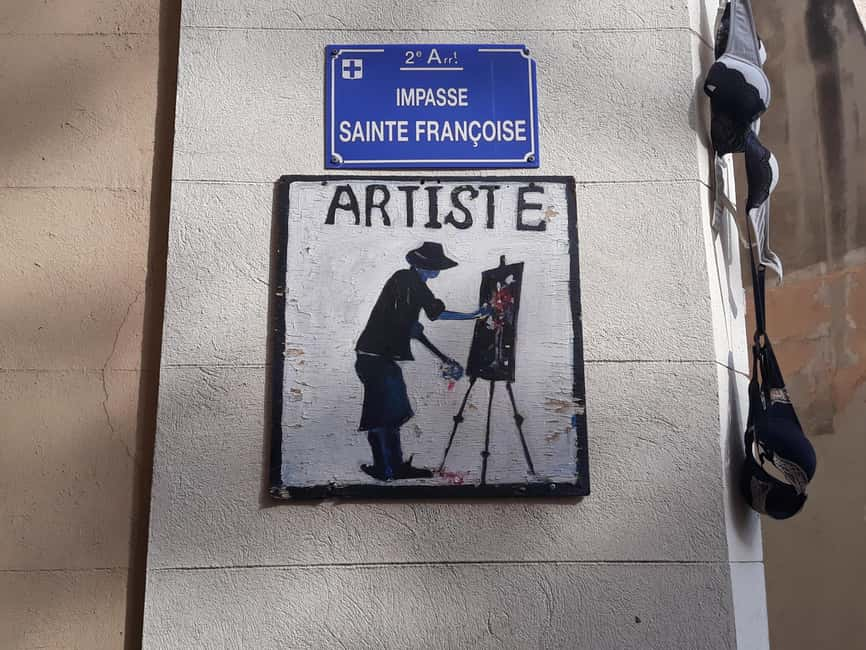
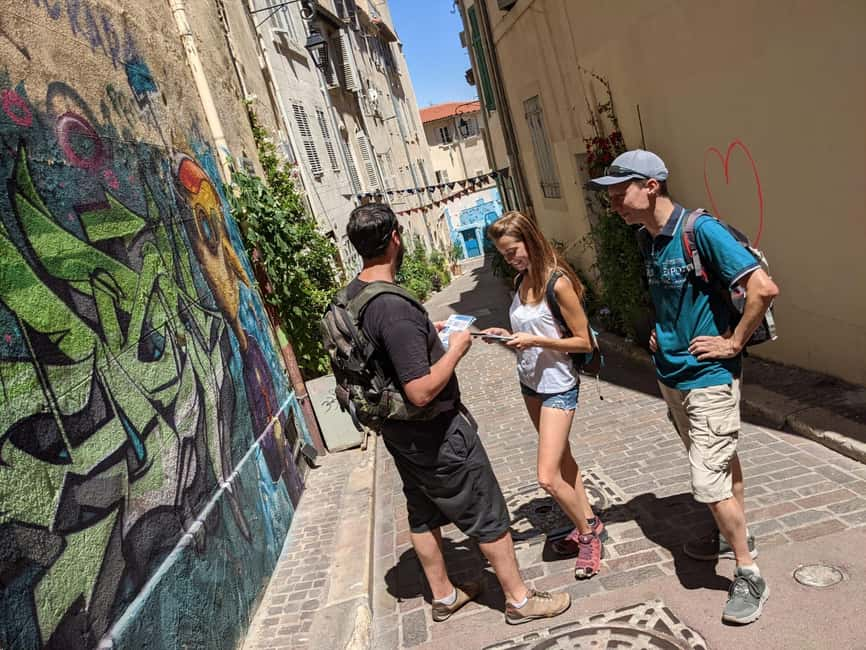
Le Panier is a good place for this format because it rewards close attention. You are not simply walking from one major monument to another. The next clue may depend on a street or alley name, a detail on a facade, or an object placed along the street.
That changes how you look at Marseille. Instead of keeping your eyes fixed on a map, you scan the buildings and signs around you. A short walk becomes a search, and ordinary details gain a job to do. The booklet gives you a reason to notice things you could easily pass without a second glance.
The setting also gives the game plenty of historical depth. Marseille was founded by Greek settlers and has about 2,600 years of history behind it. You will not get a full academic course in that time span during a 150-minute walk, but the route offers a practical way to connect old streets and landmarks with the city’s long story.
I find this especially useful for families. A standard guided walk can lose children when the guide pauses for a long explanation. Here, the next answer gives them a task. Adults still receive information about the places you pass, while children have a clear reason to keep looking.
More Treasure Hunts in France
- Louvre Guided Treasure Hunt for Families and Kids
★ 4.7 · 92 reviews - Louvre Museum Guided Family Treasure Hunt
★ 5.0 · 78 reviews - Louvre Museum – Private Family Tour with Da Vinci Treasure Hunt
★ 5.0 · 38 reviews
Starting beside Marseille’s Old Port
The meeting point is near the ferry-boat pier next to City Hall, on the north shore of the Old Port. This is a useful place to begin because it puts you close to the historic center and gives the group a clear reference point.
Take care to use the north-shore meeting point rather than simply heading to any part of the Old Port. The exact meeting location is near the ferry pier beside City Hall. Arrive ready to walk, with comfortable shoes and enough time to find the starting place.
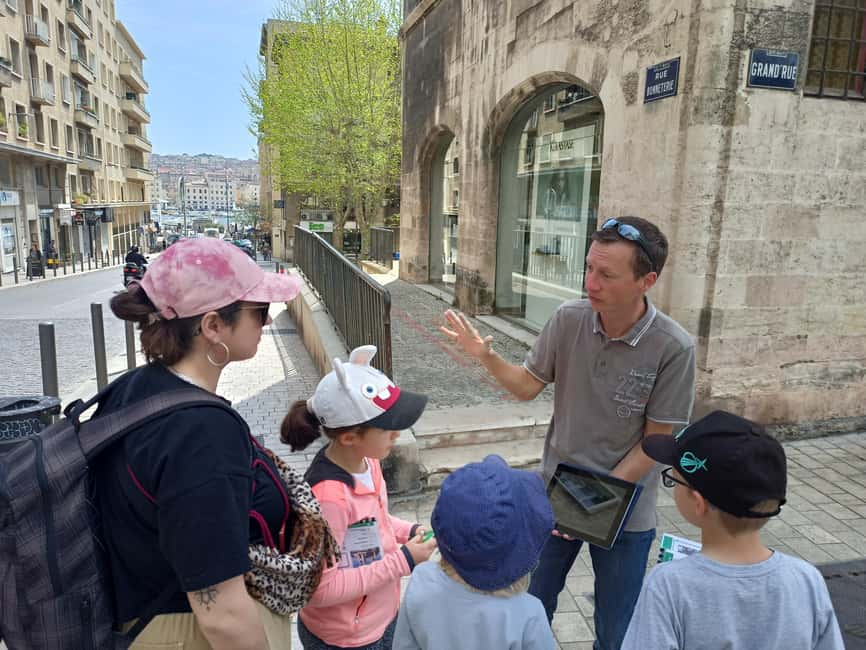
The opening section sets up the game. You receive a booklet created for the activity, then use its clues to move from one stage to the next. The guide does not just hand you a route and send you off. Eric D. explains the task and provides information about the sites you meet along the way.
The Sherlock Holmes comparison makes sense here, but the real appeal is simpler: you must observe before you move on. A street name may confirm your direction. A detail on a building may answer a riddle. A small piece of city furniture may become the clue that settles an argument between teammates.
Following the clues into Le Panier

From the Old Port, the activity leads into Le Panier, known as old Marseille. This is the core of the experience and the part where the treasure hunt format earns its keep.
Le Panier is made for slow walking and careful looking. The route uses streets and alleys as part of the puzzle, so you are encouraged to notice the shape and character of the district rather than hurry between sights. The activity describes the route as roughly 4.5 kilometres in total, which is a substantial walk but not a demanding hike.
You will encounter both must-see places and less familiar spots. The exact clue sequence is part of the game, so you should not expect a simple checklist of every stop. Instead, the guide uses the area as a playground and explains the history and legends connected with the places you meet.
That balance is important. If you already know Marseille, the less obvious locations can give you a fresh reason to explore the district. If this is your first visit, the route still gives you the essential sense of place: old lanes, historic buildings, cultural references, and the connection between the Old Port and the quarter above it.
The game also helps spread attention across the walk. You are not waiting for the next major sight to appear. A clue can make a plain-looking corner matter, at least for a few minutes. That is a useful habit in old European districts, where the best details are often found above eye level or on the edge of the main route.
History delivered through play
Eric D. is a resident of Marseille and brings local familiarity to the walk. His role is not limited to checking answers. He explains the history and legends of the places you encounter, while keeping the tone playful.
This is a good fit if you want context but do not enjoy a lecture. The booklet gives the group something to do, and the guide can add meaning to the clues. You learn about Marseille as you move, rather than stopping for a long block of information at every location.
The available languages are English, French, and German. This matters for families and mixed groups, especially since one of the strongest points of the activity is the children’s ability to take part. A German-language option is particularly useful for families who prefer to discuss clues and instructions in German. The guide’s German has been described as very good, and the activity is also available in English and French.
The history is broad rather than exhaustive. You will hear about the locations, their past, and their legends, but this is not a specialist archaeology tour or a museum visit. Choose it for a lively introduction to old Marseille, not for a detailed lecture on every period of the city’s development.
Same streets, a different puzzle:
- Saw2 vs Squid Game – Escape Game Montpellier
★ 5.0 · 752 reviews - Prison Break – Escape game in Montpellier
★ 5.0 · 583 reviews - School of Magic – Escape game Montpellier
★ 4.5 · 536 reviews - Mission Possible – Escape game Montpellier
★ 5.0 · 437 reviews
How the treasure hunt works for families
The activity is designed for players of different ages, with one clear limit: children under six are not suitable for it. That rule makes sense. Younger children may not be able to read or reason through the clues, and the total distance can be a lot for little legs.
For children aged six and up, the format has several advantages. The booklet provides a concrete task. The group works toward a solution. The prize at the end gives the game a finish line. These small details can make the difference between a family walk that drags and one that keeps everyone involved.
Adults are not left out. The clues use urban details that may require careful reading, local context, or simple teamwork. Parents can help children spot a sign, interpret a clue, or compare possible answers. You might find that the competitive part becomes less important than the shared search.
The small group limit of 10 also helps. A large crowd would make it harder for children to see the details and harder for the guide to keep several teams engaged. With fewer participants, the activity can retain its playful spirit and avoid becoming a noisy procession.
The winner receives a gift. The exact prize is not specified, so do not book this expecting a particular souvenir. Think of it as a pleasant reward that gives the final answer a little extra importance.
Walking distance, stairs, and the real pace
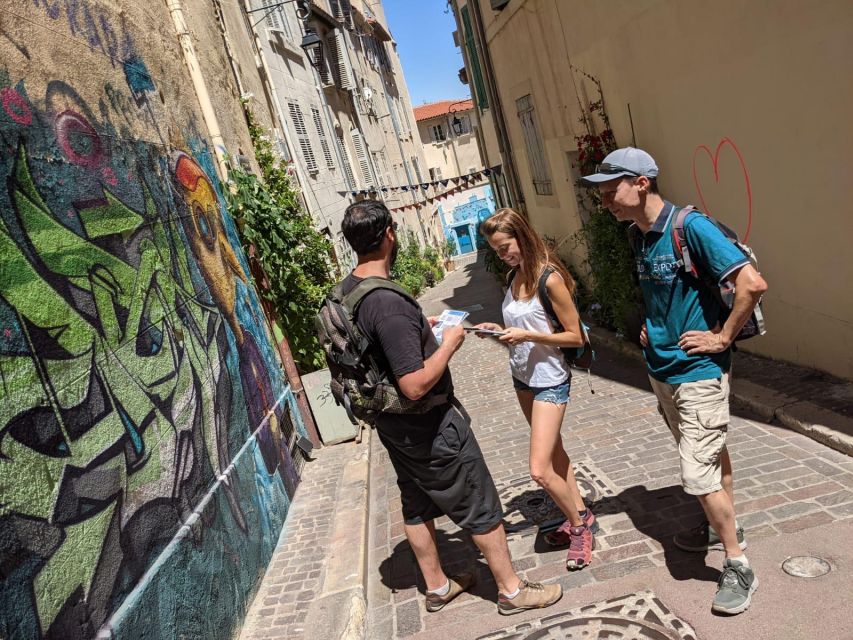
The route covers around 4.5 kilometres and lasts 150 minutes. That includes the walking, clue solving, explanations, and pauses needed to keep the group together.
This is not a strenuous outing, but it is not a short stroll either. You will spend most of the time on foot, and the route includes some stairs. Comfortable shoes are a practical choice. If your family walks slowly, the puzzle format may help the distance feel lighter, but you should still consider the age and energy of every participant.
The stairs are the main physical point to keep in mind. The experience is not presented as difficult, yet old districts often require changes in level. Anyone who needs a fully step-free route should check carefully before booking, since the activity specifically notes stairs.
Weather can also affect comfort, although no weather policy is given. Since the game depends on spotting outdoor details, poor conditions could make the clues less enjoyable. Bring what you normally need for an outdoor city walk, and avoid treating this as an indoor backup plan.
Finishing near Fort Saint-Jean

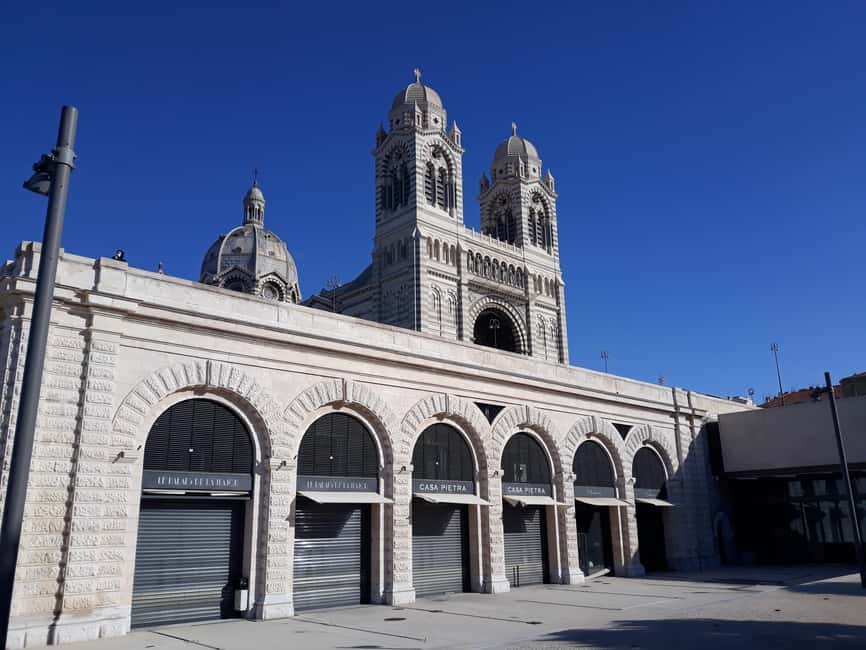
The tour ends at Fort Saint-Jean, at the edge of the historic center. This gives the route a clear destination rather than sending you back to the starting point.
Ending here also makes practical sense for sightseeing. You finish near one of Marseille’s major historic landmarks and can continue exploring the area afterward. The activity itself ends at the fort, so plan your next stop from there rather than assuming you will return to City Hall with the group.
The final location helps complete the walk through time. You begin near the Old Port, move through Le Panier, and finish by the fort. The route connects Marseille’s working waterfront, its old residential quarter, and its defensive past without requiring a full-day commitment.
The finish is not presented as a formal fort interior visit. You should book this for the guided route and treasure hunt, not for guaranteed admission to the fort or a dedicated tour inside it.
Is $33 a fair price?
At $33 per person, the value depends on what you want from a Marseille walk. You are paying for a 150-minute guided activity, an original game and riddle booklet, local explanation in one of three languages, and a small-group format capped at 10 people.
For a family, that price can make sense because it replaces two activities at once: a neighborhood introduction for adults and an organized game for children. You are not merely paying for transport between sights. The guide, booklet, and structure are what turn a normal walk into a shared challenge.
For a solo visitor or couple, the value is more personal. If you enjoy puzzles and want a playful way to see Le Panier, the format offers more involvement than a standard walking tour. If you prefer quiet observation, long historical explanations, or the freedom to set your own pace, a conventional self-guided walk may suit you better.
The small group is important to the calculation. A 10-person limit gives the guide a better chance to answer questions and keep everyone involved. It also keeps the game from feeling like a large organized crowd. With 74 ratings at five out of five, the experience has a strong record of satisfaction, particularly for its informative yet entertaining approach and its success with children.
Who should book it?

I would point this experience toward families with children aged six and older, adults who like light competition, and first-time visitors who want an introduction to Le Panier without a formal lecture.
It is also a good choice if your group includes different language preferences. English, French, and German are available, and the activity can work well when children need a clear task while adults want local history.
You should think twice if your group dislikes walking, stairs, riddles, or group activities. The route is not difficult, but 4.5 kilometres is enough to matter. The format depends on cooperation and attention, so anyone hoping to wander freely or stop for long independent visits may find the fixed game structure restrictive.
Booking is flexible: you can reserve now and pay later, and cancellation is free up to 24 hours in advance for a full refund. That gives you some room to adjust plans, but it does not change the physical demands of the route.
The final call
Book this tour if you want to see old Marseille by looking closely, solving clues, and sharing the walk with a small group. The combination of Le Panier, local stories, a handmade booklet, and a prize gives the district a playful shape that works especially well for families.
Skip it if you need a step-free route, dislike planned group activities, or want a detailed specialist history tour. For everyone else, $33 buys a well-structured way to connect the Old Port, Le Panier, and Fort Saint-Jean while keeping children involved and adults interested.
FAQ
Where does the Old Marseille treasure hunt start?
It starts near the ferry-boat pier next to City Hall, on the north shore of Marseille’s Old Port.
Where does the activity finish?
The route finishes at Fort Saint-Jean, 13002 Marseille, France.
How long does the treasure hunt last?
The activity lasts 150 minutes.
How far do you walk?
The walking distance is around 4.5 kilometres, with some stairs along the route.
Is the activity suitable for children?
It is suitable for children aged six and older. Children under six are not suitable for this activity.
Which languages are available?
The live guide can lead the activity in English, French, or German.
How many people can join the group?
The activity is limited to 10 participants.
What is included?
The price includes the guide and the game and riddles booklet.
Is there a prize?
Yes. The winner of the treasure hunt receives a gift.
How much does it cost?
The price is $33 per person.
Can I cancel the booking?
You can cancel up to 24 hours in advance for a full refund. You can also reserve now and pay later.
New puzzles around France
- Honfleur Outdoor Escape Game★ 4.5 · 19 reviews
- e-Scavenger hunt Honfleur: Explore the city at your own pace★ 4.5 · 5 reviews
- Grenoble Self Guided Sherlock Holmes Murder Mystery Game★ 3.5 · 2 reviews
- Discover Grenoble while playing! Escape game – The alchemist★ 3.5 · 2 reviews
- Grenoble Scavenger Hunt and Sights Self-Guided Tour★ 3.0 · 4 reviews
- Metz Scavenger Hunt and Highlights Self Guided Audio Tour★ 4.5 · 3 reviews
- Discover Saint-Etienne by playing! Escape game – The alchemist★ 4.0 · 2 reviews
- Escape Game Outdoor The Walking Dead in Valencia★ 3.0 · 2 reviews
Treasure Hunts, head to head.



Fun, Flexible Treasure Hunt Around Manchester with Cryptic Clues & Hidden Gems
Read our review →York Treasure Hunt Adventure: The Mystery of The Gunpowder Snitch
Read our review →
Black Diamond Treasure Hunt Excursion with Backcountry Dining
Read our review →
Amsterdam Treasure Hunt: The Mystery of a Secret Sender
Read our review →
Private city discovery tour – A Historical Treasure Hunt
Read our review →
Mostra Leonardo Da Vinci: Rome Treasure Hunt Game
Read our review →Other lists this game appears in