

Review · THE UK
Stratford Treasure Hunt The Mystery of Shakespeare’s Lucky Quill
The best part of Shakespeare’s Lucky Quill is that it gives Stratford’s famous sights a job to do. You are not simply walking from Shakespeare’s Birthplace to the theatre. You are following clues, sorting suspects, and building a case around a stolen quill. I like the freedom to start when it suits you, and I like that the 3.25-kilometre route reaches places you might otherwise hurry past. The main drawback is that the booklet does not come with a guide, so a missed clue can slow you down.
I also like the mix of puzzles and local stories. The clues are meant to be challenging without becoming impossible, and the activity works for couples, families, and private groups. Take a pen, read each clue carefully, and do not assume every wording is literal. One clue caused confusion because a reference to Tudor Gate pointed people in the wrong direction at first.
Key points at a glance

- Eighteen cryptic clues lead you through Stratford’s central sights and gradually reveal the villain.
- A 40-page English Mystery Guide includes maps, the story, puzzles, and short pieces of local history.
- The 3.25-kilometre walk takes about three hours, though coffee, food, pub stops, and attraction visits can extend your outing.
- Five memorable stops include Shakespeare’s Schoolroom, the Royal Shakespeare Theatre, Shakespeare’s Birthplace, Holy Trinity Church, and the canal.
- You set the pace with no live guide and no fixed walking group to join.
- A pen and patience help, especially if a clue is tucked away or uses indirect wording.
Why this mystery walk works in Stratford-upon-Avon
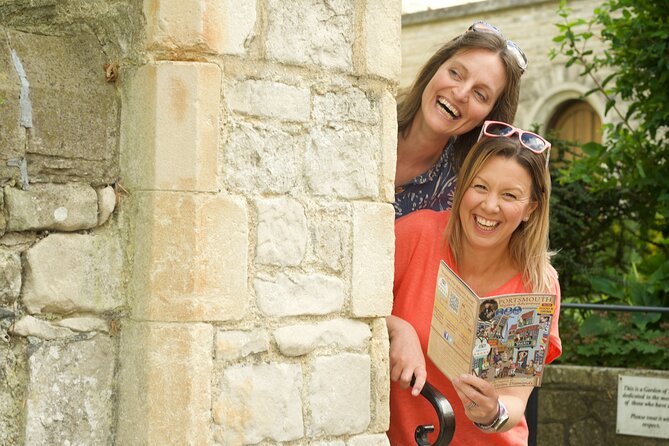
Stratford-upon-Avon can feel like a town of famous addresses. Shakespeare was born here, worked here, worshipped here, and is buried here. That is useful for sightseeing, but it can also turn your visit into a checklist.
This activity changes the rhythm. Each stop becomes part of the investigation, and the town itself supplies the setting. You look at signs, buildings, statues, doors, and details in the street because the next answer may depend on something easy to overlook.
The story concerns Shakespeare’s Lucky Quill, a stolen object at the center of a robbery mystery. As you solve the clues, you eliminate suspects and work toward a final reveal. The plot gives the walk enough shape to keep you moving, while the historic information adds context rather than feeling like a separate lecture.
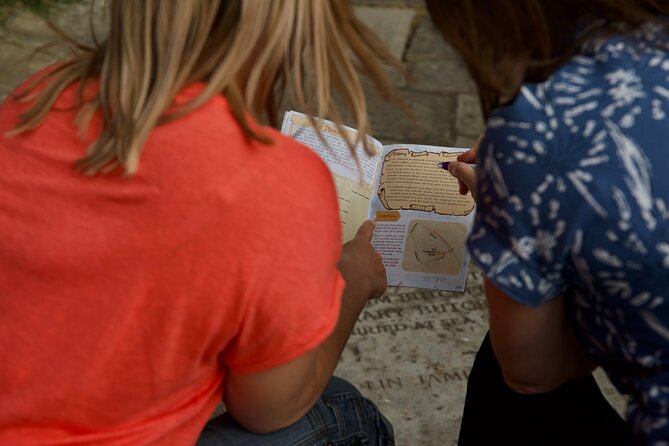
You receive a 40-page activity booklet in English. It contains 18 clues, maps, the unfolding story, and local history notes. The booklet is the whole engine of the experience, so keep it dry, turn only one page at a time, and bring a pen. That last tip matters because the answers and route develop in sequence.
More Treasure Hunts in the UK
- Fun, Flexible Treasure Hunt Around Manchester with Cryptic Clues & Hidden Gems
★ 5.0 · 253 reviews - Fun, Flexible Treasure Hunt Around York with Cryptic Clues & Hidden Gems
★ 5.0 · 248 reviews - Fun, Flexible Treasure Hunt Around Bath with Cryptic Clues & Hidden Gems
★ 5.0 · 208 reviews
Starting at Lily’s Cafe on Rother Street
The activity begins at Lily’s Cafe, 19 Rother Street, and ends back at the same meeting point. This makes the route easy to manage, particularly if you want to leave luggage, shopping, or a meal until the end of your visit. You receive a mobile ticket and confirmation at booking, then use the Mystery Guide to set off at a suitable time.
There is no guide leading the way. That is both the attraction and the limitation. You can stop for coffee, take photographs, browse shops, or pause at a pub without holding up a group. You also have to keep the plot moving yourself and decide when to use a hint or check the route.
The walk is private to your group. You do not join strangers, which works well for families, couples, and friends who enjoy a little competition. You can compare answers, split into small teams, or solve everything together.
Plan for roughly three hours if you walk steadily. A couple in their late sixties and early seventies completed it in about that time despite arthritic knees, while another group took longer because it built in coffee, lunch, and visits to attractions. The walking distance is modest, but you should still have a moderate level of fitness and be ready to walk and stand through Stratford’s center.
Stop 1: Shakespeare’s Schoolroom and Guildhall
The first stop takes you to Shakespeare’s Schoolroom and Guildhall, one of the strongest settings for a mystery based on his life. It connects the famous playwright with the town where he grew up and received his education.
The value here is not just the building itself. The clue encourages you to study the surroundings and use details from the setting. The schoolroom and guildhall give the investigation an early Tudor feel, and the historical notes in the booklet help you see Stratford as a working town rather than only a Shakespeare shrine.
This is also where you get used to the puzzle style. The clues are cryptic, but they are designed to be solved by observation and careful reading. If you rush the first one, you may spend more time later trying to work out whether you missed an instruction.
Stop 2: The Royal Shakespeare Theatre
The route then reaches the Royal Shakespeare Theatre beside the River Avon. It is one of Stratford’s best-known cultural landmarks, and it gives the mystery a natural connection to Shakespeare’s continuing presence in the town.
The theatre stop is especially useful if you already have tickets for an evening performance. One group used the mystery walk as a way to fill the morning before seeing a show, finishing in time without making the day feel over-planned. If you have a performance booked, leave a buffer rather than assuming every clue will be solved instantly.
Do not expect entrance to the theatre to be part of the activity. The experience is a town walk, not a backstage visit or performance ticket. You see the building as part of the route and use the surrounding area to solve the case.
The setting also adds a nice contrast. Shakespeare’s story moves from the old town and historic buildings to a modern theatre institution. The booklet links these parts through the fictional mystery, so you keep looking around instead of simply walking past.
Same streets, a different puzzle:
- York Treasure Hunt Adventure: The Mystery of The Gunpowder Snitch
★ 5.0 · 203 reviews - Fun, Flexible Treasure Hunt Around Oxford with Cryptic Clues & Hidden Gems
★ 5.0 · 202 reviews - Shepton Mallet Prison Escape Room – The Cell
★ 5.0 · 187 reviews - Interactive Jack the Ripper Night Walk: London’s Murder Mystery
★ 5.0 · 171 reviews
Stop 3: Shakespeare’s Birthplace
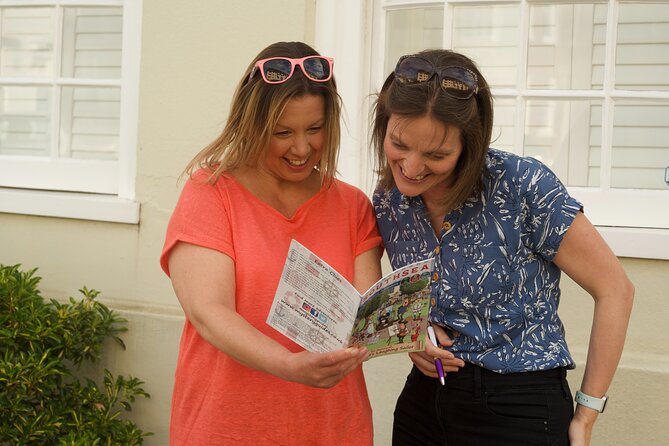
Shakespeare’s Birthplace is the most obvious stop on the route, but the puzzle gives you a reason to look beyond the standard photograph. The building draws large numbers of people, and the area can feel busy, so allow time to orient yourself before searching for the relevant clue.
The activity does not replace a proper visit inside the Birthplace. Admission to attractions is not listed as included, and the main product here is the walking booklet. You can use the route to decide which Shakespeare sites deserve a longer visit later.
This is where the activity works particularly well for first-time visitors. You see one of Stratford’s headline sights, but the clue-led format also points you toward smaller details nearby. Several people who knew the town well still noticed places they had walked past many times.
If you are visiting with children, this stop helps keep the day moving. Instead of asking them to absorb a long explanation about Shakespeare, you give them a practical task: find the detail, solve the clue, and work out what it tells you about the suspect.
Stop 4: Holy Trinity Church

Holy Trinity Church adds a quieter, more reflective section to the route. Shakespeare was baptized here and buried here, making it one of the most important places connected to his life.
The church changes the mood of the investigation. After the busy central streets and theatre area, you get a chance to slow down and pay attention to the setting. The booklet’s historical notes help explain why this location matters, while the clue keeps the visit connected to the larger story.
You should treat this part of the walk with respect. It is an active place of worship, not simply a puzzle station. If you want to go inside, check the conditions on the day and allow for the possibility that access may be limited. The activity can still be completed as a walking route, but the exact experience may depend on what is open.
For many people, this is one of the most atmospheric points on the walk. It gives Shakespeare’s story a real sense of place, rather than leaving him as a name attached to a row of tourist attractions.
Stop 5: Stratford-upon-Avon Canal
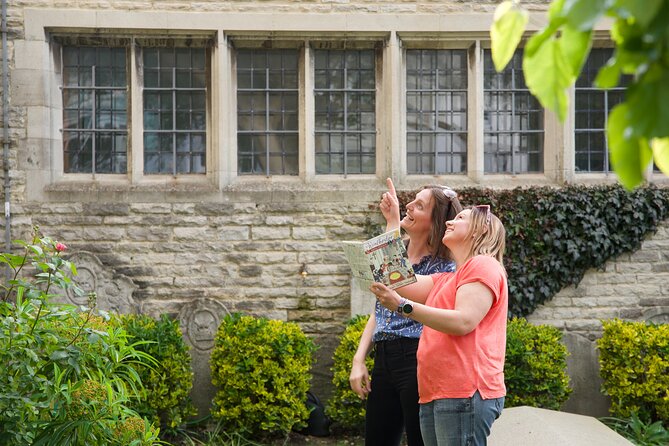
The final listed stop takes you toward Stratford’s canal. This section gives the route some breathing room after the concentrated streets around the main Shakespeare sites.
The canal is a useful change of scene for the puzzle. You are still close to the center, but the surroundings feel less tied to the standard Shakespeare circuit. The clue may ask you to notice features that are easy to ignore when you are focused only on famous buildings.
The walk eventually returns to the starting point at Lily’s Cafe. The final part of the mystery brings the suspects together and reveals the villain. The booklet is designed to create a final wow moment when the case is solved, so resist the temptation to read ahead.
The puzzles: challenging, but not built for experts
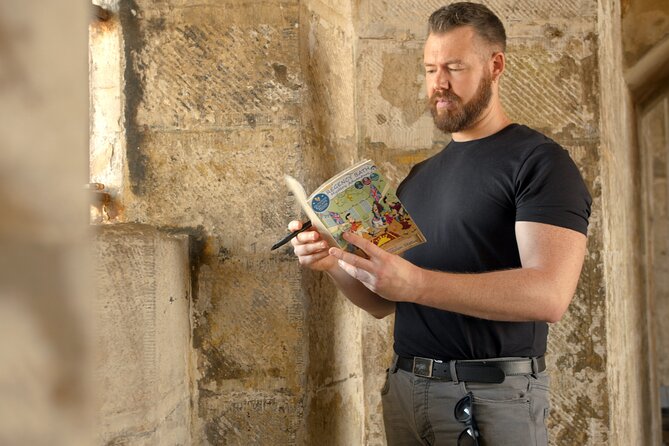
The 18 clues are the heart of the activity. They are not simply directions from one landmark to the next. You may need to inspect a sign, interpret a phrase, compare information, or work out what the wording is really asking you to find.
The clues are pitched at a useful middle level. You should expect to think, but you do not need specialist Shakespeare knowledge. The local history notes provide facts along the way, and the story supplies enough motivation to keep you trying when an answer does not come immediately.
A few practical habits make the walk easier:
- Bring a pen for writing answers in the booklet.
- Read the wording twice before deciding a clue is wrong.
- Turn one page at a time so you do not spoil the next stage.
- Take a photograph of a difficult clue only if the instructions allow it.
- Do not assume a place name points directly to the answer.
- Build in a little extra time if rain, crowds, or a pub stop could slow you down.
One clue was difficult to locate because it referred to Tudor Gate, while the answer was not simply waiting at the place with that name. Another clue involved a poster behind a table in a busy pub, which made the search feel awkward. These are small issues, but they show why a self-guided mystery can occasionally become more frustrating than a guided walk.
The booklet does offer a useful safety net through the online picture used to help with a missing clue. Still, you should be comfortable with a little uncertainty. If you want every step explained immediately, a conventional guided tour may suit you better.
Making the three hours work for you
The route is flexible, so you can shape it around the rest of your Stratford visit. A focused group can complete the walk in about three hours without long stops. If you want lunch, coffee, drinks, shopping, or attraction visits, treat the activity as the framework for a half-day outing.
Alcoholic drinks are not included, though the route passes atmospheric taverns and the story uses some of Stratford’s old drinking places as part of its setting. You pay for anything you order yourself. That is worth remembering if you are comparing this with a guided tour that includes tastings or refreshments.
The flexibility is particularly helpful in uncertain weather. One group continued through intermittent rain, while another completed the route quickly because cold weather threatened. You can make the same choice: keep moving, pause at a cafe, or return to a clue later.
Wear shoes suitable for several kilometres of town walking. The route is not presented as strenuous, but uneven pavements, standing at clue points, and repeated stops can be tiring if your knees or feet are troublesome. Service animals are allowed, and the activity is near public transport.
Who will enjoy Shakespeare’s Lucky Quill?
I would choose this for people who like to explore with a purpose. It is a good fit for:
- Couples looking for an activity beyond museums and formal tours.
- Families with older children who enjoy puzzles and teamwork.
- Friends who want a light competition during a day in Stratford.
- Repeat visitors who think they already know the town.
- People with an evening performance at the Royal Shakespeare Theatre.
- Gift buyers seeking something more memorable than a standard souvenir.
It may not suit you if you want a live guide, a detailed lecture, or guaranteed access inside each attraction. The walk also depends on your willingness to search. You are expected to be an active participant, not a passenger.
The activity works especially well as a gift because it gives you something to do together. Several people used it for birthdays, Christmas, or a work gift and then planned another Mystery Guide in a different city. That repeat appeal comes from the format: the town provides the setting, but your group supplies the teamwork.
Is the experience good value?
No price is provided here, so I cannot judge the exact cost. The value depends on what you want from a Stratford outing.
You receive a 40-page booklet, a plotted 3.25-kilometre route, 18 clues, historical information, maps, and a complete fictional mystery. For a private group, that can be good value compared with paying separately for several attractions or a private guide. You also get the freedom to start at a convenient time and stop for food without paying for a fixed itinerary.
The value is weaker if you mainly want entry to Shakespeare’s Birthplace, the Schoolroom, Holy Trinity Church, or the Royal Shakespeare Theatre. Those admissions are not included. Think of this as a self-guided town activity that passes important sites, not as an all-inclusive Shakespeare tour.
Free cancellation is available if you cancel at least 24 hours before the start time. Changes or cancellations within 24 hours are not refundable, so check the weather and your plans before the cut-off.
Should you book Shakespeare’s Lucky Quill?
Book it if you want Stratford to feel like a puzzle rather than a checklist. The route covers the town’s major Shakespeare connections, adds lesser-noticed details, and gives you enough history to make the walk worthwhile without turning it into a classroom lesson.
I would be most inclined to book it for a private group, a couple, or a family with older children. Bring a pen, leave room for a cafe or pub stop, and allow a little extra time for clues that do not behave exactly as expected.
Skip it if you need a guide at your side or if you would find a missed clue irritating. For everyone else, Shakespeare’s Lucky Quill offers a playful, practical way to see Stratford, with a clear route, a manageable walk, and a satisfying final mystery.
FAQ
How long does Shakespeare’s Lucky Quill take?
The activity takes approximately three hours. The walking distance is about 3.25 kilometres, but stops for coffee, food, drinks, shopping, or attractions can make the outing longer.
Where does the mystery walk start and finish?
It starts at Lily’s Cafe, 19 Rother Street, Stratford-upon-Avon, CV37 6LU. The activity ends back at the same meeting point.
Is a guide included?
No. This is a self-guided private activity using a 40-page Mystery Guide booklet. Only your group participates.
What does the booklet include?
The English-language booklet includes the story, 18 cryptic clues, maps, and local history information.
What should I bring?
Bring a pen so you can work through the clues in the booklet. Comfortable walking shoes are also sensible for the approximately 3.25-kilometre route.
Can I cancel for a refund?
Yes. You can cancel at least 24 hours before the experience start time for a full refund. Cancellations or changes made less than 24 hours beforehand are not refunded.
New puzzles around the UK
- Inverness Quest: Self Guided City Walk & Immersive Treasure Hunt★ 4.0 · 5 reviews
- Douglas, Isle of Man: Self Guided Walk & Immersive Treasure Hunt★ 3.5 · 2 reviews
- Adventurous Scavenger Hunt in Hastings by Operation City Quest★ 3.0 · 3 reviews
- The Ghost of Mary Queen of Scots Escape Room★ 5.0 · 24 reviews
- Magicians Heist Private Escape Room in Glasgow★ 5.0 · 23 reviews
- Fun and Flexible Treasure Hunt Around Glasgow with Cryptic Clues★ 5.0 · 9 reviews
- A Walk through Tudor Ipswich Tour and Exploration Game★ 4.5 · 3 reviews
- Escape Old Edinburgh with a Thrilling Outdoor Puzzle Trail★ 5.0 · 30 reviews
Treasure Hunts, head to head.


Fun, Flexible Treasure Hunt Around Manchester with Cryptic Clues & Hidden Gems
Read our review →York Treasure Hunt Adventure: The Mystery of The Gunpowder Snitch
Read our review →
Black Diamond Treasure Hunt Excursion with Backcountry Dining
Read our review →
Amsterdam Treasure Hunt: The Mystery of a Secret Sender
Read our review →
Private city discovery tour – A Historical Treasure Hunt
Read our review →
Mostra Leonardo Da Vinci: Rome Treasure Hunt Game
Read our review →Other lists this game appears in