
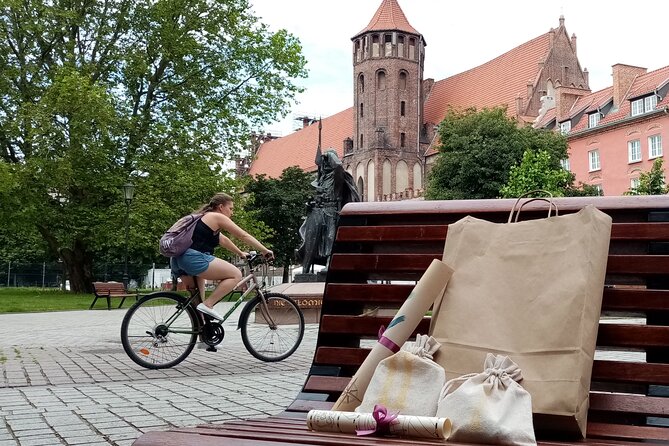
Review · GDANSK
Scavenger Hunt in Gdańsk, Poland
Gdańsk becomes your game board in this private scavenger hunt. You solve puzzles tied to the city and its monuments, search for hidden envelopes, and pick up stories and legends along the way. It is sightseeing with a task in front of you, rather than a guide talking while you trail behind.
I like the way the game makes you look closely at Gdańsk, and I like the mix of city facts, humor, logic, and simple math. The private format also lets your own group set the mood. The main concern is timing: the activity is advertised at about one hour, while one team reported having 100 minutes and still finding the tasks too numerous and difficult.
Key points to know before booking
- A city walk with a puzzle structure: You explore Gdańsk while solving clues linked to monuments and local stories.
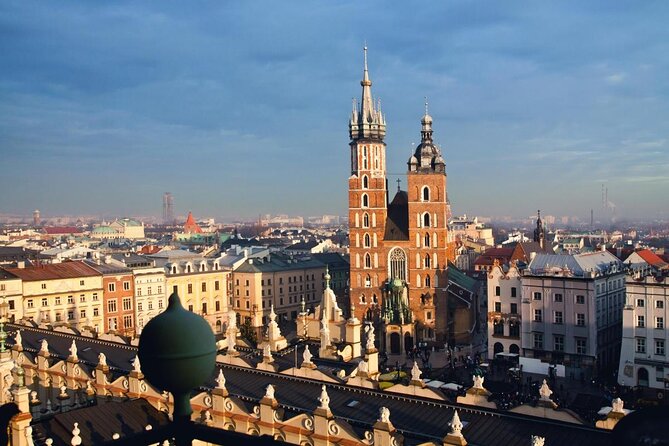
- St. Mary’s Church is part of the route: The itinerary specifically includes this major landmark.
- Hidden envelopes add a physical search: You are not only reading clues on a screen. You also look for items around the city.
- Logic and math matter: This is a better fit for people who enjoy working out answers than for anyone wanting a purely relaxed walk.
- English is offered, but check the materials: One group received code sheets in Polish, so confirm the language at the start.
- Private and flexible in feel: Only your group participates, with a return to the original meeting point.
How the Gdańsk game works
The activity begins at the playground with swings on Podwale Przedmiejskie 26. That location matters because you should arrive ready to start rather than assume the hunt begins at a famous church or central square. The advertised duration is approximately one hour, so this is a compact activity that can fit into a morning or afternoon of sightseeing.
You receive clues and work through tasks connected to Gdańsk. The game includes mobile equipment, and one past group used iPads. You should expect to read instructions, interpret clues, solve problems, and move around the city as a team. The exact sequence of tasks is not provided, which helps preserve the surprise.
The format suits a small private party particularly well. You are not competing with a busload of strangers, and only your group takes part. A group of six was split into two teams, creating a friendly contest within the party. If you are traveling with friends, family, or colleagues, that team element can add energy without making the activity feel like a formal group tour.
At the same time, the game asks for attention. You are not simply following a guide from monument to monument. Your group must discuss answers, manage clues, and keep track of time. That makes the hour feel active, but it can also create pressure if one person in the group wants an easy walk.
More Scavenger Hunts in Poland:
- Hevelius Treasure | Scavenger Hunt
★ 5.0 · 76 reviews - Gdansk Scavenger Hunt and Highlights Self Guided Audio Tour
★ 5.0 · 6 reviews - Hamburg: Scavenger Hunt Self-Guided Tour for Children
★ 4.5 · 319 reviews
Following clues from Podwale Przedmiejskie
The meeting point is listed as Plac zabaw z huśtawkami, at Podwale Przedmiejskie 26. Since this is a specific playground rather than a well-known landmark name, give yourself time to identify the correct place. Your confirmation should provide the details, and booking confirmation is sent within 48 hours, subject to availability.
The starting point is also the ending point. That is useful if you have bags, need to return to public transport, or have another plan afterward. You are not left at a different part of Gdańsk to find your own way back.
The game likely begins with an explanation of the rules and the first set of clues, although the exact briefing is not specified. Pay close attention to the instructions you receive. One group reported confusion about where to return when time ran out, even though the stated description indicated a return to the starting point. A quick clarification at the beginning can prevent an awkward finish.
The practical lesson is simple: ask how long you have, where the final return point is, and which language each clue sheet uses before setting off.
St. Mary’s Church and the monument clues
St. Mary’s Church is the stated stop on the itinerary. Even without a long guided visit, placing a puzzle around such a major Gdańsk landmark gives the game a strong sightseeing anchor. You are solving a task, but you also have a reason to study the building and its setting.
The activity description says the puzzles relate to the city and its monuments. That means you should expect to use what you see around you, not only calculate answers from a page. Details in the streets, public spaces, and historic structures may become part of the challenge. Keep your eyes up between clues.
The church also gives the route a sense of place. You are not solving generic escape-room riddles in an indoor room. The answers connect to Gdańsk, and the activity adds stories and legends as you move through the city. This is the strongest feature for anyone who wants a little context with their entertainment.
Still, do not book this expecting a full historical tour of St. Mary’s Church. The supplied details promise stories and legends, not an extended architectural explanation or a formal church visit. The monument works as part of the game, so the puzzles remain the main event.
Hidden envelopes and the pleasure of looking twice
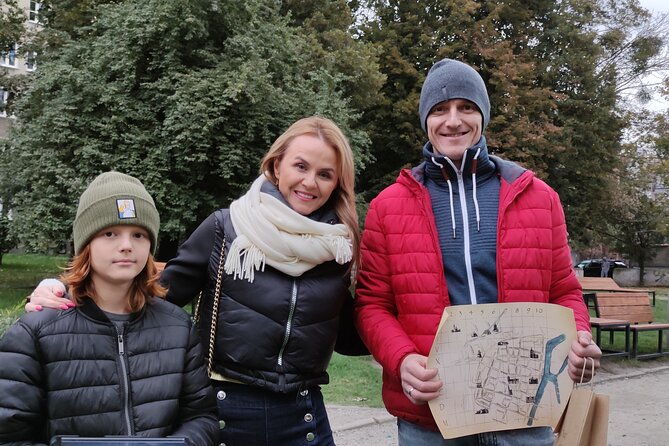
The hunt includes hidden envelopes placed around the city. This small physical detail changes the pace. Instead of moving from one clue sheet to another, your group has to search the surroundings and decide where the next item might be.
That search can make familiar sightseeing feel fresh. You may pass a monument once without noticing much, then return to it with a specific question in mind. I like this kind of activity because it gives you a reason to examine corners, signs, and nearby public spaces that you might otherwise walk past.
The envelopes also provide a clear sense of progress. A completed puzzle is one thing, but finding the next physical clue gives the group a little win. The activity is built around these moments, along with twists and a final treasure.
You should keep expectations sensible. The information does not state exactly how many envelopes you will find or where they are placed. Do not assume every clue is easy to spot. The point is to search, compare ideas, and work together rather than rush through a marked route.
More escape games around Poland:
- Undercover City Games: Gdansk
★ 5.0 · 198 reviews - Undercover City Games: Poznan
★ 5.0 · 88 reviews - Krakow Escape Rooms – fantasy, adventure, action, crime and more!
★ 5.0 · 72 reviews - Undercover City Games: Warsaw
★ 5.0 · 68 reviews
Logic, math, and the right group dynamic
A good logical and mathematical head will help. That is not a minor detail. Some sightseeing games can be solved by spotting a monument or reading a short fact. This one includes tasks that require reasoning, so the group’s mix of personalities matters.
If one person enjoys numbers, another notices visual details, and a third is good at reading instructions, you have the ingredients for a strong team. You do not need everyone to be good at every puzzle. In fact, splitting into two teams can make the game more entertaining for a group of six.
The downside is that a difficult task can slow everyone down. One team reported too much text in the assignments and too little time to complete them. That is especially important if English is not your first language, if you are traveling with children, or if your group prefers casual sightseeing.
Ask at the start whether hints are available. The provided details do not promise a hint system, so do not assume one. If the activity is running on a fixed clock, agree within your group not to spend too long on a single problem. A hard clue should be fun, not a twenty-minute argument beside a monument.
The technology can help, but check the screens
The game uses mobile equipment, and one group described working with iPads. Digital clues can keep the activity organized and allow the creators to mix text, codes, and instructions in one place. You may find the format easier than carrying a thick booklet around the city.
But screen quality matters outdoors. One team found the iPad screens too dark, which made reading the tasks harder. Bright daylight can expose that problem quickly. If you have sunglasses, consider removing them when reading, and ask the host to adjust the screen brightness before you begin.
Language is another point to check. The activity is offered in English, but one group received code sheets in Polish. That may have been an isolated mix-up, but it is worth confirming that every code sheet and instruction page is in English before leaving the meeting point.
This is not a reason to reject the activity. It is a reason to be clear at the start. Check the device, the language, the time limit, and the final meeting point while the coordinator is still with you.
Stories, humor, and meeting the creators
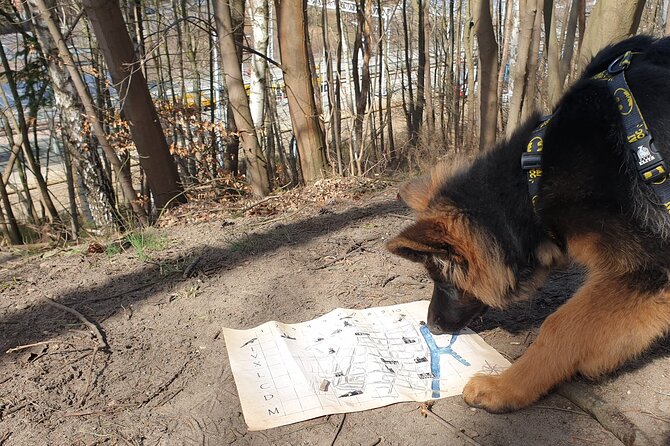
The game is not only about solving codes. It includes stories and legends connected with the city, along with humor in the way the tasks are presented. That helps keep the activity from feeling like a worksheet carried through the streets.
The people who created the game may also be involved in the experience. One group had a chance to meet the creators and found them warm, enthusiastic, and strongly connected to Gdańsk. The information does not guarantee that every booking includes a meeting with the creators, so treat that as a possible part of the interaction rather than a promised feature.
The tone matters. A puzzle can be clever and still feel cold if the instructions are dry. Here, the humor and local stories appear designed to make the route feel personal. You learn something about Gdańsk while working toward the next answer, rather than stopping for a separate lecture.
For me, that balance is the activity’s main appeal. You get a reason to notice the city, but you also get a game with a little mischief and a final reward.
What the one-hour timing means
At approximately one hour, this is shorter than a standard walking tour. That makes it easy to add to a day of sightseeing. You can use it as an active introduction to Gdańsk, a break between museums, or an evening activity before dinner.
The timing also means you should not expect a slow, detailed tour of every location. The route has to keep moving. If you stop often for photos, read every clue aloud, or debate each answer at length, you may need more time than the advertised duration.
There is some uncertainty in the practical timing. One group reported having 100 minutes, yet still felt there was not enough time for all the assignments. That suggests the pace may depend heavily on your group, the difficulty of the clues, and how quickly you read the material.
If your schedule is tight, leave a buffer after the activity. The stated end point is the original meeting place, but the actual finish may depend on how your group handles the tasks. Do not place an important train departure immediately afterward.
Is $23.66 per person good value?
At $23.66 per person, the price sits above a simple self-guided city walk but includes more than a route map. You are paying for a private activity, puzzle materials, mobile equipment, local content, and a hosted game rather than only access to landmarks.
The value is strongest when you enjoy participation. A conventional tour gives you information with little effort. This experience asks you to solve, search, and make decisions, so the entertainment comes from what your group does with the material.
For a group of six, the private format can make the price easier to justify. You share the experience only with your own party, and splitting into teams can create a friendly contest. For one or two people who simply want to see the main sights, the cost may feel less compelling than a standard walking route.
The final treasure and hidden envelopes add to the sense that you are buying an activity, not just a lecture outdoors. Still, the price does not guarantee that every puzzle will suit your taste. If difficult logic tasks frustrate you, the value drops quickly.
Who will enjoy this Gdańsk activity?
This scavenger hunt is a good match for:
- Friends who like friendly competition
- Families with older children who enjoy puzzles
- Small private groups seeking a shared activity
- Visitors who want sightseeing with movement and humor
- People who enjoy logic, codes, and problem-solving
- Anyone who has already seen the main sights and wants a different way to walk around them
It may not suit you if you want a quiet, fully guided history walk. It may also frustrate you if you dislike reading instructions, working under a time limit, or solving math-based puzzles.
Most people can participate, and service animals are allowed. The meeting point is near public transportation. The activity is offered in English, but confirm the language of all materials when you arrive.
Cancellation and booking details
You receive confirmation within 48 hours, subject to availability. Free cancellation is available if you cancel at least 24 hours before the local start time. Cancellations made less than 24 hours in advance are not refunded, and late changes are not accepted.
Since the activity is private, your booking is for your own group rather than a mixed party. That is useful if your group has a particular pace or wants to split into teams.
Should you book the Gdańsk scavenger hunt?
Book it if you want to see Gdańsk through clues, stories, hidden envelopes, and a little friendly pressure. The mix of monuments, humor, local legends, and problem-solving gives the city walk a clear purpose, and the private format works especially well for a group of friends or a family.
Before committing, decide how your group handles difficult puzzles. Ask to confirm the English materials, the time limit, the screen brightness, and the exact finish procedure. If those details are clear, $23.66 buys a memorable hour of active sightseeing rather than a passive look at the city.
Skip it if you want a relaxed guide-led walk with plenty of time for photos and explanations. Choose it if your ideal Gdańsk outing includes a clever clue, a debate over an answer, and the satisfaction of finding the next envelope.
FAQ
Where does the scavenger hunt start?
It starts at Plac zabaw z huśtawkami, Podwale Przedmiejskie 26, Gdańsk, Poland.
Where does the activity end?
The activity ends back at the meeting point.
How long does the scavenger hunt last?
The listed duration is approximately one hour. One group reported having 100 minutes, so the actual timing may vary.
Is the activity offered in English?
Yes. English is listed as an available language. Check that all code sheets and instructions are in English before starting.
Is this a private activity?
Yes. Only your group participates.
Can I cancel for a full refund?
Yes, if you cancel at least 24 hours before the experience’s local start time. Cancellations or changes made less than 24 hours in advance are not accepted for a refund.
New puzzles around Poland
- Private 2-Hour Tour with City Game in Gdańsk★ 5.0 · 15 reviews
- Gdansk Scavenger Hunt and Highlights Self Guided Audio Tour★ 5.0 · 6 reviews
- Lions & Unicorns of Gdańsk: Self-Guided Fantasy Puzzle Walk★ 3.5 · 3 reviews
- Sopot: Escape Room Adventure★ 4.4 · 3 reviews
- Krakow: 1-Hour Escape Room Challenge for Teams★ 5.0 · 2 reviews
- Gdańsk: 1-Hour Escape Room Challenge for Teams★ 4.0 · 4 reviews
- Gdańsk: Prison Break – 1-Hour Escape Room for Bigger Groups★ 5.0 · 2 reviews
- Krakow City SightSeeing hop on hop off bus and city game★ 3.4 · 3 reviews
Scavenger Hunts, head to head.
Amazing Cozumel Race: Small-Group Tour and Scavenger Hunt
Read our review →
An Epic Scavenger Hunt: New York City Central Park Adventure
Read our review →
e-Scavenger hunt Maastricht: Explore the city at your own pace
Read our review →
Angels & Demons Rome Scavenger Hunt: The Illuminati Escape Game
Read our review →Other lists this game appears in