
Review · ROME
Rome: Scavenger Hunt Self-Guided Tour
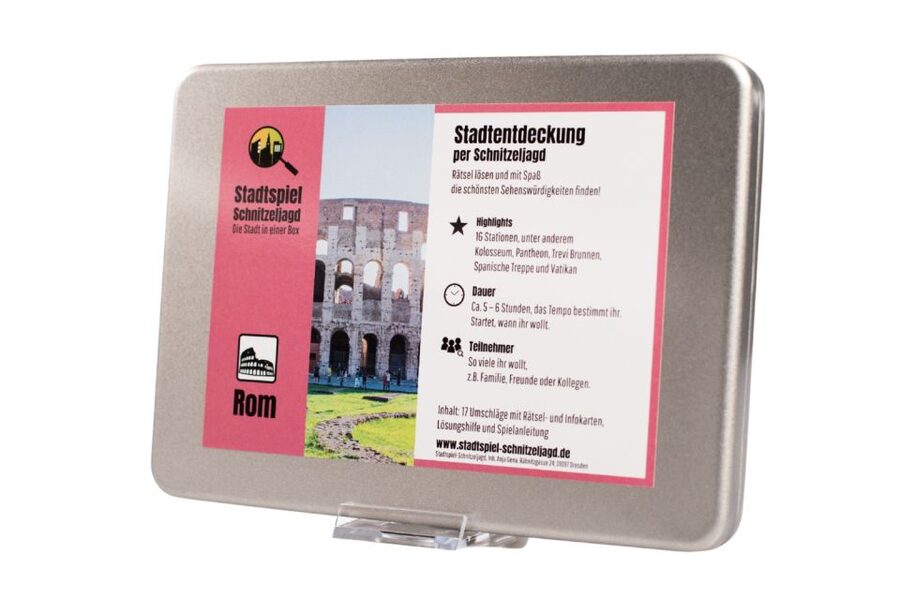
Rome’s big sights become the clues in this self-guided city game, which starts near the Colosseum and winds through the Forum, Pantheon, Trevi Fountain, Spanish Steps, and Vatican City. You open each envelope as you reach the next stop, solve a riddle, and pick up a little historical context along the way. I like the freedom to stop for an espresso or split the route over several days. I also like that one box covers a group of up to 10 people, making the $53 price easier to justify for a family or group of friends.
The catch is that this is a paper-based activity, not a guided tour with local commentary. Some children will love racing to open the next envelope, while others may lose interest during the long 10-kilometer walk. You also need to arrange delivery to an address in Germany before your trip, since pickup in Rome is not available.
Key points to know before you book
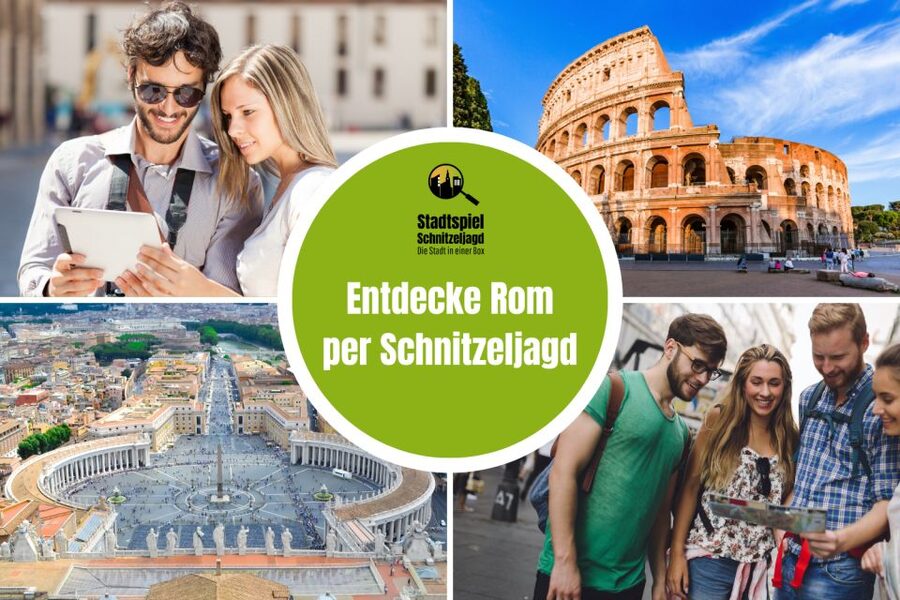
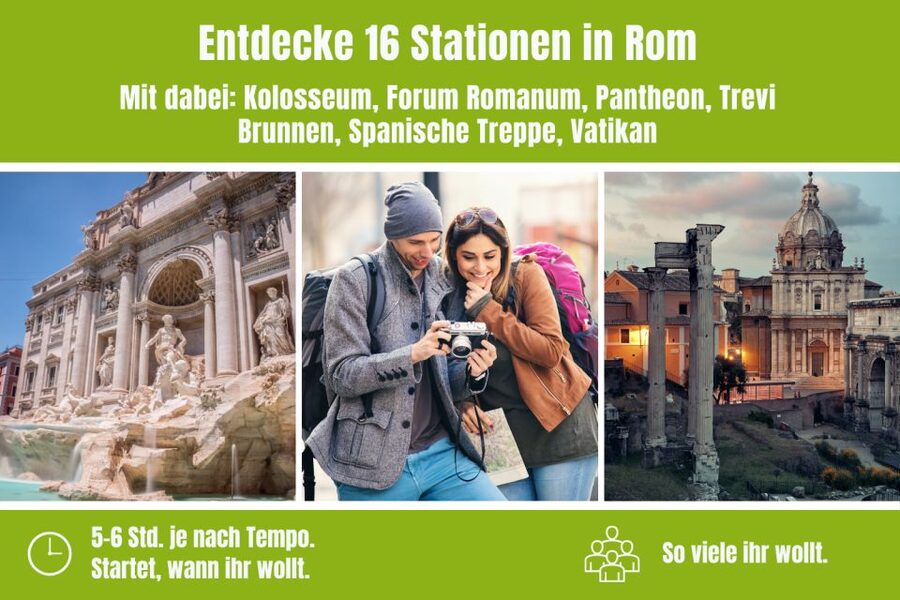
- The route covers Rome’s headline sights: Start at the Colosseum and continue to the Roman Forum, Pantheon, Trevi Fountain, Spanish Steps, Piazza Venezia, Piazza Colonna, Piazza Navona, and St. Peter’s Square.
- The box contains 16 envelopes: Each includes a riddle, directions, facts, and information for the next stage, with a separate envelope holding all solutions.
- You set the pace: The planned game takes about 5.5 hours, but you can pause for food, sightseeing, photographs, or several days of exploring.
- Expect about 10 kilometers on foot: Comfortable shoes matter, especially if you add entrance visits or take detours.
- There is no guide: You receive the materials by mail and begin at the Colosseum whenever you choose.
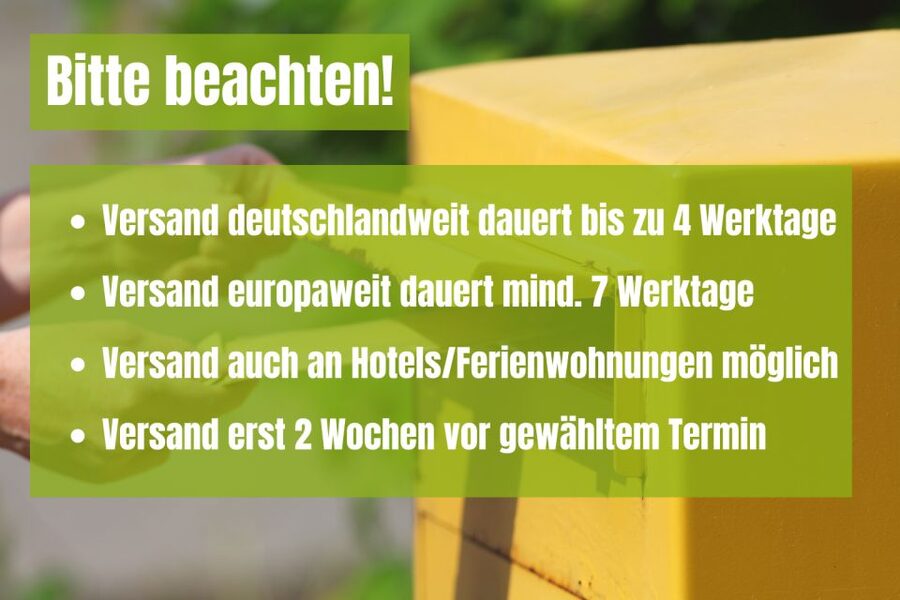
- Delivery is limited: The box ships only within Germany and can take up to four working days to arrive.
How the Rome scavenger hunt works
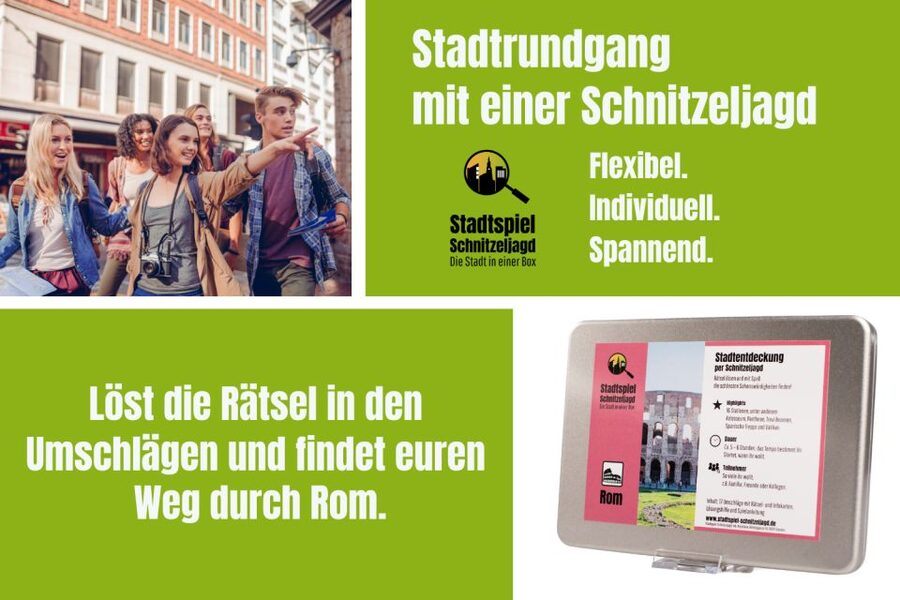
This is a walking route with a game layered over the top. Your box contains 16 sealed envelopes, and each one points you toward another sight. You solve a riddle, follow the directions, read the supplied facts, and open the next envelope when you reach the right place.
That format gives you a clear purpose in a city where it is easy to wander without a plan. Instead of simply checking off monuments, you look closely at the streets and buildings to answer the next question. For families, the envelopes provide a useful reason to keep moving. One parent described the children arguing over who got to open and read the next card, which is probably the strongest sign that the format can work well with the right age group.
You should treat the game as a sightseeing framework, not a race. Rome rewards pauses. Stop for coffee, sit in a piazza, take photographs, or enter a sight if you have tickets. The emergency envelope includes the solutions, so you do not need to abandon the route if a riddle leaves you stuck.
The meeting point is simply the starting place. No guide waits there, and there is no fixed departure time. Bring the box with you and begin on any date after it arrives.
More Scavenger Hunts in Italy
- Angels & Demons Rome Scavenger Hunt: The Illuminati Escape Game
★ 4.5 · 103 reviews - Rome: 2.5-Hour Family Vatican Highlight Scavenger Hunt
★ 4.6 · 51 reviews - Private Family Scavenger Hunt & Art Lab Tour – Rome Landmarks
★ 5.0 · 30 reviews
Starting beside the Colosseum
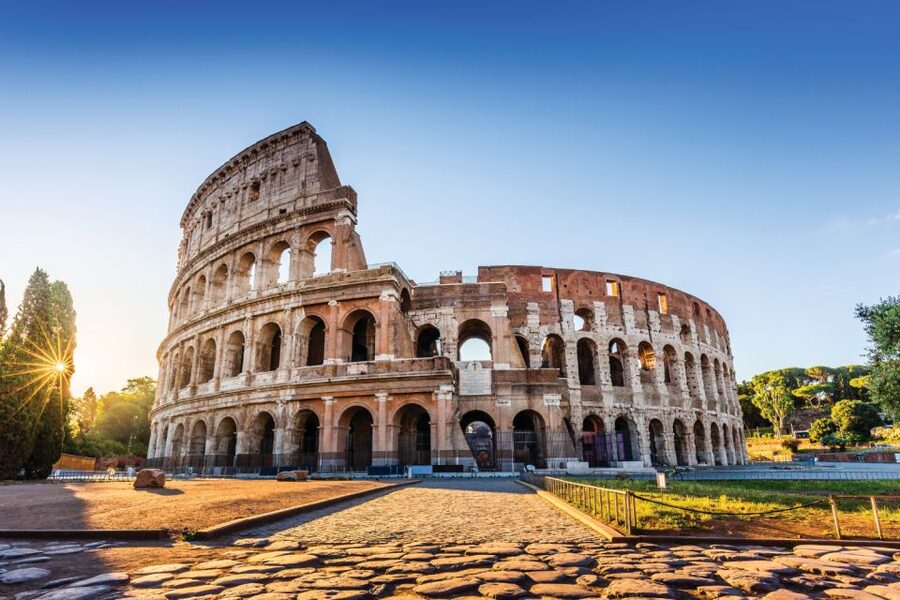
The Colosseum makes a dramatic opening point. Even if you have seen countless photographs, the building is enormous when you reach it, and its curved outer walls immediately give the game a strong sense of place.
The activity does not include admission, so you will need a separate ticket if you want to go inside. That matters for your timing. A visit to the Colosseum and nearby Forum can add substantial time to the planned 5.5-hour walk, so you may prefer to do the game first and return for an entry visit, or divide the route across two days.
From here, the route introduces you to the Forum Romanum. The Forum is one of the places where the supplied facts can add real value, since the broken columns and open archaeological ground do not always explain themselves. You get historical information as part of the clue sequence rather than relying only on a guidebook.
The opening section also sets the physical tone. You will be walking on busy city streets and covering a lot of ground, so sensible shoes are more useful than stylish ones.
Piazza Venezia and Rome’s grand center
The route continues toward Piazza Venezia, one of the city’s major traffic and monument zones. It connects several important parts of central Rome and gives you a sense of how the ancient, Renaissance, and modern city overlap.
Piazza Colonna follows as another central stop. The column at its center is an important landmark, and the square sits close to government buildings and busy streets. Here, the game helps you notice details you might otherwise pass while heading toward the next famous fountain.
This part of Rome can feel crowded and noisy, particularly around the major roads. That is not a flaw in the game so much as a reminder to pay attention while crossing streets and moving between stops. Since there is no guide managing the group, you are responsible for keeping everyone together.
The route is most useful for a group that enjoys small discoveries along the way. If you want a specialist explanation of Roman architecture or political history, this box will not replace a live expert. If you want a light structure that gets you from one important square to the next, it does the job.
The Pantheon and Hadrian’s Temple
The Pantheon is one of Rome’s essential stops. Its exterior is easy to recognize, but the building becomes more rewarding when you pause to consider its scale, age, and unusual design. The scavenger hunt directs you here and supplies facts that give the stop more meaning than a quick photograph.
Nearby, you also pass the Hadrianeum, the remains associated with the Temple of Hadrian. Its surviving columns are integrated into the modern city, which is typical of Rome. Ancient structures do not sit apart from daily life here. They appear beside cafés, offices, shops, and traffic.
You will want to check the current entry arrangements for any sight you plan to enter, since entrance fees are not part of the activity. The game itself is about reaching and understanding the places from the outside, though you can pause it while visiting an attraction.
This is one of the route’s better stretches for adults who like context. Children may need encouragement if they are more interested in the next clue than in columns and temple remains. The game helps, but it cannot turn every monument into a playground.
More Self-Guided Games in Italy
- Florence Self-Guided Treasure Hunt & Medici Mystery Walking Tour
★ 5.0 · 69 reviews - Siena Medieval Power Quest: Self-Guided Family Feud Game
★ 4.5 · 38 reviews - Bologna Secrets Quest: Self-Guided Hidden Gems Adventure
★ 4.0 · 24 reviews - Venice Scavenger Hunt and Highlights Self Guided Audio Tour
★ 4.5 · 20 reviews
Trevi Fountain and the coin tradition

The Trevi Fountain is a natural high point of the route. Its theatrical stone figures and flowing water offer one of the most recognizable scenes in Rome, and the activity gives you time to take it in rather than treating it as a quick stop between transport connections.
You can follow the local coin-throwing tradition here. The fountain is usually a place for photographs, so allow extra time if your group wants a good look. The route does not include meals or drinks, but this central area has plenty of cafés and places to stop.
The practical issue is crowding. Trevi Fountain is not a quiet monument, and the space around it can be tight. Keep the envelopes secure, stay alert with children, and do not expect to stand directly at the water for a long uninterrupted period.
The hunt works well here because the clue gives you something specific to do. Rather than arriving, taking one picture, and moving on, you look at the decoration and connect the place to the next stage.
Spanish Steps and the pleasure of a flexible pause
The Spanish Steps bring the route into another of Rome’s most famous public spaces. The steps are a popular meeting point, and the surrounding streets are full of shops, cafés, and places to pause.
This is a sensible place to take a break. By this stage, you may have already walked several kilometers, and the full route reaches about 10 kilometers. The box can wait while you rest or eat. That freedom is one of the strongest reasons to choose this activity instead of a fixed walking tour.
The Spanish Steps are also a reminder that this is not a private experience. You share the route with the normal flow of Rome, and the busiest sights may not feel calm. You gain independence, but you also lose the crowd control and local adjustment that a guide can provide.
For families, a pause here can prevent the game from turning into a forced march. For adults, it is an easy point to stop for coffee and decide whether to continue toward Vatican City the same day.
Piazza Navona and the movie connection
The route includes Piazza Navona, identified in the activity information as a location associated with the film Iluminati, starring Tom Hanks. The square itself is one of the most memorable open spaces in central Rome, with fountains, restaurants, and grand façades surrounding the long piazza.
A film connection gives children and movie fans another hook. You can look at the square as both a real Roman public space and a place familiar from the screen. The supplied facts are short, so you should not expect a film-location lecture, but the connection adds a bit of fun to the stop.
Piazza Navona is also a good place to make a judgment call about your schedule. If you are tired, you can stop the game and continue another day. One family divided the experience over three days because they added visits and detours. That is a sensible way to use the box if you want to see Rome properly rather than rush from clue to clue.
Crossing into Vatican City
The route’s claim to cover two states refers to Italy and Vatican City. The final major section leads you to the Vatican and St. Peter’s Square, giving the activity a wider reach than a Rome-only historic center walk.
St. Peter’s Square is a powerful finish. The colonnades and the scale of the space make it feel different from the tighter streets around Trevi Fountain and the Pantheon. You can pause here, take photographs, and open the relevant envelope when you are ready.
The scavenger hunt does not include entry to the Vatican Museums or St. Peter’s Basilica. It also does not include transport tickets, so the route is designed around walking. If you want to add an interior visit, book and budget for it separately, then allow extra time beyond the stated duration.
Ending here gives the route a clear sense of completion, but it also makes the full walk demanding. If your group includes young children, older adults, or anyone who dislikes long walks, splitting the route is the safer plan.
What the $53 group price really buys

The price is $53 per group of up to 10 people. That is good value when a full group uses the box, since you are paying for one set of materials rather than a fee per person. For two people, the cost feels less generous, especially because the product is a mailed paper box and does not include a guide, admissions, transport, food, or drinks.
The value improves if you use the materials over several days. You are not forced to complete the route in one 5.5-hour block, and the envelopes can give structure to a family’s sightseeing without paying for several separate tours.
The main question is what kind of experience you want. You are paying for independence, riddles, directions, and short facts. You are not paying for personal stories, spontaneous route changes, or answers to detailed questions from a local guide.
The box also needs to reach you before departure. Shipping takes up to four working days within Germany, and it is sent at the earliest two weeks before the selected date. You must provide a German shipping address. There is no pickup option in Rome, which makes this unsuitable if you are already abroad or have no German delivery address.
Who will enjoy this most
I would choose this for a family that wants a reason to keep children involved in sightseeing, or for a group of friends that enjoys solving clues together. It also suits independent planners who dislike fixed start times and want to stop for meals or photographs whenever they please.
The strongest family experience will depend on the children. One set of children became eager to open each new card, while another family found the children bored. That difference is important. The activity adds a game, but the route still involves monuments, facts, and a long walk.
You should be comfortable navigating without a guide. The directions are supplied in the envelopes, but you are still responsible for timing, street crossings, keeping the box safe, and deciding when to pause.
Wear comfortable shoes and carry water. Cafés, bistros, and restaurants appear along the way, but food and drinks are your responsibility.
Should you book the Rome scavenger hunt?
Book it if you want a flexible, playful way to connect Rome’s major sights, especially with a group of up to 10 people. The ability to pause or spread the route over several days is genuinely useful, and the envelope system can turn a long sightseeing day into a shared activity.
Skip it if you want a live guide, detailed historical storytelling, or included admission to the Colosseum, Vatican, or other monuments. Also skip it if you cannot arrange delivery within Germany.
For the best experience, plan the route over two or three days if you want to enter sights and enjoy meals along the way. If you can use the box with a full family or friend group, the price makes more sense. If you treat it as a relaxed framework rather than a timed race, it offers a practical way to see a large slice of central Rome on your own terms.
FAQ
How long does the Rome scavenger hunt take?
The planned duration is about 5.5 hours, or roughly 5 to 6 hours. The route covers about 10 kilometers on foot, but you can pause the game and continue later.
Where does the scavenger hunt start?
It starts at the Colosseum. You bring the scavenger hunt box to the starting point and begin at the time and on the date you choose after receiving it.
Is a tour guide included?
No. This is a self-guided activity. The box provides riddles, directions, facts, and solutions, but no guide meets you at the starting point.
What comes in the scavenger hunt box?
The box includes 16 envelopes with riddles, directions, information, and interesting facts. It also includes an emergency envelope containing all the solutions.
Does the price include entrance fees or transportation?
No. Entrance fees, transportation tickets, food, drinks, and travel to and from the activity are not included.
Can I collect the box in Rome?
No. The box cannot be collected in Rome. It is shipped only within Germany, and delivery can take up to four working days.
How many people can use one box?
One booking covers a group of up to 10 people. This makes the price more economical for a larger family or group of friends.
New puzzles around Italy
- Genoa Historic Centre Quest: A Self-Guided Puzzle Adventure★ 4.0 · 3 reviews
- Treasure Hunt in Florence for Families★ 4.5 · 3 reviews
- 2-Hour Private Treasure Hunt in Florence★ 5.0 · 3 reviews
- Florence Haunted Secrets: Echoes of the Dead Exploration Game★ 4.0 · 9 reviews
- Florence Scavenger Hunt and Highlights Self-Guided Tour★ 4.5 · 3 reviews
- Private Family Tour – Uffizi Gallery for Kids★ 5.0 · 27 reviews
- Kids treasure hunt in the Boboli Garden. Private, timed entry!★ 5.0 · 2 reviews
- Florence Highlights Self guided scavenger hunt and Walking Tour★ 4.5 · 3 reviews
Scavenger Hunts, head to head.
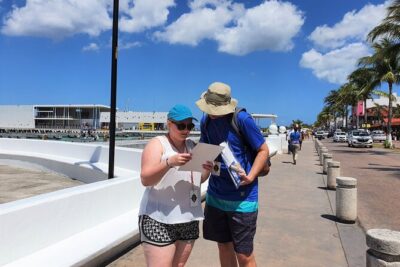
Amazing Cozumel Race: Small-Group Tour and Scavenger Hunt
Read our review →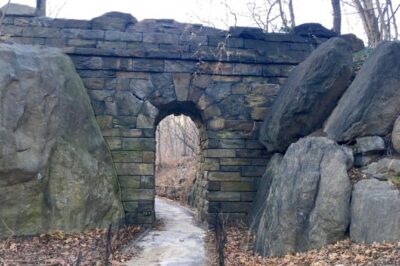
An Epic Scavenger Hunt: New York City Central Park Adventure
Read our review →
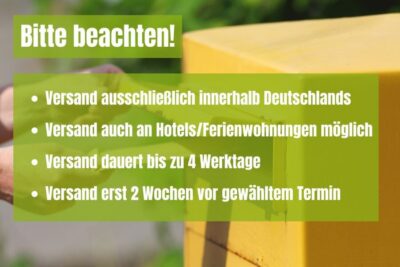
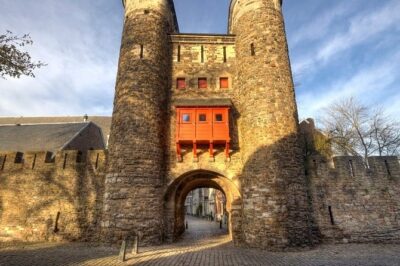
e-Scavenger hunt Maastricht: Explore the city at your own pace
Read our review →
Angels & Demons Rome Scavenger Hunt: The Illuminati Escape Game
Read our review →Other lists this game appears in