
Review · DUBLIN
Private Dublin Treasure Hunt Self Guided Tour
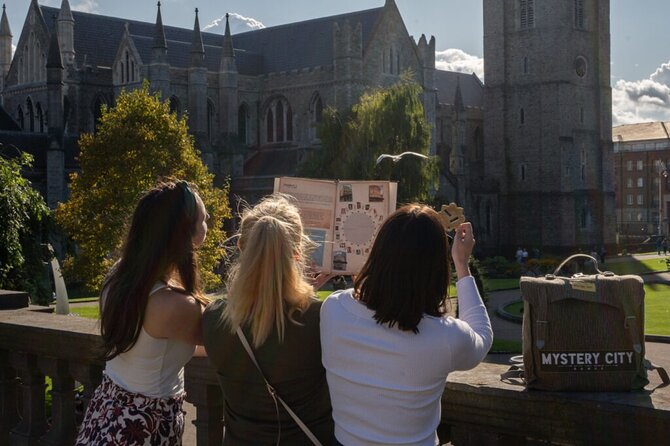
Dublin becomes your game board on this self-guided treasure hunt, where an old map leads you through the city center and each clue sends you looking for the next answer. Instead of following a guide with an umbrella, you work as a team, inspect streets and buildings, and piece together a mystery at your own pace.
I like two things right away: the private format, which lets your group set its own rhythm, and the way the puzzles make you look closely at ordinary Dublin details. Traditional pubs, police buildings, church exteriors, and city streets become part of the challenge. The catch is that the equipment and phone system may feel fiddly, especially in bad weather or when you need somewhere to sit and solve a clue.
Key points to know before you book
- Starts and finishes at The Clockwork Door: Pick up the game at 51 Wellington Quay in Temple Bar, then return there at the end.
- A two-hour city-center puzzle walk: Allow extra time if your group wants food, drinks, or longer stops along the way.
- You follow an ancient treasure map: The route is designed around clues rather than a standard sightseeing commentary.
- Pub exteriors become puzzle material: You will examine traditional Dublin pubs as part of the game, usually from outside.
- The route includes Kevin Street: You pass the Garda Police Station and may also encounter major city sights along the way.
- Private and self-guided: Only your group takes part, with instructions and support delivered through the supplied materials and mobile system.
Starting at The Clockwork Door in Temple Bar
Your meeting point is The Clockwork Door at 51 Wellington Quay, in the Temple Bar area. This is a useful start because you are already in central Dublin, close to the River Liffey and within easy reach of the city’s main streets.
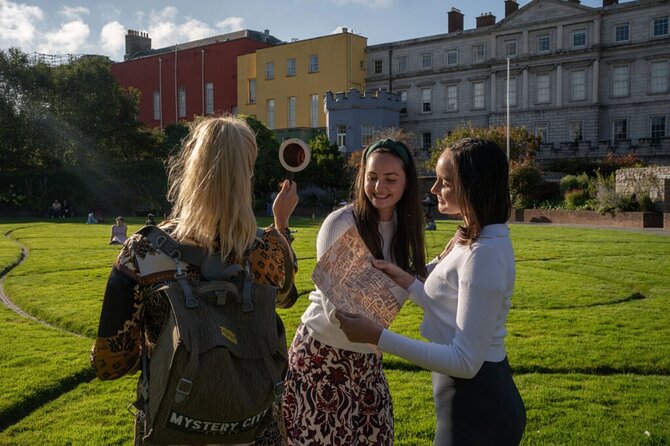
The game begins with a backpack containing the materials you need. You then set off with an ancient treasure map and a series of puzzles. There is no guide leading you from clue to clue, so the quality of the experience depends heavily on how well your group shares tasks.
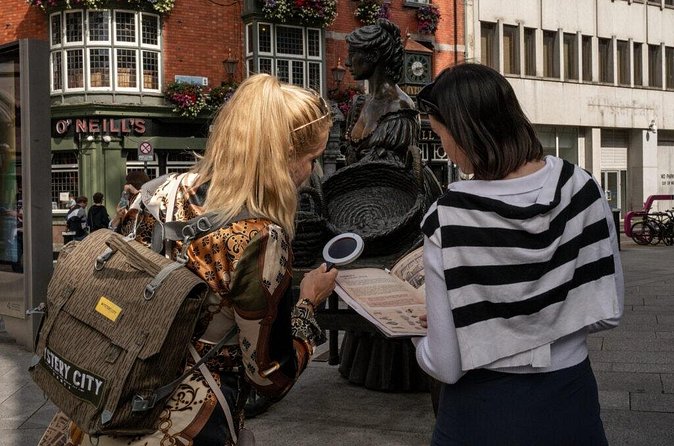
One person may read the map. Another may handle the phone. Someone else may spot a sign, pub name, architectural detail, or other answer hidden in plain sight. That division of labor is part of the fun, but it also means this is not a passive tour. You need to be willing to stop, think, test an answer, and sometimes try again.
The private setup works especially well for families, couples, and work groups that want to compete without being mixed with strangers. It has also been used by large company groups, with teams taking different routes or racing to solve the mystery. For a small group, the puzzles may feel social and cooperative. For a larger group, you will need to divide into manageable teams if everyone is to take part.
More Treasure Hunts in the world:
- Hamburg: Treasure Hunt Game through HafenCity
★ 4.7 · 364 reviews - St. Augustine: Treasure Hunt Cruise with Onboard Show
★ 4.4 · 315 reviews - Málaga: Private Sightseeing Treasure Hunt
★ 4.8 · 297 reviews
Following the map through Dublin’s center
The route is built around exploration rather than a list of formal museum visits. You follow directions across central Dublin, searching for clues in the city around you. That gives the walk an appealing sense of purpose. You are not simply being told that a building is old or important. You are looking at it because the answer may be sitting somewhere nearby.
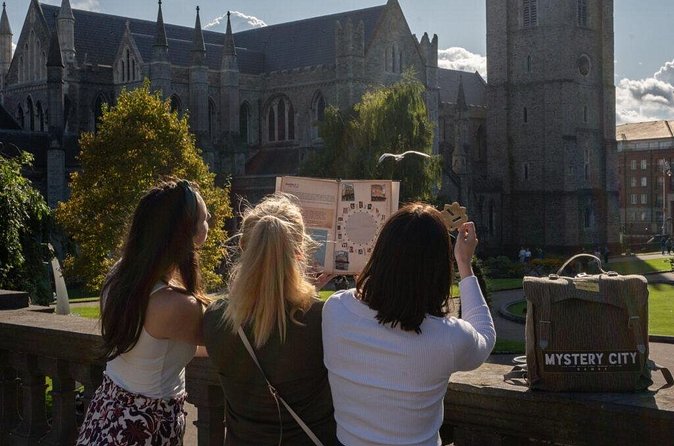
The route has taken groups toward significant places such as Trinity College and St Patrick’s Cathedral, while also passing through less polished parts of the city. That mix matters. Dublin is not presented as a postcard-only city, and the walk may lead you through streets that feel ordinary, worn, or less attractive than the famous center.
I see that as both a strength and a weakness. If you want a puzzle that makes you notice corners of Dublin you might otherwise pass, this route can work well. If you expect every stop to be a major attraction with a clear story, you may find parts of the walk disappointing.
The clues are meant to make monuments and streets useful. A building is not merely scenery. Its name, shape, sign, or position may help solve the next stage. This approach gives you a reason to pause and look carefully, though it does not provide much traditional historical explanation.
Kevin Street and the Garda Police Station
One named point on the route is the Garda Police Station on Kevin Street. Passing a police station may not sound like a classic sightseeing stop, but it fits the game’s style. You are asked to use the city as evidence, and an official building can provide a distinctive name, sign, or visual detail for a clue.
Kevin Street also helps show how this experience differs from a standard Dublin walking tour. You are not being guided from one famous monument to the next. The trail has a broader reach, and some stops exist because they help the puzzle rather than because they are headline attractions.
That can be rewarding if your group enjoys problem solving. You may find yourself studying details that would normally fade into the background. It can be less satisfying if you are hoping for a carefully narrated tour of Georgian architecture, Irish history, or Dublin’s literary past.
Traditional pubs as part of the puzzle
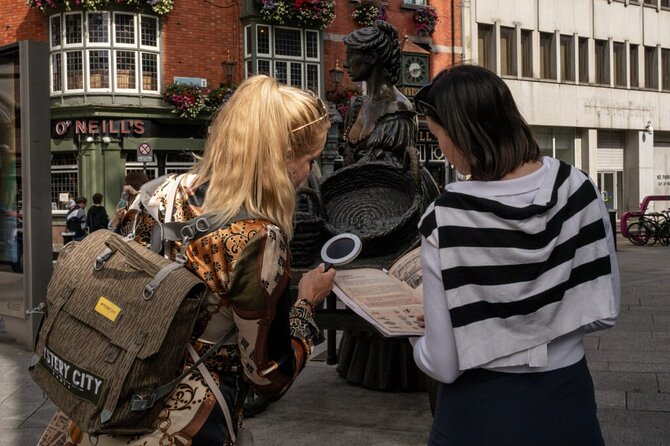
Traditional pubs are another recurring feature. You will explore the outside of several pubs while working through the clues. This is a clever way to connect the game with Dublin’s everyday character without turning the activity into a pub crawl.
The pub stops can also break up the walking. Your group might use a nearby café or pub for a short rest, food, or a drink, though the game itself does not promise included refreshments or an organized stop inside any venue.
Pay attention to the practical wording: the pubs are part of the puzzle from the outside. You should not book this expecting tastings, reserved tables, live music, or a guided introduction to Irish pub culture. The appeal is in spotting details and using them to solve the mystery.
For groups, these moments can be ideal. One person may notice a name or sign while another works out how it relates to the map. The setting gives the challenge a distinctly Dublin flavor, even if the activity does not offer much background about each pub.
More Self-Guided Games in the world:
- Hamburg: Scavenger Hunt Self-Guided Tour for Children
★ 4.5 · 319 reviews - Dresden: Old Town Self-Guided Scavenger Hunt Tour
★ 4.5 · 151 reviews - Berlin: Self-Guided Family and School Class Scavenger Hunt
★ 4.6 · 128 reviews - Düsseldorf: Scavenger Hunt Self-Guided Tour
★ 4.6 · 127 reviews
How the puzzles work on the street
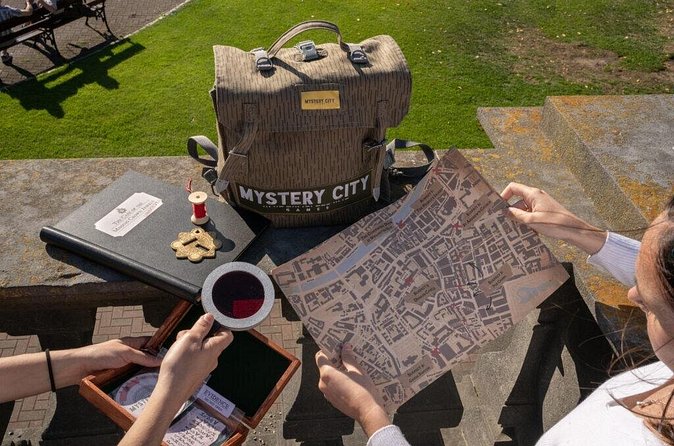
The materials include a backpack and physical puzzle items, along with a mobile link or chat function used to move between stages. Some puzzles involve manipulating materials rather than simply reading a question. One example requires string and a page, which can be imaginative but awkward when you are standing outdoors.
This is the part of the experience I would consider most carefully. A city street is not always a good puzzle table. You may need to balance the materials, write notes, keep the backpack open, and watch for other pedestrians at the same time. Wind and rain make that harder.
The equipment has also been described as cumbersome to open and close. A group that enjoys tactile puzzles may appreciate the physical evidence box and props. A group that wants quick, clear instructions may lose patience if the bag needs constant buckling and unbuckling.
The phone system is another practical issue. It is intended to help you progress, but technical problems can interrupt the flow. If the link freezes or crashes, you may have trouble reaching the next step. Keep your phone charged and make sure more than one person in the group understands the instructions. That will not solve every technical fault, but it gives you a better chance of keeping the game moving.
Weather, seating, and the two-hour estimate
The activity lasts about two hours, but that is best treated as a rough guide. A strong group may finish efficiently. A group that stops for snacks, takes longer over the clues, or deals with a technical problem will need more time.
I would avoid scheduling this tightly between lunch, a museum booking, and an evening reservation. One group planned around a two-and-a-half-hour window and found the timing possible but rushed. The game works better when you can pause without watching the clock.
Weather matters more here than on a normal walking tour. In sunshine, stopping on a pavement to study a clue can feel like part of the adventure. In heavy rain and wind, the same task can become uncomfortable very quickly. Dublin does not guarantee convenient benches along the route, so you may end up solving clues while standing or searching for a dry place nearby.
The best plan is to check the forecast, dress for wet weather, and bring a small notebook or pen if the materials do not provide everything you need. You should also use the toilets before leaving the meeting point, since the route does not promise facilities at every stage.
What you learn, and what you do not
This is a sightseeing game first and a history tour second. You will see parts of central Dublin and may pass major landmarks, but the activity does not promise a detailed explanation of each stop.
That distinction is important. If you want dates, political context, architectural detail, and stories about Dublin’s past, choose a traditional guided walk or add one separately. If you want to make your own discoveries and use landmarks as clues, this format gives you a more active way to see the city.
The route can still encourage good sightseeing habits. You may notice a building name, a police sign, a pub façade, or a church detail that you would normally ignore. The game gives these features a job to do, and that can make the city feel more immediate.
At the same time, some locations may not be open when you arrive. St Patrick’s Cathedral has been used in connection with a clue, but access is not guaranteed, and a clue linked to an interior can cause trouble if the building is closed. The activity provider’s support function is meant to help, but a malfunctioning chat system can leave you stuck. It is wise to confirm any opening-sensitive clue as early as possible and keep the supplied instructions close at hand.
Who will enjoy this private Dublin game
I would recommend it most strongly to people who enjoy escape rooms, team challenges, and city walks with a purpose. It suits friends who like arguing cheerfully over an answer, families with older children who can read and reason through clues, and company groups looking for an activity that gets everyone out of the meeting room.
It is also a good fit if you have already seen Dublin’s main sights and want a different way to move around the center. The map gives you a reason to explore beyond the most obvious route.
You may want to choose something else if you need a fully guided experience, have limited walking tolerance, or dislike solving puzzles in public. It is not ideal for someone who wants to sit comfortably while an expert explains the city. The activity also requires patience with physical props, mobile instructions, and occasional uncertainty.
Service animals are allowed, and the activity is near public transportation. Most people can participate, but the supplied information does not promise a step-free route or describe the exact accessibility of every street and stop. If that matters to you, ask before booking.
Is $30.07 per person good value?
At $30.07 per person, the price is reasonable if you are buying a shared activity rather than a sightseeing lecture. A private group gets a two-hour challenge, a route through central Dublin, physical puzzle materials, and a format that can bring a whole team together.
The value is strongest when several people split the cost of a private booking and treat the experience as an organized group outing. It can be particularly worthwhile for a work event, birthday, or family afternoon when the shared problem solving matters as much as the places you see.
The value is weaker if you judge the price by the amount of historical information provided. You are not paying for entry to Trinity College or St Patrick’s Cathedral, a meal, drinks, or a personal guide. You are paying for the game structure and the chance to explore Dublin while solving it.
Take the time into account, too. If your group finishes in two hours and enjoys the challenge, the price compares well with many organized city activities. If technical problems or confusing instructions prevent you from completing the trail, the same price will feel high.
Booking details and cancellation
You receive confirmation at the time of booking. The ticket is mobile, and the activity is offered in English. Only your group participates, which means you do not need to match your pace to an unrelated party.
The experience begins and ends at The Clockwork Door. Free cancellation is available if you cancel at least 24 hours before the start time. Cancellations or changes made less than 24 hours ahead are not refunded, and the cut-off follows Dublin local time.
Should you book this Dublin treasure hunt?
Book it if you want a social puzzle walk, not a standard tour. It is at its best with a group that likes clues, teamwork, and a little friendly confusion. Give yourself more than the advertised two hours if you want a drink or snack stop, and choose a dry day if you can.
Skip it if your priority is expert history, smooth technology, indoor comfort, or a route made entirely of famous sights. The physical backpack, outdoor puzzle solving, and possible phone glitches require patience.
For the right group, the strongest reward is not a checklist of monuments. It is the moment an ordinary Dublin street suddenly supplies the answer your team needs. That makes the city feel like a living puzzle, but you should arrive ready to do the work.
FAQ
Where does the Dublin treasure hunt start?
It starts at The Clockwork Door, 51 Wellington Quay, Temple Bar, Dublin, D02 NH04, Ireland.
Where does the activity finish?
The activity ends back at the meeting point at The Clockwork Door.
How long does the treasure hunt take?
The activity takes approximately two hours. You may need extra time if your group solves clues slowly or adds food and drink stops.
Is the treasure hunt guided?
No. It is a self-guided activity using a mobile ticket, a treasure map, supplied puzzle materials, and a mobile system.
Is this a private activity?
Yes. Only your group participates in the activity.
What is the cancellation policy?
You can cancel for a full refund up to 24 hours before the experience start time. Cancellations or changes made less than 24 hours before the start time are not accepted for a refund.
New puzzles around the world
- Leavenworth Locomotion, KS Scavenger Hunt★ 5.0 · 2 reviews
- Unique Scavenger Hunt Experience in Wichita by Zombie Scavengers★ 3.5 · 2 reviews
- Fun Scavenger Hunt in Overland Park by Zombie Scavengers★ 3.5 · 3 reviews
- The Dinner Detective True Crime Murder Mystery Show – Wichita, KS★ 5.0 · 11 reviews
- Amazing Scavenger Hunt: Wichita, To The Arkansas River★ 3.5 · 2 reviews
- Saugatuck Showdown Scavenger Hunt★ 3.0 · 2 reviews
- Murder Mystery Detective Experience in Shawnee KS★ 3.0 · 3 reviews
- Outdoor Escape Room in Kansas City – the Garment District★ 5.0 · 19 reviews
Treasure Hunts, head to head.


Fun, Flexible Treasure Hunt Around Manchester with Cryptic Clues & Hidden Gems
Read our review →York Treasure Hunt Adventure: The Mystery of The Gunpowder Snitch
Read our review →
Black Diamond Treasure Hunt Excursion with Backcountry Dining
Read our review →
Amsterdam Treasure Hunt: The Mystery of a Secret Sender
Read our review →
Private city discovery tour – A Historical Treasure Hunt
Read our review →
Mostra Leonardo Da Vinci: Rome Treasure Hunt Game
Read our review →Other lists this game appears in