
Review · NORWAY
Oslo Viking Quest: Exploration Game and Tour
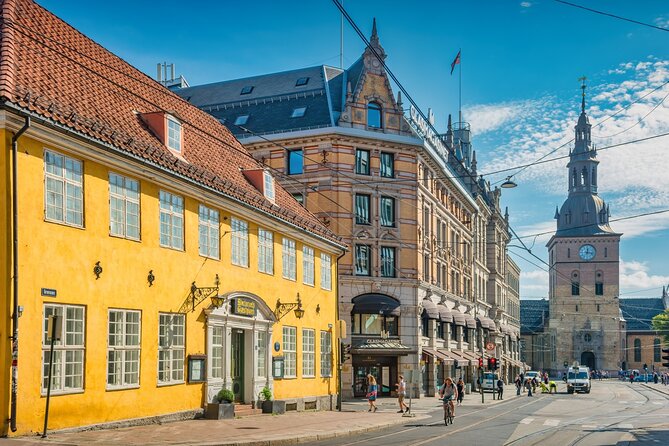
Oslo Viking Quest turns a city walk into a phone-based puzzle game, sending you from the Nobel Peace Center and City Hall toward the Royal Palace, Storting, Cathedral, and Akershus Fortress. You solve clues at each stop, then receive the next location and a short piece of Oslo’s story.
I like the freedom to start whenever you want and pause when the city catches your eye. I also like the price: at $7.20 per person, it is a low-cost way to get an overview of central Oslo while keeping children, friends, or a private group involved.
The main drawback is weather and clue design. You are outside for the whole route, and one puzzle may take patience if its wording does not click. The advertised time is about 1 hour 15 minutes, but side trips can stretch the walk to several hours.
Key points at a glance
- Eleven puzzles guide the route: You solve challenges at major central Oslo sights rather than simply following a list of facts.
- The route links political, royal, religious, and wartime Oslo: City Hall, the Royal Palace, the Storting, Oslo Cathedral, and Akershus Fortress all fit into one walk.
- No physical guide joins you: The quest arrives through a mobile access code and is designed for your group alone.
- You control the clock: The game is available daily from 5:00 AM to 9:00 PM, and you can pause and resume.
- The $7.20 price is modest: It works best as an engaging city orientation, not as a substitute for a full museum tour or expert guide.
- Wear sensible walking clothes: Rain or cold can make the outdoor puzzles less pleasant, and a few clues may require careful reading.
A Viking quest through central Oslo
This is a self-guided exploration game from Questo, not a traditional walking tour. You receive a mobile code, open the game, and move through central Oslo by solving 11 interactive challenges tied to public places and monuments.
The Viking theme gives the walk a light sense of purpose. You are not simply ticking off sights. You look around for details, answer a question, and use the result to advance. That small change matters, especially if you are exploring with children or with friends who lose interest during a standard city lecture.
You should think of the game as a structured introduction to Oslo. It gives you a route, a reason to pause at each stop, and short historical content. It does not provide a guide who can answer follow-up questions, adjust the pace, or explain what you are seeing in depth.
The route is private for your group. That makes the experience easy to fit around your own plans. You do not have to arrive at a meeting time with strangers, and you can stop for food or take a longer look at a building without holding up a guide.
More City Exploration Games in the world:
- Malaga city game: Operation Mindfall
★ 5.0 · 111 reviews - Romantic Montmartre: Paris Lost Lovers Exploration Game and Tour
★ 4.5 · 107 reviews - Sibiu Old Town Exploration Game and Self-Guided Tour
★ 4.5 · 82 reviews
Starting at the Nobel Peace Center
The stated starting point is Rådhusgata 30B, 0151 Oslo, near the central waterfront area. The first named stop is the Nobel Peace Center, an appropriate place to begin a walk that quickly introduces you to Oslo’s public institutions and civic identity.
The center presents the Nobel Peace Prize and the ideas linked to peace, war, conflict, and public debate. You do not need to enter the museum to take part in the outdoor challenge. Instead, you look around the site for the information needed to move forward.
That format is useful because it trains you to pay attention to your surroundings. A plaque, architectural detail, or public sign can become part of the game. If you are the kind of person who prefers to learn by doing, this is more effective than reading a long paragraph on your phone.
Allow extra time if you want to visit the Nobel Peace Center itself. The game is built around the exterior route and does not include admission to attractions, so museum entry would be a separate choice and cost.
Oslo City Hall and the public face of the city
From the Nobel Peace Center, the route takes you to Oslo City Hall. The red-brick municipal building houses the city council, city administration, and other local offices. The building was constructed between 1931 and 1950, with work interrupted during the Second World War.
City Hall is a strong stop for this kind of game because it gives you a clear sense of Oslo as a working capital, not only a place of palaces and museums. The challenge asks you to inspect the surroundings and find the answer needed for the next location.
This is also where the game’s value becomes clear. You are learning a basic fact about the building, but you are also being nudged to notice the public space around it. You can pause for photographs or take a closer look before continuing.
Do not expect a full explanation of the building’s art, rooms, or political role. The content is meant to keep you moving. For a deeper visit, you would need a separate guided tour or museum experience.
Nils Sigurd Aas and a quieter artistic stop
One stop focuses on Nils Sigurd Aas, a Norwegian sculptor born in 1933 who died in 2004. Aas was important in modern Norwegian sculpture and is known for the statue of King Haakon VII at June Seventh Square. He also designed Norwegian coins, including the 10-krone and 20-krone pieces.
This is one of the more distinctive parts of the route. Many quick city walks concentrate only on famous buildings. This challenge brings in a Norwegian artist and connects public sculpture with everyday money you may handle during your visit.
You will need to look around for the answer, so keep your eyes open for the relevant sculpture or nearby information. The supplied route does not give a detailed description of the exact puzzle location, and that is part of the appeal, though it can also create uncertainty if you are rushing.
I would treat this stop as a reminder to slow down. Look at the work before entering the answer. Even a short puzzle can turn a passing monument into something you remember.
More escape games around the world:
- Branson Murder Mystery- Branson’s Original #1 Murder Mystery
★ 5.0 · 1,513 reviews - Sofia Escape Room – Teorema Rooms
★ 5.0 · 895 reviews - True Crime NYC: Mafia Walk w/Ret. NYPD Detective and Local Food
★ 5.0 · 848 reviews - Saw2 vs Squid Game – Escape Game Montpellier
★ 5.0 · 752 reviews
The Royal Palace and Norway’s monarchy
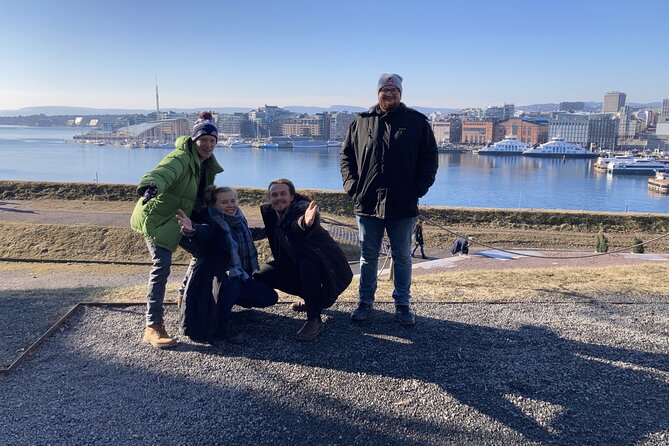
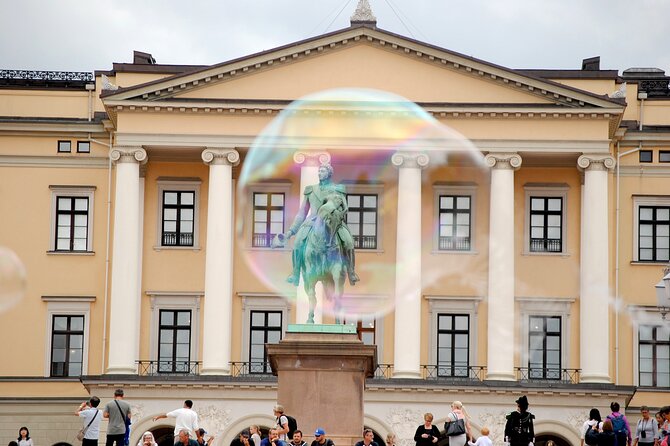
The Royal Palace is one of the route’s headline sights. Built in the first half of the 19th century, it was created as a Norwegian residence for Charles III John, the French-born king who ruled Norway and Sweden.
The palace gives the walk a different tone from City Hall. Here, the focus shifts from local government to monarchy and national ceremony. The open setting around the palace also gives you a natural place to pause, take photographs, and consider how Oslo’s main institutions sit within walking distance of one another.
The challenge again asks you to inspect the area for an answer. You should not expect the game to include palace rooms or an interior visit. Its role is to use the building and its surroundings as an outdoor history lesson.
If you are visiting Oslo for the first time, this stop helps you build a mental map of the city center. The route is not just a chain of unrelated clues. It connects the royal, political, religious, and municipal parts of Oslo.
The University of Oslo and the Storting
The University of Oslo follows as another reminder that the walk is designed to show several sides of the city. The university is Norway’s oldest and was known as the Royal Frederick University until 1939.
The stop is less about a grand royal sight and more about education and national development. As with the other locations, you look around for the answer rather than waiting for a guide to point it out. That makes the game active, but it also means you need to read carefully and stay patient.
The route then reaches the Storting, Norway’s parliament. The building at 22 Karl Johans gate opened in 1866 and was designed by Swedish architect Emil Victor Langlet.
This is a particularly useful stop for visitors who want to understand Oslo’s civic center. The Storting is not just a photogenic building. It represents Norway’s national political life, and the game gives you a simple reason to stop and connect the site with that role.
The lack of a live guide is noticeable here. A guide could explain Norway’s political system or point out architectural details that are not part of the puzzle. The game gives you a compact introduction instead, which suits a short city walk but not a serious political history lesson.
Oslo Cathedral on the way downtown
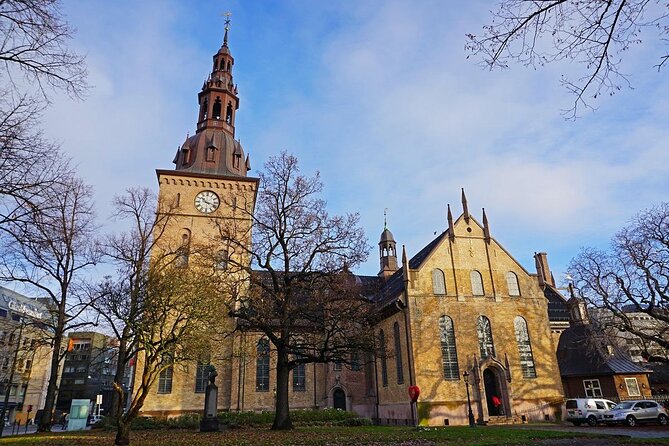
Oslo Cathedral, formerly called Our Savior’s Church, serves as the main church for the Church of Norway Diocese of Oslo and as the parish church for downtown Oslo. The present building dates from 1694 to 1697.
The cathedral also has a public role. Norway’s Royal Family and government use it for official events. That makes the stop useful for connecting religious space with national ceremony.
The challenge format encourages you to study the exterior and surrounding area. You may find that the puzzle is easy to fit into a normal day because the cathedral sits within the central city route, close to other major sights.
You should keep your expectations practical. The tour description does not promise an interior visit, a service, or a detailed account of the cathedral’s art. If the building is open and you want to look inside, that would be an extra part of your own visit.
Akershus Fortress and the wartime story
The final stretch leads to Akershus Fortress, a medieval castle built to protect Oslo and provide a royal residence. This is one of the most substantial historical settings on the route, with a stronger sense of defense and power than the earlier civic buildings.
The Norwegian Resistance Museum is located at the fortress. Its collection covers the Norwegian resistance during the German occupation from 1940 to 1945, with equipment, photographs, and documents from the war years.
The game uses both the museum area and the fortress as puzzle locations. You are asked to look around for answers and learn the story connected with each place. The museum itself is not included as an admission benefit, so plan separately if you want to enter.
Akershus makes a fitting end because it adds military history to the route. By the time you arrive, you have seen government, monarchy, education, religion, art, and wartime memory. That range is one of the strongest reasons to choose this walk over a simple sightseeing checklist.
The listed end point is the Scandinavian Star Memorial at Akershusstranda. This means you finish near the waterfront and fortress area rather than returning to the starting point. Plan your next move before beginning, especially if you have a timed dinner, train, or museum booking.
How long the route really takes
The official duration is about 1 hour 15 minutes. That is a reasonable target if you walk directly, solve the puzzles without long pauses, and do not enter attractions.
In real use, you can easily make it longer. One account describes taking several hours after adding side trips, which extended the outing by at least half again. That is not a problem unless you need a strict schedule. The route passes enough major sights to tempt you into stopping for photographs, food, or extra sightseeing.
The flexibility is one of the best features. You can pause and resume, so you are not forced to hurry past a place that interests you. You can also split the experience if weather changes or your group needs a break.
The route is available Monday through Sunday from 5:00 AM to 9:00 PM during the stated operating period, which runs through February 7, 2027. Those broad hours make it easier to fit around a morning arrival or an evening walk, though daylight and weather still matter.
Price, group size, and practical value
At $7.20 per person, this is inexpensive for a private city activity. Group discounts are available, which can make the cost even more attractive for families or friends traveling together.
You are paying for the mobile access code, 11 interactive puzzles, and the Oslo history content. You are not paying for a physical guide, museum admissions, food, transport, or any other personal spending during the walk.
I see the price as good value if you want a playful introduction to central Oslo. It is less valuable if you want expert commentary, a long historical explanation at every stop, or a fully guided experience. The low price reflects the self-guided format.
Most people can participate, and service animals are allowed. The route is near public transport, which helps with reaching the start or leaving the end. Confirmation is provided at booking, and you can cancel for a full refund up to 24 hours before the start time. Cancellations or changes inside that window are not refunded or accepted.
Who will enjoy this Oslo activity?
I would choose this for families, couples, friend groups, and independent visitors who like a bit of structure without surrendering control of the day. The private format is especially helpful when your group walks at its own pace.
It also suits people who want a quick orientation to central Oslo. The route covers many of the city’s key public sights, and the puzzles give you a reason to notice them instead of passing by.
You may want a different option if you dislike phone-based activities, need step-by-step explanations, or are visiting during poor weather. The outdoor format is not ideal in heavy rain or severe cold. One challenge may also require patience if the wording is not immediately clear.
Bring a charged phone, allow more than 75 minutes if you enjoy side trips, and avoid placing this directly before an appointment. The game is flexible, but the city itself is full of interruptions.
Should you book Oslo Viking Quest?
Book it if you want a low-cost, private way to see central Oslo while solving puzzles and learning short pieces of local history. The route’s biggest strengths are its freedom, broad selection of sights, and ability to keep a group involved.
Skip it if your priority is a live guide, detailed museum access, or a tightly edited history tour. You will need to read clues yourself and cope with the weather.
For most visitors, the sensible approach is to treat it as a city introduction rather than the whole Oslo experience. At $7.20, it gives you a useful route and a playful reason to explore. Add your own coffee stop, photos, and museum visits, and the short quest can become a relaxed half-day around the heart of the city.
FAQ
How long does Oslo Viking Quest take?
The stated duration is approximately 1 hour 15 minutes. You can pause and resume, and side trips may extend the experience to several hours.
Is there a physical tour guide?
No. The activity is self-guided and uses a mobile access code. Only your private group participates.
How many puzzles are included?
The experience includes 11 interactive puzzle challenges with an immersive Viking storyline and Oslo history content.
Where does the activity start and end?
It starts at Rådhusgata 30B, 0151 Oslo, Norway. It ends at the Scandinavian Star Memorial on Akershusstranda, 0150 Oslo, Norway.
What sights are included on the route?
The route includes the Nobel Peace Center, Oslo City Hall, a stop connected with sculptor Nils Sigurd Aas, the Royal Palace, the University of Oslo, the Storting, Oslo Cathedral, the Norwegian Resistance Museum, and Akershus Fortress.
Can I cancel the booking?
Yes. You can cancel up to 24 hours before the experience start time for a full refund. Cancellations or changes made less than 24 hours before the start time are not refunded or accepted.
New puzzles around the world
- Leavenworth Locomotion, KS Scavenger Hunt★ 5.0 · 2 reviews
- Unique Scavenger Hunt Experience in Wichita by Zombie Scavengers★ 3.5 · 2 reviews
- Fun Scavenger Hunt in Overland Park by Zombie Scavengers★ 3.5 · 3 reviews
- The Dinner Detective True Crime Murder Mystery Show – Wichita, KS★ 5.0 · 11 reviews
- Amazing Scavenger Hunt: Wichita, To The Arkansas River★ 3.5 · 2 reviews
- Saugatuck Showdown Scavenger Hunt★ 3.0 · 2 reviews
- Murder Mystery Detective Experience in Shawnee KS★ 3.0 · 3 reviews
- Outdoor Escape Room in Kansas City – the Garment District★ 5.0 · 19 reviews
City Exploration Games, head to head.

Romantic Montmartre: Paris Lost Lovers Exploration Game and Tour
Read our review →
Sibiu Old Town Exploration Game and Self-Guided Tour
Read our review →
Glasgow Ghost Hunt: The Soul That Got Away Exploration Game
Read our review →
Rotterdam Highlights & Spies: Interactive City Game
Read our review →
Discover Utrecht with a self-guided Outside Escape city game tour
Read our review →
Bristol Street Art: Banksy Exploration Game and Tour
Read our review →Other lists this game appears in