
Review · THE NETHERLANDS
Leiden Rembrandt Quest Through His Life: Exploration Game
Leiden’s Rembrandt Quest turns a city walk into a 90-minute outdoor puzzle game. You follow the painter’s early life from a canal-side windmill to the places linked with his school days, family, and first art training. I like the way the route takes you beyond the obvious sights, and I like that you can stop, study a building, and set your own pace. The main caution is that the puzzles sometimes take center stage, so anyone seeking a serious art tour may find the Rembrandt material a little thin.
The price is just $6 per person, a strong deal for a private activity that includes 10 challenges and a GPS map. It is especially good for families with school-age children and older kids, though the absence of a live guide means you must rely on the app and your own curiosity.
Key points to know before you start
- Rembrandt’s early Leiden: Follow places tied to his childhood, schooling, family, and apprenticeship.
- Ten phone-based puzzles: Clues and riddles are linked to the locations rather than delivered as a standard lecture.
- About 90 minutes: The route is long enough to fill an afternoon but short enough to fit around other Leiden plans.
- A self-guided walk: Start, pause, and resume when you like during the stated opening hours.
- Good family value: The puzzles are designed to be manageable for children and adults working together.
- Private for your group: No strangers or live guide join you, so the pace and teamwork are yours to manage.
Starting beside Park de Put and its windmill
Your quest begins at Morspoort Kazerne, beside Park de Put at Park de Put 11. This gives you a pleasant start rather than dropping you into a noisy commercial street. The park sits by a canal and includes a traditional windmill, with traces of Leiden’s former defenses adding a bit of context to the setting.
The first challenge uses this place as more than a backdrop. You follow clues, examine the surroundings, and solve a puzzle connected with the site’s past. The opening stop lasts about 10 minutes, which is enough time to get used to the app without feeling rushed.
I like this beginning because it gets you outside and moving at once. You are not simply told that Leiden has an old defensive history. You have to look around and use the setting to make progress. For children, that active task can be easier to grasp than a spoken explanation.
The practical point is to arrive with your phone charged and the access code ready. The route depends on mobile access, GPS, and the built-in map. Since there is no live guide, your group should be comfortable reading instructions and deciding together when an answer is correct.
More City Exploration Games in the Netherlands
- Rotterdam Highlights & Spies: Interactive City Game
★ 4.0 · 51 reviews - Discover Utrecht with a self-guided Outside Escape city game tour
★ 4.5 · 51 reviews - Discover Delft with a self-guided Outside Escape city game tour!
★ 5.0 · 32 reviews
Rembrandtplein and the painter’s childhood world
From the park, the story moves toward Rembrandtplein, a square linked with the neighborhood where Rembrandt spent his early years. It is not presented as a grand museum stop. Instead, the square works as a prompt to imagine the young artist before he became famous.
A puzzle here reveals a story from his youth. This is one of the more useful ideas in the quest: the city becomes a set of clues about a real person rather than a string of unrelated photo stops. You are asked to connect a location with a stage in Rembrandt’s life.
The information is likely to work best if you read the extra material in the app rather than racing from answer to answer. Families can divide the job. One person can read the story, another can study the clue, and children can try to spot the details that lead to the solution.
If you want long explanations about Rembrandt’s paintings, this stop will not provide that. The route is about his early surroundings and the pleasure of solving a problem outdoors. That is useful to know before booking.
Doelenpoort and Leiden’s civic past
Doelenpoort is one of the route’s stronger architectural pauses. This 17th-century gateway once led to a shooting range used by Leiden’s civic guards. Its decoration and symbols point toward ideas of duty, defense, and public status.
The puzzle here is tied to the archway and its former purpose. I like stops such as this because they widen the story beyond Rembrandt himself. You see the city he grew up in as a working civic place, shaped by guards, institutions, trade, religion, and learning.
Doelenpoort also gives the walk a visual change. After canals and open green space, you are looking at a carefully decorated historic entrance. The game encourages you to inspect what you might otherwise pass while heading toward the next attraction.
The route’s self-guided design is helpful here. You can pause to look at the façade and read the app’s background without holding up a group. A guide would offer more detail, but a private phone game gives you more freedom.
The Young Rembrandt School and his first studies
The next chapter leads to the Young Rembrandt School, known in Rembrandt’s time as the Latin School. This is where the future painter began formal academic study, learning classical subjects that helped shape his early thinking.
The riddle draws on his school days. It is a good match for the overall theme because it shows that Rembrandt’s development was not only about paint and drawing. His education also formed the ideas and references he carried into his adult work.
For parents, this is one of the easier places to explain to children. The question is not simply who Rembrandt was. It asks how a young person’s school, neighborhood, and interests can help shape a later career. The app keeps that idea light rather than turning the walk into a classroom lesson.
You should expect a short stop, not a full school visit. The available details describe the exterior location and the puzzle connected with it. If you want to enter every site on the route, check separately, because this activity is built around an outdoor path.
Same streets, a different puzzle:
- Amsterdam Treasure Hunt: The Mystery of a Secret Sender
★ 5.0 · 149 reviews - e-Scavenger hunt Maastricht: Explore the city at your own pace
★ 4.5 · 110 reviews - Amsterdam: Treasure Hunt Walking Tour “A Secret Sender”
★ 4.7 · 71 reviews - Utrecht Old Town: Medieval Monster Hunt & Walking Tour
★ 4.0 · 62 reviews
Universiteit Leiden and the city’s intellectual life
Universiteit Leiden was founded in 1575 and is the oldest university in the Netherlands. The route uses it to show the intellectual setting around Rembrandt’s youth. The university is also associated with figures such as Einstein and Descartes, giving this section a wider sense of Leiden’s academic importance.
The puzzle here is described as a brain-teaser, which adds some variety after the more directly biographical clues. You are not only looking for a physical object. You are also asked to think through information connected with the university.
This stop helps keep the quest from becoming a narrow portrait of one artist. Rembrandt lived in a city where scholarship, religion, civic life, and trade were all close together. That wider setting matters, especially if you are introducing children to the idea that art grows from a whole community.
The possible weakness is the same as at other stops. The app can point you toward a fact, but it cannot answer follow-up questions. If a detail sparks your interest, make a note and investigate later. Think of the quest as a lively introduction, not a complete biography.
Pieterskerk and Rembrandt’s family connection
Pieterskerk brings you to one of Leiden’s major Gothic churches. Its size and age give the walking route a sense of scale, and the church connects to Rembrandt’s family story. His father worked nearby as a miller, placing the family within the practical, industrial life of the city.
The puzzle uses the church and its surroundings to reveal another piece of Rembrandt’s early world. This is valuable because family background can otherwise disappear behind the famous name. Before he was a celebrated painter, he was a boy growing up near workplaces, waterways, churches, and busy streets.
I would slow down here. Even if your group solves the clue quickly, Pieterskerk deserves a few minutes of looking. The church’s Gothic form and long connection with Leiden make it one of the more memorable sights on the walk.
The activity does not include admission to attractions, and the itinerary describes this as a location-based stop. Plan on appreciating Pieterskerk from the route unless you have arranged separate entry.
Young Rembrandt Studio and the start of his art training
The Young Rembrandt Studio is the most direct art stop on the route. It occupies the house where Rembrandt trained under the painter Jacob van Swanenburgh. Here the young artist worked on basic skills such as mixing pigments and using perspective.
This is the point where the story moves from childhood and schooling toward professional art. The puzzle is inspired by Rembrandt’s apprenticeship, so it fits the subject closely. If you are mainly booking this quest for the painter himself, this stop will likely be one of the most satisfying.
The app’s storyline can help you picture the training process, but it is not a substitute for a museum visit or a specialist-led art talk. You will get a compact account of an important stage in Rembrandt’s life, then continue along the route.
For families, this stop offers a nice chance to connect the clues with the finished paintings children may know. Mixing colors and learning perspective are simple ideas, but they make the young apprentice feel more real than a list of dates.
Hooglandse Kerkgracht and a Golden Age street
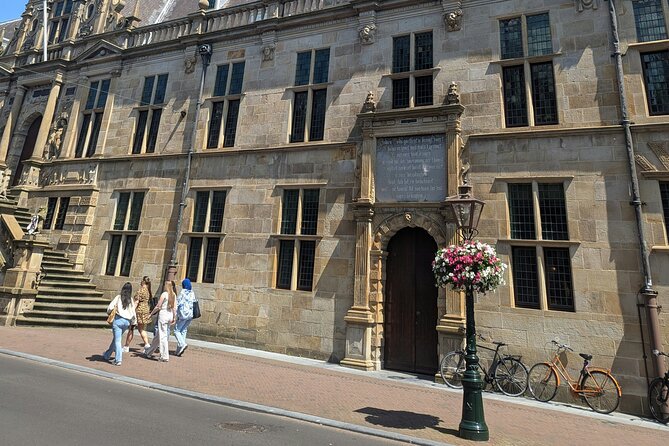
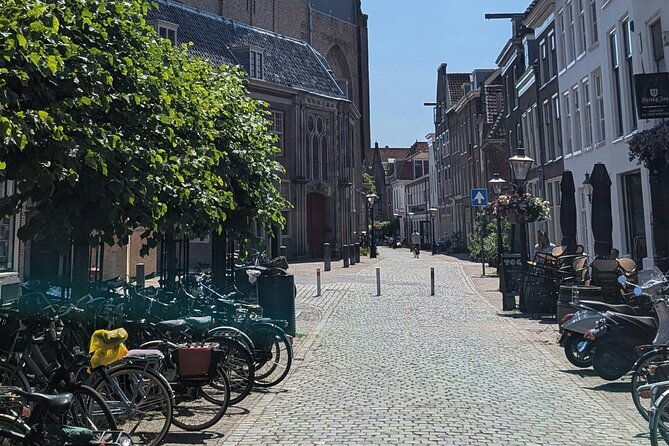
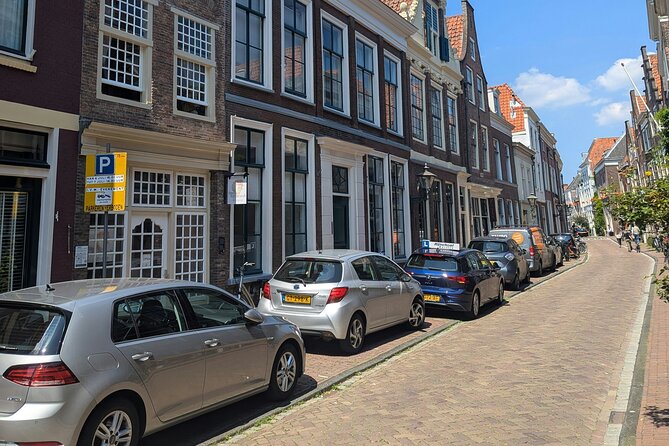
Hooglandse Kerkgracht is a particularly attractive part of the walk. The street is lined with 17th-century houses and trees, and it lies near the large Hooglandse Kerk. It gives you a sense of the city’s older residential and commercial fabric.
The riddle here draws on the street’s past, when merchants, artists, and scholars moved through the area. This is a good example of how the quest uses ordinary-looking streets as part of the story. You are not just checking off major landmarks. You are learning to notice the setting between them.
The route is strongest when the puzzles make you examine a place you might otherwise pass. The criticism to keep in mind is that some participants may feel there is too much puzzle-solving and not enough Rembrandt. If you feel that way, take time to read the background text at each stop rather than focusing only on the answer.
Stille Rijn and Rembrandt’s canal-side Leiden
Stille Rijn brings the route back to the water. This quiet canal is presented as part of the everyday world Rembrandt knew, where he lived and sketched among the ordinary scenes of Leiden.
It is a calmer section of the walk and a useful change after the formal university, church, and gateway stops. The clue here asks you to connect the canal with Rembrandt’s early days. You may find the setting more effective than a long explanation because water, bridges, and old buildings help you picture the city as he experienced it.
This is also a good place to control your pace. The quest lets you pause and resume, so you can take a few minutes for photos or simply enjoy the canal. You are not locked into a group schedule.
The GPS map should help you move between locations, but keep an eye on your surroundings rather than staring at your screen. The best part of a city puzzle is noticing the place in front of you.
Kort Galgewater and the final view
The quest ends at Kort Galgewater 20. This waterside area is known for its windmill view and connection with Leiden’s old trade and industry. It also relates to Rembrandt’s family, since his father’s mill stood nearby.
That family link makes a fitting final chapter. The story returns to the working world around Rembrandt and shows how closely his early life was tied to water, mills, and the city’s practical economy. The final puzzle asks you to use what you have learned about his family and surroundings.
I like the ending because it leaves you by the water rather than at an arbitrary street corner. It gives the walk a clear finish and a scenic place to pause. The route starts at Park de Put and ends at Kort Galgewater, so you should plan your next stop from the end point rather than assuming you will return to the beginning.
The full route takes about one hour and 30 minutes, though your time can vary. Groups that stop for photos or read all the extra information will likely move more slowly. That flexibility is one of the activity’s better features.
What the $6 price really gets you
At $6 per person, this is inexpensive compared with a conventional guided walk. You receive a mobile access code, 10 themed challenges, a GPS map, a Rembrandt-focused storyline, and the ability to pause or resume. For a family or small group, the total cost remains modest.
The value depends on what you want. If you want someone to explain Leiden’s architecture, answer questions, and add personal stories, this is not the right format. There is no live guide. If you want a structured way to move through the old city and keep children interested, the price is easy to justify.
The private format is another advantage. Only your group takes part, so you can debate answers without worrying about strangers. You can also set the pace. The route works especially well for friends, couples, and families with children around primary-school age through the teenage years.
The activity is offered in English. Service animals are allowed, it is near public transportation, and most people can participate. The stated hours are daily from 8:00 AM to 9:00 PM for the listed operating period, May 26, 2025 through February 7, 2027.
Who should book the Rembrandt Quest?
I would choose this for families who want an outdoor activity with a clear purpose. Children can help solve the clues, while adults can read the extra information and connect the stops to Rembrandt’s early life. Older children, including those around 11 to 13, should find many of the puzzles approachable.
It also suits people who already know Leiden and want a different route. The game leads you to places you might skip on a standard sightseeing walk, including quieter streets and canal-side settings.
I would hesitate if you dislike phone-based activities or want a detailed art lecture. The puzzles are generally manageable, but one piece of feedback points to a real concern: some people may find the game mechanics more prominent than the Rembrandt content. Go in expecting a city quest with art and biography woven through it, not a museum-quality Rembrandt course.
Book at least 24 hours ahead if you want the option of a full refund. Cancellations made less than 24 hours before the start time are not refundable, and late changes are not accepted.
Should you book it?
Book the Leiden Rembrandt Quest if you want to walk, think, and see the city from several angles without paying for a full guided tour. The best parts are the manageable puzzles, the family-friendly pace, and the way the route links canals, schools, churches, civic buildings, and Rembrandt’s early training.
Skip it if your priority is detailed art history or personal guidance. For everyone else, $6 buys a smart, flexible way to spend an hour and a half in Leiden, with enough story to give the sights a human connection and enough game play to keep the walk lively.
FAQ
How long does the Leiden Rembrandt Quest take?
The activity takes approximately one hour and 30 minutes. Your exact time may vary because you can choose your own walking pace and pause or resume the quest.
Where does the quest begin?
It begins at Morspoort Kazerne, Park de Put 11, 2312 BM Leiden, Netherlands.
Where does the quest end?
The route ends at Kort Galgewater 20, 2312 BR Leiden, Netherlands.
Is there a live tour guide?
No. This is a self-guided activity using a mobile access code, GPS-based map, storyline, and puzzles.
How many puzzles are included?
The quest includes 10 themed puzzle challenges connected with places along the Leiden route.
Is the activity available in English?
Yes. The quest is offered in English.
New puzzles around the Netherlands
- Maastricht Scavenger Hunt and Highlights Self Guided Audio Tour★ 4.5 · 2 reviews
- Maastricht Medieval Mystery: Interactive City Game & Tour★ 4.0 · 25 reviews
- 90 minutes Self-Guided Walking tour with puzzles in Leiden★ 4.0 · 15 reviews
- e-Scavenger hunt Leiden: Explore the city at your own pace★ 4.0 · 19 reviews
- Leiden Self Guided Sherlock Holmes Murder Mystery Game★ 3.0 · 2 reviews
- Leeuwarden Self Guided Sherlock Holmes Murder Mystery Game★ 3.0 · 2 reviews
- Discover Leiden with a self-guided Outside Escape city game tour!★ 5.0 · 16 reviews
- Discover Leeuwarden in this Outside Escape city game tour!★ 5.0 · 5 reviews
City Exploration Games, head to head.

Romantic Montmartre: Paris Lost Lovers Exploration Game and Tour
Read our review →
Sibiu Old Town Exploration Game and Self-Guided Tour
Read our review →
Glasgow Ghost Hunt: The Soul That Got Away Exploration Game
Read our review →
Rotterdam Highlights & Spies: Interactive City Game
Read our review →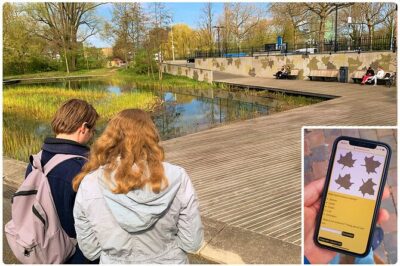
Discover Utrecht with a self-guided Outside Escape city game tour
Read our review →
Bristol Street Art: Banksy Exploration Game and Tour
Read our review →Other lists this game appears in