
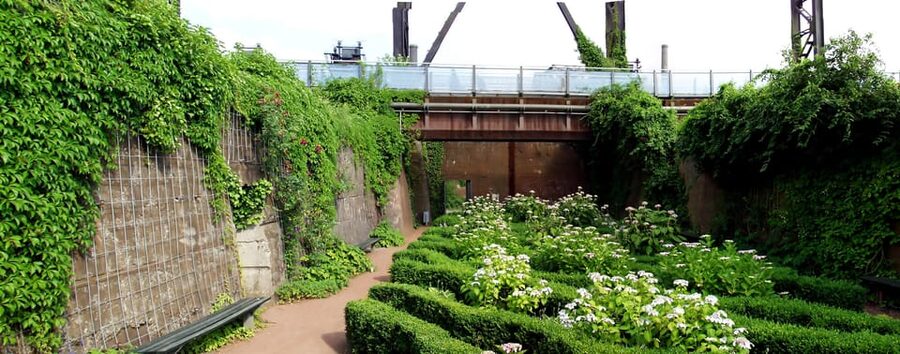
Review · GERMANY
Duisburg Landscape Park GPS treasure hunt in old ironworks
The most unusual part of this Duisburg activity is the setting: you use GPS coordinates and puzzle clues inside an old ironworks, where casting halls once handled molten iron. Instead of a standard guided walk, you follow a road book, find marked locations, and work out answers that lead toward a small treasure connected to the park.
I like two things right away. You choose the difficulty, which makes the hunt workable for families with younger children as well as adults. I also like the freedom to use your own smartphone, GPS device, or rental equipment, then begin when it suits you during visitor-center hours.
The main caution is route reliability. A January 2026 outing found part of the way closed and one station difficult to solve, so you should allow for a little patience and ask the visitor center for current route information before setting off.
Key Points at a Glance

- Three difficulty levels: Pick a road book that matches the age and puzzle skills of your group.
- A two-hour outdoor hunt: Search for GPS locations while walking through Duisburg’s former ironworks.
- A flexible start: Collect the road book at the visitor center during its opening hours.
- A treasure for each person: Everyone in the group receives a small reward linked to the park and ironworks.
- Team competition is possible: Up to six teams can challenge one another.
- German-language activity: Instructions and help are provided in German, so basic German makes the hunt easier.
From Molten Iron to GPS Coordinates

Duisburg Landscape Park is not a simple green space with a few paths. Its identity comes from the former industrial works, and this treasure hunt uses that setting as its playing field. You search around the old factory grounds while thinking about clues, numbers, and directions.
That mix gives the activity more purpose than a plain walk. You are not only moving from one point to the next. You are using parts of the ironworks as reference points and trying to understand how each location fits into the puzzle.
The supplied information does not name each stop, so you should not expect a fixed list of famous sights with a guide explaining every building. The experience is built around the route and the tasks. At some locations, the challenge may feel quick. At others, you may need to pause, compare clues, and check your answer before moving on.
I see this as a good way to introduce children to an industrial site without turning the visit into a long museum lesson. The old works provide the atmosphere, while the GPS hunt gives younger visitors a reason to keep walking.
More Treasure Hunts in Germany:
- Hamburg: Treasure Hunt Game through HafenCity
★ 4.7 · 364 reviews - Treasure Hunt through Hamburg’s Hafencity
★ 5.0 · 234 reviews - Dresden Sightseeing Treasure Hunt
★ 5.0 · 57 reviews
Choosing the Right Road Book
You receive one road book per group, with three difficulty levels to choose from. This is one of the most important decisions you make before starting.
For a family with children around the minimum age of seven, the easiest book should be the safest choice. Younger children can help search for locations, spot features, and carry the excitement from one clue to the next. Adults may find the simplest level less demanding, but it can keep the group moving without frustration.
The harder versions make more sense for older children, teenagers, and adults who enjoy puzzles. The wording says the tasks can be tricky, so do not assume every clue will fall into place at once. A mixed-age family may want to choose a middle level, especially if adults are willing to help without solving everything for the children.
The visitor center staff can also help you choose. The activity is in German, and the road book is central to the experience. If your group is not comfortable reading German instructions, the puzzle work may become much harder than the GPS work.
How the Two-Hour Hunt Works
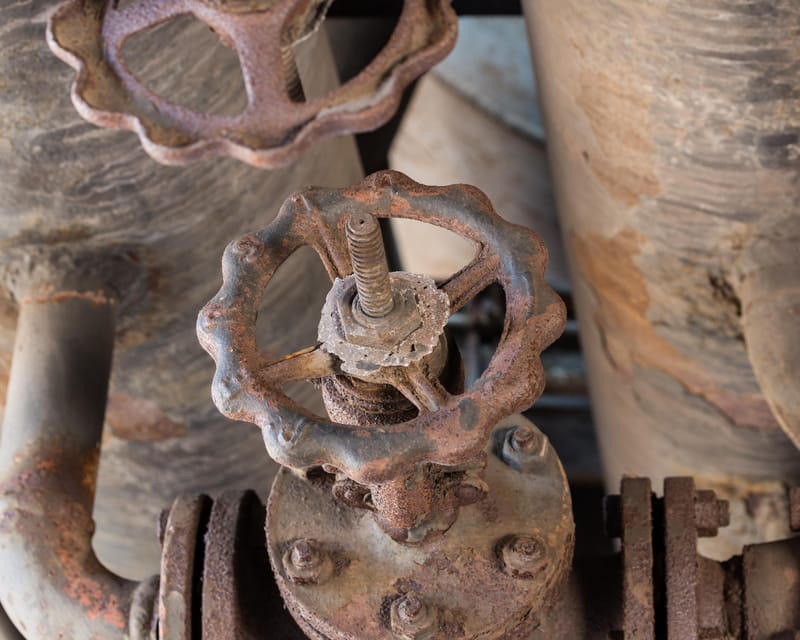
You begin at the visitor center, where you pick up the road book during opening hours. The start is not tied to a particular guided departure, so you have some control over your timing.
From there, you follow GPS coordinates to the listed locations. You can bring your own smartphone or GPS device, or use rental equipment. The supplied details do not specify the rental fee or the exact device model, so ask at the visitor center if you need equipment.
At each point, the road book gives you a task. Some answers may come from observing the surroundings, while others may require calculation or careful reading. The goal is not simply to reach every coordinate. You need to solve enough of the challenge to work out the final result.
That makes the pace different from a guided tour. Your group decides when to stop, discuss, and try again. If you are competing with other groups, this also creates a little pressure. Up to six teams can take part, so a family gathering, school-style group, or group of friends can turn the hunt into a friendly contest.
Plan on about two hours. The exact pace depends on your group, the difficulty you select, and how quickly you solve each task. Comfortable shoes are important because this is an outdoor activity, not a seated puzzle game.
What Makes the Old Ironworks Special
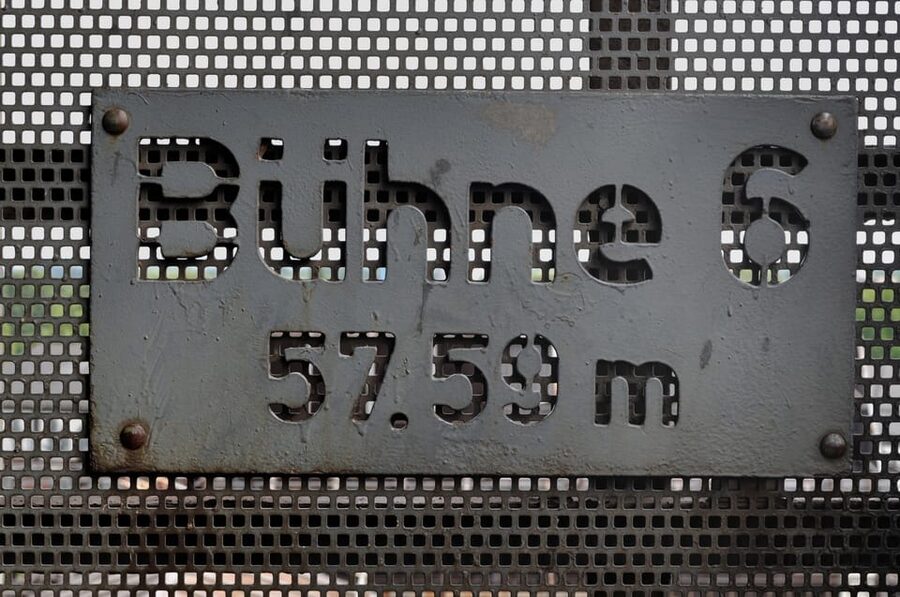
The ironworks setting gives the hunt its strongest character. The game takes place where iron once flowed through casting halls, so your surroundings are tied directly to the activity rather than serving as background scenery.
That setting can help children understand the scale of industrial work in a simple, active way. They are following clues in a place built for heavy production, then using small devices and written instructions to find their way around it. The contrast between old industry and modern GPS technology is the central idea.
You should keep your expectations in check, though. This is not presented as a full historical tour with a named guide at every stage. The instructor language is German, but the activity is primarily self-guided through the road book. You will get information as part of the route, yet the main focus is finding locations and solving tasks.
One visitor described it as a useful way to get to know Duisburg Landscape Park while also receiving information about the site. That is the right way to view the experience: a playful introduction to the park, rather than a complete explanation of the ironworks.
More escape games around Germany:
- Hamburg: Scavenger Hunt Self-Guided Tour for Children
★ 4.5 · 319 reviews - Escape Room Adventure in Berlin Solve the Mystery
★ 5.0 · 222 reviews - Dresden: Old Town Self-Guided Scavenger Hunt Tour
★ 4.5 · 151 reviews - Escaping and spying on the Berlin Wall Scavenger hunt
★ 4.5 · 128 reviews
The Puzzle Quality Can Affect the Day
Most of the fun depends on the tasks working properly. When the clues are clear, the group has a satisfying rhythm: find a location, solve a problem, celebrate a correct answer, and move on.
There is a known risk of frustration. During one January outing, a station was inaccessible because part of the route was closed. At another station, the group repeatedly tried the calculation but could not reach a clear result, so they had to estimate. That points to a practical weakness: the experience can suffer when route conditions or puzzle instructions are not up to date.
I would ask the visitor center about closures before starting, particularly in winter or after bad weather. If your group includes young children, agree in advance that you may need help rather than letting one stubborn clue spoil the whole afternoon.
The reception staff can make a difference. A staff member was described as friendly and helpful when the group returned with concerns and discussed how the activity could work better for families. That is useful reassurance, even though it does not remove the need to check the route before you begin.
Price and What You Receive for $15
At $15 per person, the price is reasonable if your group enjoys interactive activities and everyone uses the treasure hunt. You receive one road book for the group, not one per person, plus one treasure for each participant.
That structure favors families and small groups. One shared book keeps everyone focused on the same task, while the individual reward gives children a reason to finish. The value is less clear if one person does all the solving or if your group prefers a traditional guided tour.
The price also covers an activity that can occupy about two hours, rather than a short photo stop. You are paying for the prepared route, the puzzle material, and the reward, not for a personal guide walking beside you.
For a larger gathering, the competition option may improve the value. Up to six teams can compete, and the group can compare results as it goes. Just remember that the core materials are organized around each group, so ask how teams should be arranged when booking.
Who Will Enjoy This Most?

I would recommend this for families with children aged seven and up who like searching, guessing, and solving problems together. It also suits adults who want a different way to explore the former industrial site without committing to a formal tour.
Older children and teenagers may prefer the harder road books. Adults can enjoy the challenge too, especially when several teams compete. The activity is also useful for groups that want a shared goal instead of simply walking around at separate speeds.
It is less suitable if you want a detailed, continuously guided history lesson. It is also a poor match for anyone who dislikes outdoor walking, puzzle delays, or instructions in German.
The activity is not suitable for children under seven, wheelchair users, or people with visual impairments. The supplied information does not give a route length or surface details, so you should contact the provider if your group needs specific mobility information.
Timing, Weather, and Practical Preparation
The hunt can be carried out all year round, which makes it flexible for a trip to northern Germany. Winter brings a different feel to an industrial site, but it also makes route checks more important. Check the visitor center’s opening hours and ask whether any part of the route is closed before you collect the road book.
Bring comfortable shoes. That is the only stated item, but it matters because you will be outdoors for roughly two hours and moving between several GPS points.
You can start when you choose during visitor-center hours rather than following a fixed departure time. This works well if you are fitting the activity around other plans at Duisburg Landscape Park.
The provider offers free cancellation up to 24 hours before the activity for a full refund, and you can reserve now and pay later. Those terms are useful if weather or family plans may change, but they do not replace checking the local conditions on the day.
Should You Book the Duisburg GPS Treasure Hunt?
Book it if you want a family-friendly outdoor puzzle with a strong industrial setting, flexible timing, and a small reward for each person. The three difficulty levels are a real advantage, and the chance for up to six teams to compete adds energy for groups.
I would be more cautious if your day depends on every station being open and every calculation being perfectly clear. Ask about current route conditions, choose the road book carefully, and make sure your group can follow German instructions.
For the right audience, $15 buys a lively way to explore the old ironworks rather than simply walk past them. It is best treated as an active park introduction with puzzles, not as a fully guided history experience.
FAQ
Where does the GPS treasure hunt begin?
The meeting point is the visitor center at Duisburg Landscape Park.
How long does the activity take?
The treasure hunt lasts about two hours.
How much does it cost?
The listed price is $15 per person.
What is included in the price?
You receive one road book per group and one treasure per person.
How many difficulty levels are available?
You can choose from three road books with different levels of difficulty.
Can I use my own GPS device?
Yes. You can use your own GPS device or smartphone, or choose rental equipment.
Can the activity be done all year?
Yes. It can be carried out throughout the year.
What language is the activity in?
The activity and instructor support are in German.
What ages can take part?
The activity is suitable for ages seven and up. Children under seven should not take part.
What should I bring?
Bring comfortable shoes. The activity takes place outdoors.
Can several teams compete?
Yes. Up to six teams can compete against one another.
Can I cancel for a full refund?
Yes. You can cancel up to 24 hours in advance for a full refund.
New puzzles around Germany
- Self Guided Scavenger Hunt and Tour in Heidelberg★ 4.0 · 7 reviews
- Heidelberg Scavenger Hunt and Highlights Self Guided Audio Tour★ 4.0 · 9 reviews
- Heidelberg Self Guided Sherlock Holmes Murder Mystery Game★ 5.0 · 3 reviews
- Störtebeker city puzzles in Hamburg with the smartphone★ 5.0 · 5 reviews
- Adventure Breakfast and Escape Game in Braunschweig★ 4.5 · 2 reviews
- Hamburg Scavenger Hunt and Sights Self-Guided Tour★ 4.5 · 10 reviews
- e-Scavenger hunt Hamburg: Explore the city at your own pace★ 4.0 · 4 reviews
- Hamburg Scavenger Hunt and Highlights Self Guided Audio Tour★ 4.5 · 10 reviews
Treasure Hunts, head to head.


Fun, Flexible Treasure Hunt Around Manchester with Cryptic Clues & Hidden Gems
Read our review →York Treasure Hunt Adventure: The Mystery of The Gunpowder Snitch
Read our review →
Black Diamond Treasure Hunt Excursion with Backcountry Dining
Read our review →
Amsterdam Treasure Hunt: The Mystery of a Secret Sender
Read our review →
Private city discovery tour – A Historical Treasure Hunt
Read our review →
Mostra Leonardo Da Vinci: Rome Treasure Hunt Game
Read our review →Other lists this game appears in