

Review · ATHENS
Percy & Medusa: Family Mythology Treasure Hunt & Tour
Percy and Medusa turns central Athens into a storybook. Instead of standing still while someone recites dates, you follow clues from Hadrian’s Arch to Plaka, stopping at temples, theaters, hills, and old streets to solve riddles tied to Greek mythology. The Narratologies app supplies stories and directions, while a facilitator brings the game to life at key points.
I like two things right away: the route connects major sights you might otherwise pass without noticing, and the lukumades stop gives children a tasty reason to keep moving. Guides such as Maria and Konstas also handle a wide age range well, explaining mythology for elementary-school children while answering deeper questions from older children and adults.
The main consideration is pace. You cover many stops in about two hours, including hills and uneven historic streets, so this is not a slow, detailed tour of each monument. It works best as an active introduction to Athens, not as a replacement for the Acropolis or Acropolis Museum.
Key points to know before booking
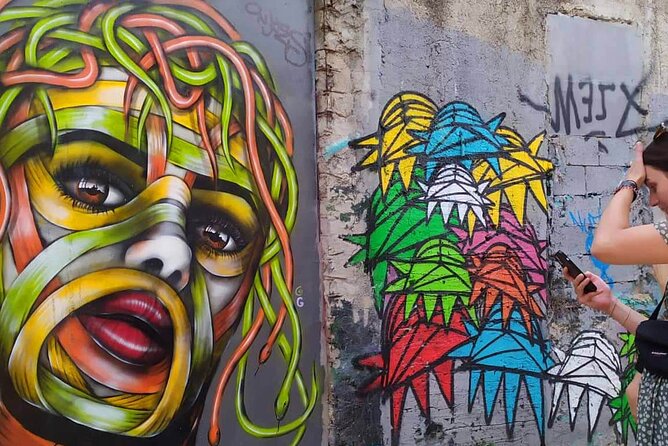
- A mythology quest, not a standard walking tour: You solve clues at ancient sites instead of simply following a guide from one lecture to the next.
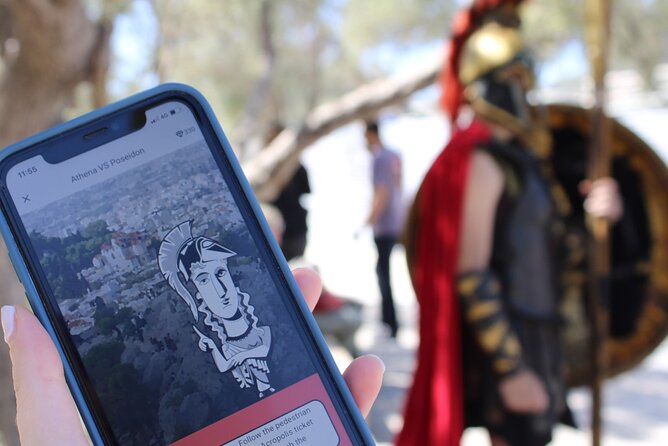
- The app remains part of the experience: Download Narratologies before meeting the facilitator so you can read location-based stories and follow directions without delay.
- Food is built into the route: You receive Greek donuts called lukumades with honey and cinnamon, plus water.
- The route links eleven sights: You pass the Temple of Olympian Zeus, Acropolis Museum, Dionysus theater, Areopagus, Plaka, and more.
- The final ceremony takes place in Plaka: Your mission ends at the Choragic Monument of Lysicrates, near Acropolis Metro Station.
- The small group has a practical limit: A maximum of 15 people keeps the riddles manageable, though families should still expect a fair amount of walking.
Why this Athens treasure hunt works for families
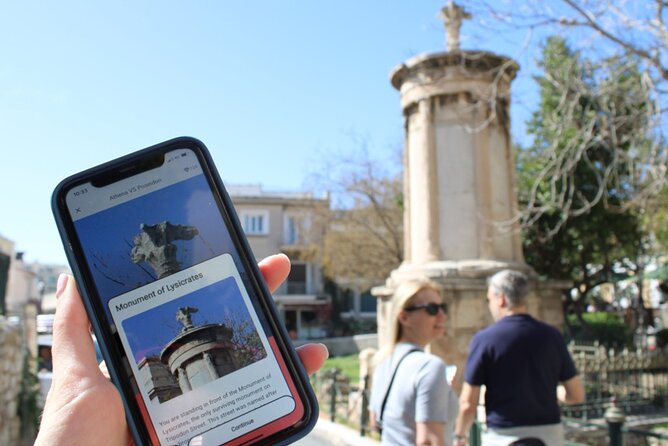
Greek mythology can feel remote when you meet it only in a textbook. This experience gives the stories a physical setting. Zeus is connected to the Temple of Olympian Zeus, Dionysus appears near his theater, and the gods become part of a route you can actually walk.
You are not asked to memorize a long list of names. At each stop, you read a short story in the app, look at your surroundings, and solve a riddle that points toward the next location. That structure gives children a clear job. Adults get enough historical context to appreciate the monuments, while younger participants can focus on the mission.
The Percy Jackson connection is useful, too. Konstas, one of the named guides, is able to explain how the modern Percy Jackson stories relate to Greek mythology, then move into broader questions about Athens and ancient Greek history. That makes the activity a good bridge between something a child already enjoys and the real places behind the stories.
Maria has also been praised for shifting easily between elementary-school and middle-school children. That matters if your family includes children at different ages. The activity is not designed only for very young children, and it does not assume that older children want a formal lecture.
You will still need to stay engaged. The app is a central part of the hunt, and the facilitator has the magic code that starts the game. If your family prefers a guide who does all the talking while you simply walk, choose a conventional sightseeing tour instead.
More Family and Kids Games in Greece
- Greek Mythology Treasure Hunt for Kids – Athens Private Tour
★ 5.0 · 77 reviews - Athens: Family Mythology Treasure Hunt and Tour
★ 4.8 · 42 reviews - Athens: Percy Family Treasure Hunt & Tour
★ 4.8 · 19 reviews
Starting at Hadrian’s Arch and the Temple of Olympian Zeus
The meeting point is the Arch of Hadrian on Leoforos Vasilisis Amalias 50. From there, the first stop is the Temple of Olympian Zeus, where the group asks the gods for help before reading a story and tackling the first riddle.
The temple is an excellent opening because its scale helps children understand that ancient Athens was not a small village of scattered ruins. It was a city that built on a grand scale, even when projects took generations to finish. The activity does not include a paid entrance here, so you can begin the story without an extra admission charge.
You spend about ten minutes at this stop. That is enough for an introduction and a clue, but not enough for a full architectural lesson. I see that as a fair trade. The goal is to get your family moving and curious, not to cover every fact about the temple.
A quick look at the Acropolis Museum
The route then reaches the Acropolis Museum. You receive another story and solve a riddle that sends you onward. The planned stop lasts about five minutes, so you should not expect to enter the museum or tour its galleries as part of this activity.
That short pause can still help you place the museum in the story of Athens. You are near one of the city’s most important cultural institutions, and the game uses the setting as a clue point rather than trying to squeeze a museum visit into a two-hour walk.
If you want to see the museum properly, plan a separate visit. The treasure hunt will give you a taste of its importance, but not time with its collection. This is one of the clearest limits of the experience.
Walking Dionysiou Areopagitou
Dionysiou Areopagitou is one of the most attractive pedestrian streets in central Athens. Ancient monuments line the route, and the street also offers views of carefully designed modern houses. Here, you read several stories and work through more challenging riddles.
This section gives the hunt room to breathe. You are not stopping only at isolated ruins. You are walking through a part of Athens where ancient remains and modern city life sit close together. Keep watch for the Olympian gods mentioned in the game, since the route asks you to look carefully rather than simply follow the pavement.
The planned time is about 15 minutes. That will feel brisk if your family pauses for photographs or wants to read every story slowly. The app makes the route more flexible, but the group still has a shared schedule.
More Treasure Hunts in Greece
- The Acropolis Treasure Hunt: Licensed Guide + Interactive Puzzles
★ 5.0 · 60 reviews - Athens Urban Treasure Hunt w Food Stop
★ 5.0 · 16 reviews - Athens Family Mythology Treasure Hunt and Tour w Food Stop
★ 5.0 · 15 reviews - Treasure Hunt Around Acropolis— Private Group
★ 5.0 · 10 reviews
Lukumades: the reward in the middle
The food stop is at LUKUMAΔΕΣ, where you receive lukumades with honey and cinnamon, along with water. These Greek donuts are a smart addition to a family route. A sweet snack gives children a break and gives the group a taste of something local without requiring a full meal.
The stop lasts about 15 minutes. Savory pastry is also included in the tour description, so you can expect more than a single bite of dessert, while drinks besides water are not included. If your family needs a larger meal, plan that separately.
Food can sometimes feel tacked onto a sightseeing package. Here, it serves a practical purpose. You have already walked through several historic areas, and the snack arrives before the second half of the mission. I would still keep water with you, especially in hot weather, since the route includes open areas and uphill walking.
Dionysus and the Herod Atticus Odeon
The Theatre of Dionysus comes next, at the foot of the Acropolis. This surviving ancient theater gives the mythology theme a strong setting, since Dionysus was closely tied to theater and performance. You learn a little about the site, solve another clue, and continue the mission.
The stop is planned for about five minutes. That is enough to connect the theater to the story, but not enough for a detailed discussion of ancient drama, seating, performances, or construction. If your family has a special interest in theater, you may want to return later with more time.
The route then reaches the Herod Atticus Odeon, a Roman-era theater of major importance. Another story and riddle prepare you for the Acropolis hill. Again, the focus is on movement and discovery rather than a full site visit.
This pair of stops shows the tour’s strength and its limit. You get a useful chain of connections between mythology, performance, Roman Athens, and the Acropolis. You do not get a deep explanation of each structure. Think of the activity as a lively framework for seeing the area, with room for a more detailed return visit.
The climb to Areopagus and the view
Areopagus is a small rocky hill with views toward Athens and the Parthenon. Clues are scattered through this part of the route, and the setting gives the group a natural pause after the lower monuments.
This is one of the more physically demanding parts of the experience. The tour asks for moderate fitness, and that advice is worth taking seriously. The route includes walking on historic streets and reaching a hill, so comfortable shoes matter more than polished sightseeing clothes.
The reward is the view. You can see the city and the Parthenon from a position that feels different from the usual street-level approach. The stop lasts about ten minutes, which gives you time to look around and work on the clue, though the surface and slope may slow a family with small children.
Ancient Agora from above
The Ancient Agora appears next, viewed from above rather than explored through a full entry. You read a story about the former center of ancient Athens, solve another riddle, and carry on.
That viewpoint helps you understand the Agora as an urban space rather than a group of separate ruins. It was central to daily civic life, and seeing it from above gives you a sense of its position in the city.
The planned stop is only five minutes. Do not book this activity expecting an Agora admission or a guided walk among its buildings. If the Agora interests you, save a separate block of time for it. The treasure hunt offers orientation and atmosphere, not a complete archaeological visit.
Plaka, the oldest district on the route
Plaka is where the hunt becomes most street-based. You read several stories and solve multiple riddles as each answer brings you closer to the final mission. The district’s narrow streets and old buildings make a natural backdrop for a mythology game.
You spend about 20 minutes here, the longest scheduled stop. That gives you more time to search, compare clues, and notice details around you. It also means the group is moving through a popular part of central Athens, where other pedestrians and changing street conditions can affect the pace.
I like Plaka as the final stretch because it shifts the experience away from formal ruins and into the living city. You are still following an ancient theme, but the setting is a neighborhood with shops, food, and daily activity. Discount vouchers for local souvenir shops and museum gift shops add a small practical benefit after the hunt.
The Tower of the Winds and the final coronation
The Tower of the Winds is the next clue point. You learn about an early recorded weather station and try to crack the riddle connected with it. The stop lasts about five minutes, so the game uses the tower as a memorable final challenge rather than a full architectural explanation.
The finish comes at the Choragic Monument of Lysicrates, at Epimenidou 3 in Plaka. A facilitator meets you there for the coronation ceremony if you have completed the mission. This gives the tour a clear ending rather than simply leaving you at the last street corner.
The monument is well preserved and close to Acropolis Metro Station. That makes the end useful for planning the rest of your day. You can continue around Plaka, head toward the Acropolis area, or use the metro without arranging a separate pickup.
What the $75.06 price means
At $75.06 per person, this is not the cheapest way to walk around central Athens. The price includes the facilitator, the Narratologies app, location-based stories, riddles, the lukumades food stop, water, and discount vouchers.
The value depends on how your family normally sights sees. If children lose interest during standard tours, the game format may justify the cost because it gives them an active role. You are paying for structure, storytelling, a guide, and a snack, not simply access to ruins. The major monuments on the route are free stops, and paid entry to the Acropolis, Acropolis Museum, or Ancient Agora is not included.
I would compare the price with the cost of a private family guide, since that is the closest alternative in spirit. A group size of no more than 15 keeps the activity from becoming a huge crowd, though it is not the same as having a private guide just for your family.
The activity is often reserved about 64 days ahead, so book early if your Athens dates are fixed. That is especially sensible for school holidays. Free cancellation is available up to 24 hours before the start time, giving you some flexibility if plans change.
Using the app without losing the human touch
After booking, you receive meeting information and a link to download the Narratologies app. Download it before the day of the tour. The app is the digital guide when the facilitator is not present, so waiting until you arrive can waste time and make the opening feel rushed.
The app provides navigation, location-based stories, riddles, and a way to collect gems. The facilitator has the magic code that unlocks the game, so you still need to meet the staff member even though much of the activity runs through your phone.
This blend works well for families who like a little independence. You can read, search, and solve together instead of listening nonstop. The tradeoff is screen time. If you want an entirely phone-free experience, this will not be the right fit.
Who should book Percy and Medusa?
I would choose this for families with school-age children, especially when children of different ages are traveling together. The Percy Jackson link can draw in mythology fans, while the clues, food, and coronation give younger children reasons to stay involved.
It also suits adults who want a light introduction to Athens before visiting major sites in greater depth. The route gives you a useful map of the area and points out places you might otherwise pass without understanding.
I would be cautious about booking it for anyone with limited mobility, since moderate fitness is required and Areopagus involves a hill. I would also skip it if your main goal is detailed archaeology. Five-minute stops at the museum, Odeon, theater, and Tower of the Winds are enough for a story and clue, not a full lesson.
Should you book it?
Book Percy and Medusa if you want your family to move through Athens with a purpose. You will taste lukumades, see a long list of major landmarks, hear mythology connected to real places, and finish with a playful ceremony in Plaka.
Skip it if you want entry and extended guided time inside the Acropolis Museum, Ancient Agora, or Acropolis itself. For most families, the best plan is to use this as an active first look at central Athens, then return to the sites that captured your attention.
FAQ
Where does the tour start?
It starts at the Arch of Hadrian, at Leoforos Vasilisis Amalias 50 in Athens.
Where does the treasure hunt end?
It ends at the Choragic Monument of Lysicrates at Epimenidou 3 in Plaka, near Acropolis Metro Station.
How long does the experience last?
The activity lasts approximately two hours.
What language is offered?
The experience is offered in English.
Is the Narratologies app included?
Yes. The app provides navigation, location-based stories, riddles, and gem collection.
Should I download the app before the tour?
Yes. You receive a download link after booking, and downloading it in advance is advised for a smoother start.
Is a guide or facilitator included?
Yes. One facilitator is included. The facilitator also has the magic code needed to start the game.
Is food included?
Yes. The experience includes a stop for Greek donuts called lukumades with honey and cinnamon, plus water. Drinks besides water are not included.
Are admission tickets to the major sights included?
The listed stops are free of charge within the activity. Admission to sites such as the Acropolis Museum or the Acropolis is not included as part of this experience.
How many people can join?
The activity has a maximum of 15 participants.
Is the tour suitable for people with limited fitness?
The experience recommends a moderate level of physical fitness. The route includes walking through central Athens and reaching Areopagus hill.
Can I cancel for a full refund?
Yes. You can cancel at least 24 hours before the start time for a full refund. Changes or cancellations made less than 24 hours before the start time are not accepted or refunded.
More Family and Kids Games in Athens
- Private Athens Family Treasure Hunt
★ 5.0 · 3 reviews - Hamburg: Scavenger Hunt Self-Guided Tour for Children
★ 4.5 · 319 reviews - Berlin: Self-Guided Family and School Class Scavenger Hunt
★ 4.6 · 128 reviews - Dresden: Old Town Scavenger Hunt for Children
★ 4.6 · 117 reviews
More Treasure Hunts in Athens
- Athens: Private Urban Treasure Hunt and Tour
★ 4.4 · 10 reviews - Athens: Street Art Treasure Hunt with Food Stop
★ 4.2 · 9 reviews - Acropolis Museum: Family Tour &Treasure Hunt w/Ticket Option
★ 5.0 · 8 reviews - Ancient Agora: E-Ticket w/Treasure Hunt Tour on your phone
★ 4.8 · 6 reviews
New puzzles around Athens
- Athens Highlights Self guided scavenger hunt and Walking Tour★ 4.5 · 6 reviews
- Athens Urban Treasure Hunt w Food Stop★ 5.0 · 16 reviews
- Treasure Hunt Around Acropolis— Private Group★ 5.0 · 10 reviews
- Athens Treasure Hunt Tour of the Lost Library of Aristotle★ 5.0 · 4 reviews
- Athens City Game: The Journey through Time★ 5.0 · 9 reviews
- Private Athens Treasure Hunt★ 5.0 · 4 reviews
- Athens Greek Mythology Exploration Game★ 3.5 · 7 reviews
- Private Athens Family Treasure Hunt★ 5.0 · 3 reviews
Family and Kids Games, head to head.



Greek Mythology Treasure Hunt for Kids – Athens Private Tour
Read our review →
Private Venice Family Tour with Saint Mark’s & Doge’s Palace
Read our review →Other lists this game appears in