
Review · AMSTERDAM
Amsterdam Treasure Hunt: The Mystery of a Secret Sender
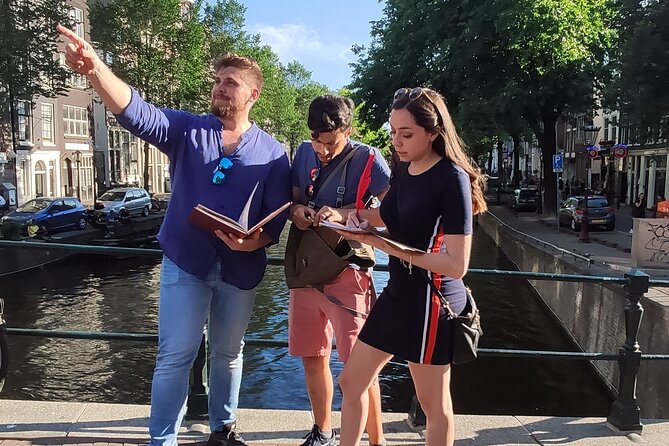
Amsterdam becomes your puzzle board in this self-guided mystery walk. You follow clues linked to old buildings and monuments, then work out the identity of a secret member of the Order of the Rosy Cross. It is part sightseeing walk, part family game, with enough history to keep the route from feeling like a simple hunt for objects.
I like the flexible start time and the fact that your private group controls the pace. I also like the route itself: three kilometers through central Amsterdam, with stops at the Oude Kerk, Nieuwmarkt, Westerkerk, Torensluis, and Amsterdam Museum. The main drawback is the amount of walking. Two hours is an estimate, and the puzzles may be harder to manage with a large group or during a rushed visit.
Key points at a glance
- A 3-kilometer mystery route: Walk through central Amsterdam while solving clues tied to real buildings, monuments, and city stories.
- A private, self-guided game: Only your group takes part, so you can pause, discuss clues, and set your own speed.
- Five useful city stops: The route includes the Oude Kerk, Nieuwmarkt, Westerkerk, Torensluis, and Amsterdam Museum.
- Good for families with teenagers: The game gives young visitors a reason to look closely at Amsterdam instead of simply following an adult from sight to sight.
- A two-hour activity with real walking: Wear comfortable shoes and start early if you want time for lunch, photos, or extra stops.
- Several language choices: The game is offered in English, Dutch, French, German, Spanish, and Italian.
What the Amsterdam mystery game is really like
This is not a guided lecture with a fixed group and a leader setting the pace. You receive the game materials and make your way through Amsterdam’s center, using clues to move from one location to the next.
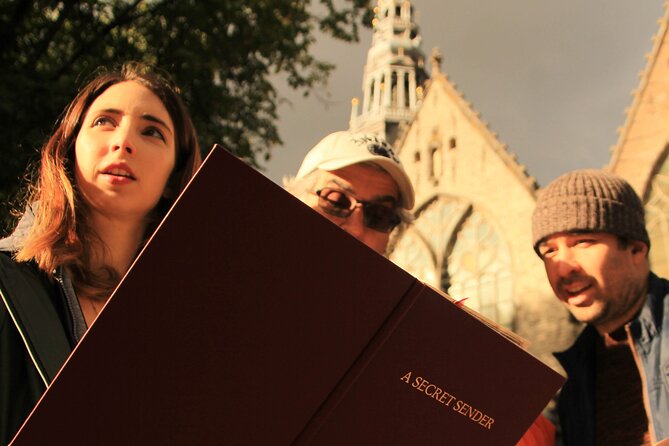
The story sends you after the identity of A Secret Sender, a historic member connected to the Order of the Rosy Cross. That theme gives the walk a bit of drama, but the real pleasure comes from using the city itself as part of the puzzle. You look at architecture, street details, monuments, and bits of local history with more care than you might on an ordinary stroll.
The advertised play time is about two hours, and the route covers roughly three kilometers. That is a comfortable distance for many people, but the game involves stopping, reading, discussing, and solving. If your group likes to think through every clue or take plenty of pictures, plan on needing more than the basic two-hour window.
Because this is a private activity, you do not have to match the speed of strangers. That matters with children, teenagers, and mixed-age groups. You can stop for a drink, take a wrong guess, or spend extra time at an interesting building without holding up another party.
More Treasure Hunts in Amsterdam:
- Amsterdam: Treasure Hunt Walking Tour “A Secret Sender”
★ 4.7 · 71 reviews - Amsterdam Red Light District Treasure: Self-Guided Tour & Quest
★ 5.0 · 39 reviews - Amsterdam: “Operation 45 ” Treasure Hunt Walking Tour
★ 4.5 · 6 reviews
Starting at Zwanenburgwal 178
The experience begins at Zwanenburgwal 178, in Amsterdam’s central area, and returns to the same meeting point at the end. That simple out-and-back arrangement makes planning easier, especially if you have another activity afterward.
The game is available with a mobile ticket, and confirmation is provided when you book. You choose a start time that suits your party rather than joining a fixed departure. That flexibility is useful if you are fitting the hunt between museum visits, meals, or a train arrival.
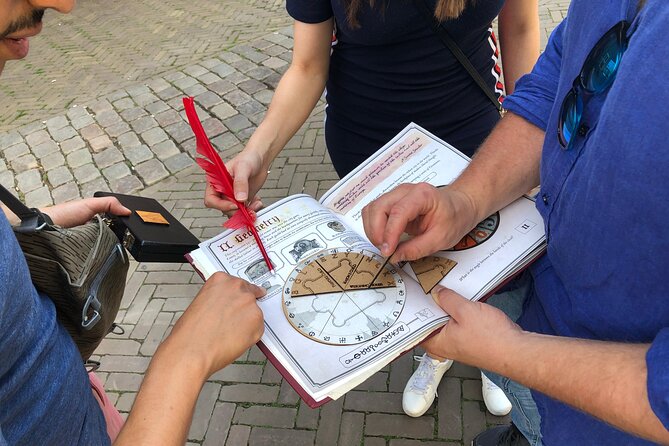
The game materials include a book and clues. One practical detail from the experience is that a backpack is supplied, though it may not be especially easy to buckle and unbuckle. You should not need to treat that as a major problem, but it is worth knowing if you are managing younger children or carrying your own small bag at the same time.
Staff at the start and finish are described as friendly, and Ben is specifically praised as a good host. Since the walk is self-guided, the host interaction is limited compared with a traditional walking tour, but a warm welcome and clear instructions can make the opening much easier.
Oude Kerk: starting with Amsterdam’s oldest core
The Oude Kerk is the first listed stop, placing you in one of Amsterdam’s most historic parts right away. Its location in the old city center gives the opening section a strong sense of place. You are not solving clues in a generic park or modern shopping area. You are using one of the city’s best-known old landmarks as part of the story.
The value here is visual. A puzzle can make you inspect doorways, shapes, signs, and nearby buildings that you might otherwise pass without a second look. This is especially useful for younger visitors, who may not want a long explanation about Amsterdam’s past but will happily search for the detail needed to solve the next step.
The area around the Oude Kerk can be busy, so keep your group together and give yourselves room to read the game book. The activity is intended for most participants, but crowded streets and frequent stops mean you need to pay attention to your surroundings rather than focusing only on the clue.
Nieuwmarkt: a lively pause in the route
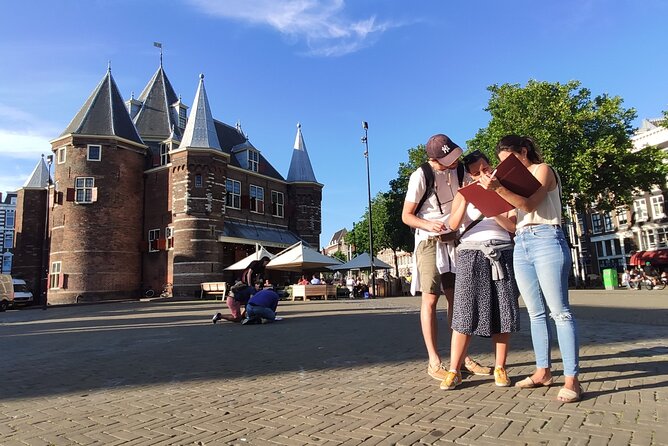
From the old center, the route continues to Nieuwmarkt. This gives the game a change of setting and provides a natural place to notice Amsterdam’s street layout, buildings, and public spaces.
Nieuwmarkt is also a practical point for your group. If you are walking with children or teenagers, a stop in an open square can break up the puzzle work. If you need a short pause, this is a sensible place to reset before tackling the next clue.
The game does not turn every stop into a formal sightseeing visit. That is both a strength and a limitation. You get a reason to explore the area and learn selected facts, but you should not expect a full architectural explanation or an extended visit inside each landmark. The activity works best as a playful introduction, with the option to return later to places that catch your interest.
More escape games around Amsterdam:
- Discover Amsterdam’s city center in this Outside Escape game tour
★ 4.5 · 18 reviews - e-Scavenger hunt Amsterdam: Explore the city at your own pace
★ 4.5 · 14 reviews - Amsterdam Urban Legend Scavenger City Game
★ 5.0 · 11 reviews - Amsterdam Scavenger Hunt and Highlights Self Guided Audio Tour
★ 4.0 · 9 reviews
Westerkerk: history with a puzzle in hand
Westerkerk adds another major landmark to the route. By this point, the walk has taken you through several different parts of central Amsterdam, and the clues should have your group working more closely together.
The puzzles are designed to be challenging enough to create suspense without stopping the entire outing. That balance matters. If clues are too easy, the game feels like a list of directions. If they are too obscure, younger participants can lose interest. The available experience suggests a middle ground, though a larger group may find it harder to agree on answers and share the materials.
I would pair a teenager with an adult rather than leaving one child to manage the book alone. The game is a social activity, and the best moments come from comparing guesses, spotting details, and explaining why an answer might fit.
Torensluis: looking up and looking closer
Torensluis is another useful stop because it encourages you to pay attention to Amsterdam’s built environment, not just its famous postcard sights. The route uses architecture and city details as clues, so this section rewards a slower pace.
You may find yourself noticing small features that are easy to miss on a normal city walk. That is the central idea behind the experience: the puzzle changes how you look. Instead of moving directly from one major attraction to another, you search the surrounding streets for information.
This stop also shows why the activity is best placed near the beginning of an Amsterdam visit. The route can point you toward streets, buildings, and restaurants you may want to revisit after the game. One family found that it helped them discover places to explore later, which is useful if you are still getting your bearings in the city.
Amsterdam Museum: finishing with a stronger sense of place
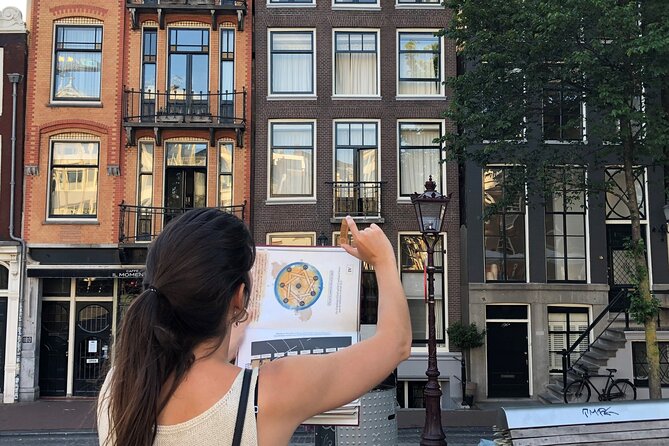
The Amsterdam Museum is the final listed stop before you return to the starting point. Its presence gives the ending a clear historical frame and ties the mystery back to the city’s wider story.
You should not assume the game includes a full museum visit. The activity is a walking game that uses the museum as one location on the route, not a replacement for an admission-based museum tour. If you want to spend time inside, check your schedule separately and allow extra time beyond the two-hour game.
Ending back at Zwanenburgwal 178 is convenient. You do not have to figure out a new meeting location after solving the mystery, and your group can discuss the final answer before moving on to lunch or another attraction.
Why the self-guided format works
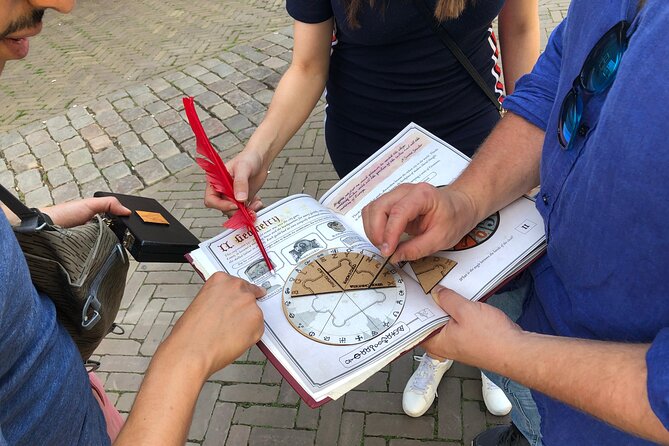
The strongest feature here is control. You choose the start time, play only with your own group, and set the rhythm. That is a better fit than a conventional walking tour if your party includes people with different interests or energy levels.
A self-guided format also gives you time to think. You can reread a clue, test an answer, or let the youngest member of the group take the lead. The game becomes less about reaching the next stop quickly and more about paying attention together.
The trade-off is that you do not have a guide constantly adding context or rescuing you from a difficult puzzle. Staff can help at the beginning and end, but the main challenge belongs to your group. If everyone prefers a clear explanation at every stop, a traditional guided walk may suit you better.
The private format works particularly well for couples, families, and small groups of friends. With a very large party, discussion can become noisy and the game book may be harder to share. One small group found the experience especially enjoyable for two people, while also noting that a larger group could be more difficult to manage.
A good choice for teenagers and families
The game’s clearest audience is families with school-age children and teenagers. Two teenagers, aged 13 and 16, rated the experience highly during a first visit to Amsterdam. That makes sense: the activity gives them a job to do, keeps them moving, and turns history into a series of problems to solve.
It can also work during a short visit. One family fitted the activity into a seven-hour layover, with time for a short lunch near Nieuwe Kerk. That is possible because the route lasts about two hours, but I would not cut the timing too closely. Delays, wrong turns, photos, and a slower group can easily extend the outing.
The walk is not limited to families. Couples can enjoy the shared puzzle-solving, and adults who like city history may appreciate the clues as an excuse to inspect Amsterdam more closely. Still, people who dislike games, walking, or stopping to read may find the format less appealing.
Price, timing, and practical value
At $30.25 per person, this costs more than simply walking through the same central streets on your own. The price pays for the prepared mystery, game materials, route design, and the structure that turns sightseeing into a group activity.
I see the best value for a private group that wants a shared experience rather than a list of sights. If you already plan to walk through the city center, the game adds purpose and interaction. For a family with teenagers, that can be worth more than another standard tour where children simply listen.
The value is weaker if your main goal is detailed history, interior visits, or a fast introduction to Amsterdam. This is not a full guided tour and does not replace a museum ticket. You are paying for the game and the way it changes your walk.
The activity has a 4.9 rating from 149 reviews, with 97 percent recommending it. Those figures suggest that the format works well for its intended audience, but they should not hide the basic facts: you will walk three kilometers, solve puzzles, and manage the activity yourself.
Comfortable shoes are a smart choice. Starting early is also useful, especially if you want to eat afterward or have a firm appointment. The walk is offered in English, Dutch, French, German, Spanish, and Italian, so check that your chosen language matches the needs of your group.
Service animals are allowed, the meeting point is near public transportation, and most people can participate. Free cancellation is available if you cancel at least 24 hours before the local start time. Changes or cancellations inside that window are not accepted for a refund.
Should you book Amsterdam’s secret sender mystery?
Book it if you want to explore Amsterdam through a shared challenge, especially with teenagers, children, or a partner who enjoys puzzles. It is a clever way to turn a three-kilometer city walk into an active afternoon, and the route includes several useful landmarks rather than a string of random stops.
Think twice if you want a guide talking throughout, a short walk, or a detailed visit inside Amsterdam’s museums and churches. The activity asks you to read, search, discuss, and keep moving.
For most families and small groups, I would schedule it in the first few days of your stay. It gives you a useful introduction to the center, points out places you may want to revisit, and lets you get your bearings while doing something more engaging than simply following a map.
FAQ
How long does the Amsterdam mystery game take?
The game has about two hours of play time. The route covers roughly three kilometers, and your group may need longer if you stop for photos, take breaks, or spend extra time solving clues.
Where does the activity start?
It starts at Zwanenburgwal 178, 1011 JH Amsterdam, Netherlands.
Where does the activity end?
The activity ends back at the meeting point.
Is this a guided walking tour?
No. It is a self-guided game for your private group. You follow the route and solve the clues at your own pace.
Which landmarks are included?
The listed stops are the Oude Kerk, Nieuwmarkt, Westerkerk, Torensluis, and Amsterdam Museum.
What languages are available?
The game is available in English, Dutch, French, German, Spanish, and Italian.
Is the activity suitable for children?
Most people can participate, and the game is designed to keep children and teenagers involved. The puzzles and walking distance may be better suited to children who can comfortably take part in a two-hour city walk.
Can I cancel for a refund?
Yes. You can cancel at least 24 hours before the local start time for a full refund. Cancellations or changes made less than 24 hours before the start are not accepted for a refund.
New puzzles around Amsterdam
- e-Scavenger hunt Amsterdam: Explore the city at your own pace★ 4.5 · 14 reviews
- e-Scavenger hunt Almere: Explore the city at your own pace★ 3.5 · 4 reviews
- Discover Amsterdam Vondelpark in this Outside Escape city game!★ 4.5 · 6 reviews
- Self-Guided Secrets of Amsterdam Exploration Game★ 5.0 · 2 reviews
- e-Scavenger hunt Volendam: Explore the city at your own pace★ 4.5 · 8 reviews
- Self-Guided Mystery Hunt by Dam Square in Amsterdam★ 5.0 · 2 reviews
- Amsterdam Scavenger Hunt and Highlights Self Guided Audio Tour★ 4.0 · 9 reviews
- Romantic Amsterdam: Fairytale or Tragedy? Self-Guided PuzzleQuest★ 5.0 · 2 reviews
Treasure Hunts, head to head.


Fun, Flexible Treasure Hunt Around Manchester with Cryptic Clues & Hidden Gems
Read our review →York Treasure Hunt Adventure: The Mystery of The Gunpowder Snitch
Read our review →
Black Diamond Treasure Hunt Excursion with Backcountry Dining
Read our review →
Private city discovery tour – A Historical Treasure Hunt
Read our review →
Mostra Leonardo Da Vinci: Rome Treasure Hunt Game
Read our review →
Other lists this game appears in