
Review · ROME
Rome: Spanish Steps, Trevi, & Pantheon Live Treasure Hunt
Rome becomes a giant game board on this 2.5-hour treasure hunt through the Spanish Steps area, Trevi Fountain, and Pantheon. Instead of listening to a long stream of dates, you search for clues, answer riddles, and pick up bits of Roman history as you go. Guide Marco has led the activity with a playful style, and prizes give the finish a useful spark of competition.
I like two things right away: the hunt gives children a reason to look closely at famous monuments, and it lets adults learn alongside them without turning the outing into a school lesson. The Trevi Fountain’s coin-tossing tradition and the Pantheon’s unusual architecture become part of the game. The main consideration is price: at $105 per person, this makes the most sense for families or groups that truly want an organized activity, not simply a guided walk.
Key points to know
- Trevi Fountain becomes a clue station: Look for facts about its origins and the tradition of tossing coins.
- Marco may guide the hunt: His name comes up in the strongest comments, especially for keeping the game engaging.
- The Pantheon adds substance: Activities focus on its architecture and long history.
- Prizes make the teams care: Winning is not the whole point, but it gives the riddles extra energy.
- Meet near the Spanish Steps: Find the Column of the Immaculate Conception in Piazza Mignanelli.
- Bring good walking shoes: The route is outdoors and moves through Rome’s central streets.
A Rome sightseeing game with real landmarks
This experience works because it gives a simple purpose to a familiar Rome route. You are not just moving from one monument to the next. You are looking for something, trying to solve something, and listening for details that may help your team.
That format can be especially useful with children. Rome offers an endless supply of statues, churches, fountains, and old stones, but young visitors do not always want a lecture about each one. A riddle or quiz gives them a job. Adults get a bit of history, while children get a game with a clear goal.
The activity is also suitable for adults alone, especially colleagues or friends looking for a team-building outing. One Italian group described it as a successful team-building event, with careful organization and plenty of fun. You do not need to treat it as a children-only tour, even though children are central to its design.
The supplied information does not give a group size, so you should not expect a guaranteed private experience unless your booking says so. It is best to think of this as a guided team activity in public parts of central Rome.
More Treasure Hunts in Italy
- Mostra Leonardo Da Vinci: Rome Treasure Hunt Game
★ 4.7 · 140 reviews - Florence Self-Guided Treasure Hunt & Medici Mystery Walking Tour
★ 5.0 · 69 reviews - Best of Florence Treasure Hunt Tour for Kids & Families
★ 5.0 · 44 reviews
Meeting at Piazza Mignanelli near the Spanish Steps
Your starting point is the Column of the Immaculate Conception in Piazza Mignanelli. This is beside the Spanish Steps area, and your guide will hold a sign with your name.
That meeting detail matters. Central Rome can feel like a maze of small lanes and grand squares, and the Spanish Steps area is often full of people. Give yourself enough time to find the column rather than arriving at the last minute. Look for the sign, then confirm that you have found the correct guide before the group leaves.
The meeting area gives the hunt a strong beginning. You are already in one of Rome’s most famous central zones, surrounded by streets that lead toward the Trevi Fountain. The activity does not begin with a coach ride or a long transfer. It starts on foot, with the city itself providing the setting.
Wear comfortable shoes. That is the one specific item the operator asks you to bring, and it is sound advice for any activity that moves through Rome’s historic center. The duration is 2.5 hours, so the walk is long enough for poor footwear to become a nuisance.
Trevi Fountain turns history into a challenge
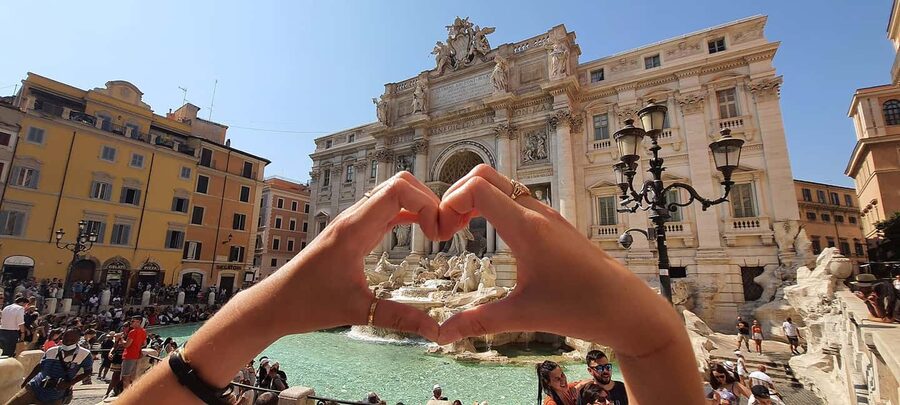
The Trevi Fountain is one of the key stops, and the hunt uses it for more than a quick photo. You will search for clues and answer questions about the fountain’s origins and the familiar tradition of throwing coins into the water.
This is a smart way to handle a monument that can otherwise become a short stop in a crowded square. You look at the fountain with a question in mind. Details that might blur together during ordinary sightseeing become possible answers.
The coin tradition is a good example. Many people know that visitors toss coins into the Trevi Fountain, but the game encourages you to connect the custom with the wider story of the monument. The exact quiz content can vary, so you should expect prompts and trivia rather than a fixed classroom lesson.
The fountain is also a busy public site. Crowds, noise, and people taking photographs may make it harder to hear every word or spot a clue at once. That is part of the tradeoff. You gain a lively setting, but you do not get a quiet museum room. Stay close enough to your group to follow the instructions.
For families, this stop is likely to be one of the easiest to enjoy. The fountain is visually dramatic, the coin tradition is familiar to children, and the activity gives them something specific to do. For adults, the value comes from seeing a famous monument with a little more attention than a standard photo stop allows.
Walking through Rome with a purpose
After Trevi, the route continues through the central streets toward the Pantheon. The exact street-by-street path is not specified, so you should not book this expecting a detailed architectural walking tour of every lane.
Still, the movement between landmarks is important. The hunt uses Rome as an outdoor puzzle space, and the walk lets you keep solving questions between the major stops. Your guide can add anecdotes and small facts as the group goes, giving the route more life than a simple transfer from one attraction to another.
I like this part because it keeps the activity from feeling like two disconnected monument visits. The hunt has a steady rhythm: search, listen, answer, walk, and try again. That rhythm can help children stay involved during the less famous stretches of the route.
It also gives your group a chance to work together. One person may notice a visual detail, another may remember a fact, and someone else may be willing to make the final guess. The prize system encourages that cooperation, even if friendly competition is part of the plan.
Do not expect a relaxed, slow-paced stroll at every moment. A treasure hunt has a goal, and the group may need to keep moving. If someone in your party wants to stop for long photo sessions or shop along the way, the format may feel restrictive.
Same streets, a different puzzle:
- Open Air Escape Game in Villa Borghese !
★ 4.5 · 145 reviews - Angels & Demons Rome Scavenger Hunt: The Illuminati Escape Game
★ 4.5 · 103 reviews - Open Air Escape Game – TRASTEVERE REVOLUTION
★ 4.5 · 89 reviews - Rome: 2.5-Hour Family Vatican Highlight Scavenger Hunt
★ 4.6 · 51 reviews
The Pantheon supplies the big history lesson
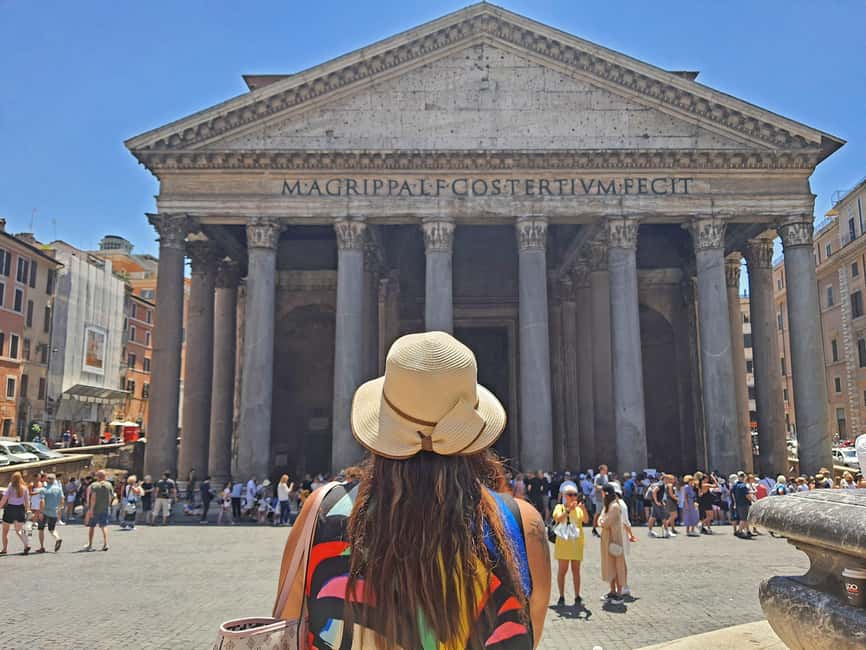
The Pantheon is the second major landmark named in the experience. Here, the activities focus on the building’s architecture and its long story. You can expect questions and challenges designed to make children notice how the building works, rather than simply hear that it is old and important.
The Pantheon is well suited to this approach. Its shape and engineering invite questions, and its interior gives a guide plenty to explain. The activity information does not promise a private entrance, reserved access, or a full formal tour inside, so keep your expectations focused on the treasure hunt and its educational prompts.
The Pantheon section can be the most satisfying part for children who enjoy puzzles. The building offers physical details to observe, while the guide supplies the historical setting. Instead of asking a child to remember a list of dates, the hunt lets them connect an architectural feature with a question or clue.
For adults, this stop adds weight to the outing. The game is not only about racing between fountains and squares. You also get a chance to think about how Roman buildings were made and why the Pantheon has remained such an important part of the city.
The activity promises interesting anecdotes and fun facts along the way. Marco is specifically praised for making the experience engaging, so if he is assigned to your group, you can expect an energetic guide who uses conversation and challenges to keep the pace moving.
Clues, quizzes, and prizes keep the group moving
The heart of the outing is the mix of clues, riddles, trivia, and interactive tasks. This matters because not every child enjoys the same kind of sightseeing. One may like solving word puzzles, another may prefer searching for visual clues, and another may simply want to compete.
The hunt also works for adults because the questions are not presented as a test you must pass. You are learning while trying to help your team. The tone is more playful than formal, which makes it easier for families to take part together.
Prizes are part of the appeal. The exact prizes are not described, so do not book this expecting a particular reward. What is clear is that the prize adds a final goal and makes the result feel more tangible.
One useful point: your team does not need to win for the outing to work. A participant who did not win still found the activity worthwhile because the group saw and learned a lot. That is a good sign for families with younger children who may become disappointed by competition.
At the same time, prizes can change the mood. Some groups enjoy a race, while others prefer a calm outing. If your children are sensitive about losing, set expectations before the hunt begins. The best approach is to treat the prize as a bonus and the clues as the main event.
What the $105 price means for value
At $105 per person, this is not a low-cost way to see Rome’s main sights. You are paying for the guide, the prepared treasure hunt, the interactive structure, and the chance to explore with a group that wants something more active than a standard tour.
For a family of four, the total becomes significant. The price is easier to justify if your children enjoy games, puzzles, and friendly competition. It is also more attractive for a group or company seeking a team-building activity, since the hunt gives everyone a shared task.
The value is weaker if you mainly want historical depth or a simple introduction to the monuments. A traditional Rome guide may spend more time on art, politics, architecture, and the details of each site. This experience chooses participation over long explanation.
I would compare the cost with the alternatives in your own itinerary. If you already have several formal guided tours booked, this hunt can provide a change of pace. If your budget is tight and you are happy to visit Trevi and the Pantheon independently, the price may be hard to defend.
The five-star rating from six submitted ratings is encouraging, and the comments repeatedly praise the guide, the fun format, and the prizes. That is a small sample, not a guarantee, but the praise is notably consistent. Marco receives the clearest personal approval, including comments about his guiding and the way he kept the activity enjoyable.
Who will enjoy this most
This is a strong match for families with children aged five and older who want to sightsee without asking kids to stay quiet through a long lecture. The minimum age is five, and children under five are not accepted. The activity also has a stated upper age limit of 95.
It suits groups that enjoy solving problems together. Friends, school-age families, and work teams can all use the format to break the ice and share an experience. The team-building comments suggest that it is not limited to parent-and-child outings.
You should choose it if you want:
- A guided walk with games and questions
- Famous Rome landmarks presented in a playful way
- A chance for children and adults to work together
- An English-language activity with a live guide
- A prize-driven finish
You may want something else if you prefer:
- A quiet, unhurried walk
- A long lecture at each monument
- A detailed art history tour
- Guaranteed private guiding
- A low-cost way to see central Rome
The operator lists English as the available language. If someone in your group is not comfortable in English, the riddles and fast-moving team discussion may be difficult.
Practical details that can shape your day
The activity lasts 2.5 hours, with starting times based on availability. Check the time carefully against lunch, naps, museum visits, and any other booked plans. Because the activity moves outdoors through central Rome, comfortable shoes are more important than stylish ones.
The meeting point is the Column of the Immaculate Conception in Piazza Mignanelli. Your guide will hold a sign with your name. That makes the final meeting easier, but you still need to allow time to reach the square.
The tour is guided live in English. A top-rated local guide is included, and Marco is one named guide connected with the experience. Guide assignments can vary, so booking information should be your final source for the person leading your group.
You can cancel up to 24 hours before the activity for a full refund. You can also reserve now and pay later, which helps if your Rome plans are still changing. Those policies are useful, but the main booking decision is still about format: you are buying an interactive game, not simply access to the landmarks.
Should you book the Rome treasure hunt?
Book it if your group likes riddles, friendly competition, and learning by doing. The route links the Spanish Steps area, Trevi Fountain, and Pantheon, while the clues give children a reason to notice the city around them. Marco’s strong personal praise and the repeated approval of the prizes add confidence to the format.
Think twice if you want a traditional historical tour or need to watch every euro. At $105 per person, the activity earns its price through preparation and participation, not through exclusive entry or luxury transport.
For the right group, this is a cheerful way to make central Rome feel less like a list of monuments and more like a shared mission. Bring shoes you can walk in, arrive at Piazza Mignanelli with time to spare, and remember that the best prize is getting your whole team to solve the next clue together.
FAQ
Where does the treasure hunt meet?
Meet your guide by the Column of the Immaculate Conception in Piazza Mignanelli. The guide will hold a sign with your name.
How long does the activity last?
The treasure hunt lasts 2.5 hours.
What landmarks does the hunt include?
The experience includes the Spanish Steps area, the Trevi Fountain, and the Pantheon.
What happens at the Trevi Fountain?
You will search for clues and answer trivia about the fountain’s origins and the tradition of tossing coins.
What happens at the Pantheon?
The hunt continues with activities about the Pantheon’s architecture and history.
Is the activity suitable for children?
It is designed as a family-friendly experience, but children under five are not permitted.
Is the activity available in English?
Yes. The live guide and activity are available in English.
Is a guide included?
Yes. A local guide is included, and Marco is one guide associated with the experience.
What should you bring?
Bring comfortable shoes for the outdoor walking route.
Can I cancel for a refund?
You can cancel up to 24 hours in advance for a full refund. You can also reserve now and pay later.
New puzzles around Italy
- Genoa Historic Centre Quest: A Self-Guided Puzzle Adventure★ 4.0 · 3 reviews
- Treasure Hunt in Florence for Families★ 4.5 · 3 reviews
- 2-Hour Private Treasure Hunt in Florence★ 5.0 · 3 reviews
- Private Family Tour – Uffizi Gallery for Kids★ 5.0 · 27 reviews
- Florence Haunted Secrets: Echoes of the Dead Exploration Game★ 4.0 · 9 reviews
- Florence Scavenger Hunt and Highlights Self-Guided Tour★ 4.5 · 3 reviews
- Kids treasure hunt in the Boboli Garden. Private, timed entry!★ 5.0 · 2 reviews
- Florence Highlights Self guided scavenger hunt and Walking Tour★ 4.5 · 3 reviews
Treasure Hunts, head to head.


Fun, Flexible Treasure Hunt Around Manchester with Cryptic Clues & Hidden Gems
Read our review →York Treasure Hunt Adventure: The Mystery of The Gunpowder Snitch
Read our review →
Black Diamond Treasure Hunt Excursion with Backcountry Dining
Read our review →
Amsterdam Treasure Hunt: The Mystery of a Secret Sender
Read our review →
Private city discovery tour – A Historical Treasure Hunt
Read our review →
Mostra Leonardo Da Vinci: Rome Treasure Hunt Game
Read our review →Other lists this game appears in