
Review · ITALY
Mostra Leonardo Da Vinci: Rome Treasure Hunt Game
Rome becomes a giant game board on this tablet-guided treasure hunt, with clues leading you through the historic center and back to the Leonardo da Vinci exhibition. You choose the route, stop for photos, answer questions, and collect clues for a final riddle.
I especially like the freedom to visit as much or as little as you want, and the way the game gives children a reason to notice statues, squares, and small details. The main drawback is the walking: three hours is tight if you want to reach every major sight, and younger children may find some English instructions difficult.
Key points to know before you book
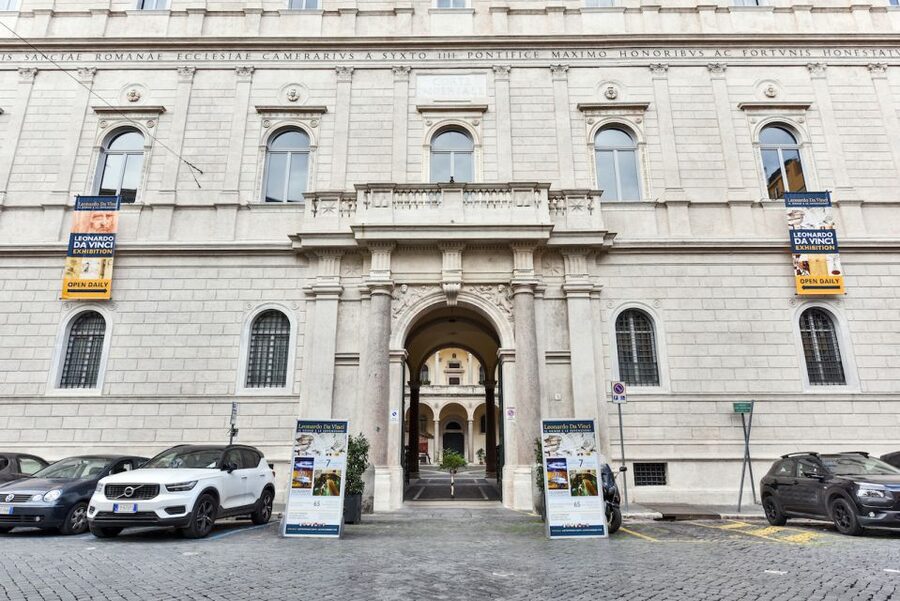
- The game begins and ends at the Leonardo da Vinci exhibition: You collect the tablet at Piazza della Cancelleria 1, near Campo de’ Fiori and Piazza Navona, then return there for the museum portion and final riddle.
- You choose the route: The interactive map can send you toward the Pantheon, Piazza Navona, Campo de’ Fiori, the Spanish Steps, the Roman Forum, or the Colosseum.
- One tablet is provided per family: This is a private-group activity, but the game is designed for everyone to solve clues and take part together.
- The museum entry is included: Admission to the Leonardo da Vinci exhibition is part of the price, while entry to other Roman sights is not.
- The treasure hunt is especially good for children and teenagers: Kids earn points, take photos, and receive clues, turning a long city walk into a shared challenge.
- Plan for rain or shine: The outdoor game continues in all weather, so comfortable shoes and suitable clothing matter.
How the Leonardo da Vinci treasure hunt works
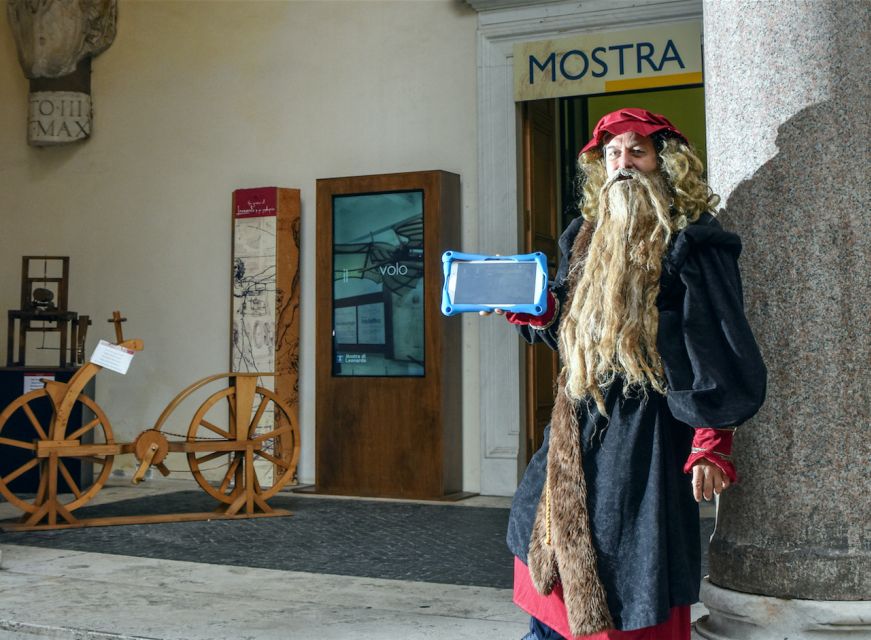
You start at Mostra Leonardo da Vinci, located at Piazza della Cancelleria 1. This is a handy location near Campo de’ Fiori and Piazza Navona, two central stops you might reach during the game.
At the ticket counter, you show your voucher and receive the treasure hunt kit. The main tool is a tablet with an interactive city map. It acts as your guide, showing possible points around central Rome and giving you questions, clues, facts, and photo tasks.
This is not a traditional walking tour with a guide leading a fixed group. You are given a route system and decide what interests you. You can make the game short and focused, or keep walking until you have covered much of the center.
The activity is scheduled for about three and a half hours, with roughly three hours devoted to the outdoor hunt. The extra time allows for starting the game, visiting the museum, and solving the final challenge. If your children are tired, you can do fewer stops. If they are having fun, you may want every available clue.
One practical point matters at the start: ask the museum staff to show you exactly how the map and photo functions work. The tablet software can take a little time to understand, especially when you need to see your position, save a photograph, or enter an answer before moving on.
More Treasure Hunts in Italy
- Florence Self-Guided Treasure Hunt & Medici Mystery Walking Tour
★ 5.0 · 69 reviews - Best of Florence Treasure Hunt Tour for Kids & Families
★ 5.0 · 44 reviews - Naples: The Path of the Immortals Treasure Hunt Walking Tour
★ 4.1 · 42 reviews
Choosing your route through central Rome
The strongest feature of this activity is its flexible route. You are not locked into one trail, and you do not have to visit every listed sight. Instead, you choose the points that seem most interesting and use the tablet to guide your progress.
That freedom works well in Rome, where a planned route can easily become too ambitious. You might spend more time around Piazza Navona, then head to the Pantheon and Campo de’ Fiori. Or you might aim for the Spanish Steps and the Forum area if those are priorities for your family.
The tradeoff is distance. The Colosseum, Spanish Steps, Pantheon, Piazza Navona, Campo de’ Fiori, and Roman Forum are not all close together. You can reach many of them on foot, but answering every question may require a long walk and quick decisions about where to spend your time.
If this is your first morning in Rome, the activity can help you get your bearings. If you have already seen the major sights, it gives you a reason to explore streets and places you might otherwise pass by. One family happened upon an Italian market during the walk, which shows the value of leaving room for surprises.
You should also separate the game from sightseeing inside the major monuments. The price does not include admission to the Colosseum, Pantheon, Forum, or other attractions. You can view many exterior areas and public squares, but paid entry is your responsibility.
What happens at the Roman stops
The game uses Rome’s major sights as question stations rather than as formal guided visits. At each point, you read information on the tablet, look closely at the surroundings, answer a question, or complete a task.
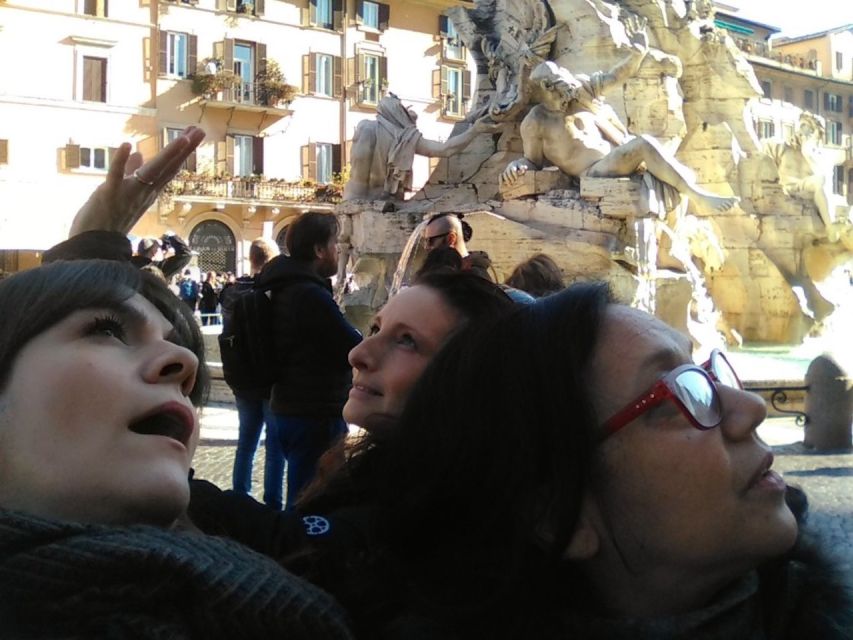
At Piazza Navona, the open square gives you plenty to photograph and examine. Its fountains and sculptures work well for the photo challenges, especially when children are asked to create their own living sculpture beside an original work.
Campo de’ Fiori is close to the starting point and can add a market stop to your route. It is also useful as a simple first stage because you can begin exploring without committing to a long walk.
The Pantheon offers a strong history lesson from the outside, although entry is not included. The game encourages you to look up, read carefully, and connect what you see with the questions on the tablet instead of simply checking off another sight.
The Spanish Steps make a good choice if your family wants a well-known Roman landmark and a change of setting. The route can become more demanding if you combine them with the Forum or Colosseum, so check the map before setting out.
The Roman Forum and Colosseum area may appeal most to families eager to see ancient Rome. Keep in mind that the treasure hunt does not replace an archaeological-site ticket or a full guided visit. It gives you a way to reach and observe these places, then directs your attention with clues.
The exact sequence is up to you. That is useful, but it also means you need to keep an eye on the clock. A family that stops for every photo, market, snack, and monument may not finish every challenge within three hours.
The photo challenges make the walk more active
The photo tasks are more than a way to record the day. You are asked to place yourselves beside sculptures and create your own living versions of them. This gives children a physical activity in a city where much sightseeing involves standing still and listening.
The tablet stores the photographs, and the museum can email them to you afterward. Check the tablet case before starting, though. If it shifts over the camera, part of each image can be blocked. It is worth taking one test photo and confirming that it saved correctly before you walk away from the museum.
These tasks also change how you look at Rome. Instead of simply photographing a fountain or statue, you study its pose, shape, and setting. That small shift can keep older children and teenagers involved when their attention starts to fade.
The scoring system adds another reason to keep going. You earn points at different stages, and higher scores give you more clues. The clues are important because they help you solve the final riddle at the Leonardo da Vinci exhibition.
Same streets, a different puzzle:
- Open Air Escape Game in Villa Borghese !
★ 4.5 · 145 reviews - Angels & Demons Rome Scavenger Hunt: The Illuminati Escape Game
★ 4.5 · 103 reviews - Open Air Escape Game – TRASTEVERE REVOLUTION
★ 4.5 · 89 reviews - Rome: 2.5-Hour Family Vatican Highlight Scavenger Hunt
★ 4.6 · 51 reviews
Returning to the museum for Leonardo’s inventions
The hunt begins and ends at the same exhibition, which gives the day a clear shape. After the outdoor part, you return to Mostra Leonardo da Vinci and continue with the museum portion.
The museum is not just a place to collect your prize. Its displays focus on Leonardo’s inventions and ideas, giving children a chance to see how sketches, machines, and practical experiments connect with the puzzle they have been solving.
A second tablet is used inside the exhibition for the final part of the game. You use the clues collected around Rome to answer the riddle. If you solve it, a special prize is available. Staff members are also prepared to help explain the process, and the museum itself can be a highlight for children who enjoy hands-on or invention-focused exhibits.
The museum portion matters because it ties the city walk to Leonardo rather than treating the exhibition as an unrelated add-on. You spend the first part looking at Rome through questions and observation, then return to a focused indoor setting where you can spend more time with the da Vinci material.
If the weather is poor, the museum provides the more comfortable part of the experience, but the outdoor hunt still operates in rain. Bring waterproof layers and shoes with good grip if the forecast is uncertain.
Is three hours enough?
Three hours is enough for a satisfying selection of stops. It is not enough to see every major point in central Rome at a relaxed pace, complete every task, and make long visits inside paid attractions.
I would choose your priorities before collecting the tablet. Decide if the goal is the Pantheon and Piazza Navona, the Spanish Steps and central shopping streets, or a longer route toward the Colosseum and Forum. The map lets you change course, but a rough plan prevents wasted time.
Families with younger children should resist the urge to chase every point. The game works best when you stop for photographs, allow questions, and accept that a few missed challenges do not spoil the day.
Teenagers often have enough independence to read clues, manage the tablet, and choose the next destination. Adults can enjoy solving the riddles too. This is one of those activities where the adults may become just as involved as the children.
One booking includes one tablet per family. That works well for a family that wants to stay together. A group of adults may need to share the device closely, so the experience is more social than a set of separate audio guides.
What the $53 price includes
At $53 per person, the value depends on how much you use the experience. The price includes entry to the Leonardo da Vinci exhibition and the treasure hunt kit, including tablet rental and the interactive map.
It does not include food, drinks, hotel pickup, or admission to other attractions. You should budget separately if you want to enter the Colosseum, Forum, Pantheon, or another site along the route.
For a family, the activity combines a museum visit with several hours of structured sightseeing. That can be useful when children need a reason to keep walking. You are not paying for a private human guide, but you are paying for a flexible game, the tablet, the museum entry, and staff help at the start and finish.
The strongest value comes when you use the hunt as your introduction to Rome. It shows you several parts of the center and gives you a list of places to revisit later. If you already know the city well and want a detailed explanation at each monument, a conventional guide may suit you better.
Who will enjoy it most
I would recommend this activity first to families with children around elementary-school age through the teenage years. The tasks give kids a clear job, and the photo challenges keep the walk from feeling like a long sequence of adult sightseeing stops.
It also suits families who have already covered Rome’s biggest attractions and want a lighter way to explore. You can select less familiar streets, discover a market by chance, and still have the tablet keep everyone focused.
Adults can enjoy the puzzles, but the format is clearly more playful with children. Two adults may find the game useful for reaching places they would otherwise miss, though the tasks may feel less essential without kids in the group.
The activity is wheelchair accessible, and it is offered as a private group. Still, the exact route is your choice, so you should consider the distance between the places you select. Bring a passport or ID card, as requested for the activity.
The host and museum staff can assist in Italian, English, German, French, Spanish, or Russian. The staff are also able to help with rescheduling in some circumstances, but you should not count on changes unless you speak with them directly.
Practical tips for a smoother hunt
- Test the tablet map before leaving the museum. Make sure you can see your position and understand how to select the next point.
- Take one sample photograph and check that the tablet case does not cover the lens.
- Choose only a few priority sights if you have younger children.
- Wear comfortable walking shoes. You may cover a lot of ground if you pursue every clue.
- Bring water and plan food separately, since neither is included.
- Keep the weather in mind. The game runs rain or shine.
- Set aside time for the museum at the end, rather than treating it as a quick prize stop.
- Do not worry about achieving a perfect score. The staff can still award the prize, and the main value is the shared exploration.
The activity has earned a 4.7 rating from 140 bookings, with especially strong praise for family fun, the museum, the friendly staff, and the way the game makes children notice more of Rome. The most useful criticism is also clear: the tablet instructions can take time to learn, the English wording may challenge eight to ten-year-olds, and three hours can feel short.
Should you book the Rome Leonardo da Vinci treasure hunt?
Book it if you want a family-friendly way to connect Rome’s squares, statues, and famous sights with a game. The flexible route is a real advantage, and the Leonardo exhibition gives the activity a clear beginning and ending rather than leaving you with only a tablet and a long walk.
You should skip it if you want a traditional guide explaining every monument in detail, or if you dislike managing a device while sightseeing. It is also not the right choice for fitting full visits to every major paid attraction into one morning.
For families, especially those with children aged 10 to 13 or teenagers, the $53 price can be fair when you use both the outdoor hunt and the museum. Start early, choose your priorities, and ask for a full tablet demonstration. Done at an easy pace, this is a smart way to turn Rome’s center into a shared family adventure.
FAQ
Where does the Leonardo da Vinci treasure hunt begin?
It begins at the ticket counter of Mostra Leonardo da Vinci at Piazza della Cancelleria 1, near Campo de’ Fiori and Piazza Navona.
Where does the activity finish?
The hunt returns to Mostra Leonardo da Vinci, where you complete the museum portion and try to solve the final riddle.
How long does the experience last?
The listed duration is three and a half hours, including the outdoor treasure hunt and the museum visit. The self-guided city portion takes about three hours.
What attractions can I visit during the game?
The possible areas include the Colosseum, Spanish Steps, Piazza Navona, Campo de’ Fiori, the Pantheon, and the Roman Forum. You choose which points to visit.
Does the price include entry to the Colosseum or Pantheon?
No. The price includes entry to Mostra Leonardo da Vinci, but admission to other attractions is not included.
Is a tablet provided?
Yes. The treasure hunt kit includes tablet rental and an interactive city map. One tablet is provided per family.
Is the activity suitable for children?
Yes. The game is designed to engage children with questions, clues, points, and photo challenges. Younger children may need help with some of the English instructions.
What happens if it rains?
The activity takes place rain or shine. Bring suitable clothing and shoes for the outdoor walk.
Can I cancel the booking?
You can cancel up to 24 hours in advance for a full refund. A reserve-now, pay-later option is also available.
Is the activity wheelchair accessible?
Yes. The activity is listed as wheelchair accessible.
New puzzles around Italy
- Genoa Historic Centre Quest: A Self-Guided Puzzle Adventure★ 4.0 · 3 reviews
- Treasure Hunt in Florence for Families★ 4.5 · 3 reviews
- 2-Hour Private Treasure Hunt in Florence★ 5.0 · 3 reviews
- Florence Haunted Secrets: Echoes of the Dead Exploration Game★ 4.0 · 9 reviews
- Florence Scavenger Hunt and Highlights Self-Guided Tour★ 4.5 · 3 reviews
- Private Family Tour – Uffizi Gallery for Kids★ 5.0 · 27 reviews
- Florence Highlights Self guided scavenger hunt and Walking Tour★ 4.5 · 3 reviews
- Private Kids Treasure Hunt in Palazzo Vecchio. Timed entry!★ 5.0 · 6 reviews
Treasure Hunts, head to head.


Fun, Flexible Treasure Hunt Around Manchester with Cryptic Clues & Hidden Gems
Read our review →York Treasure Hunt Adventure: The Mystery of The Gunpowder Snitch
Read our review →
Black Diamond Treasure Hunt Excursion with Backcountry Dining
Read our review →
Amsterdam Treasure Hunt: The Mystery of a Secret Sender
Read our review →
Private city discovery tour – A Historical Treasure Hunt
Read our review →
Other lists this game appears in