
Review · LONDON
Jack the Ripper: Night Murder Mystery Walking Tour in London
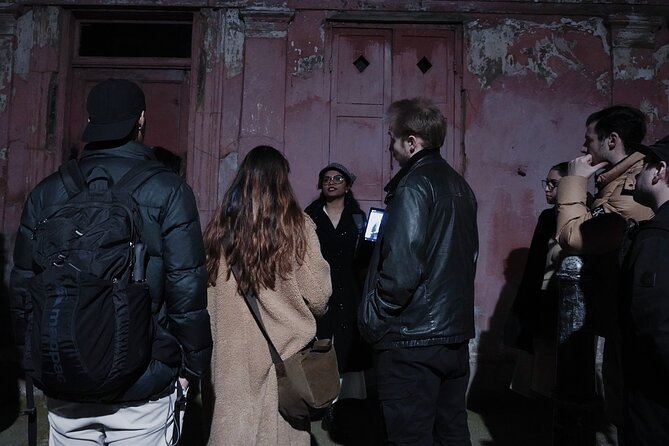
The most gripping part of this Jack the Ripper walking tour is its setting. You move through Whitechapel after dark, from narrow lanes to old pub fronts, while the guide rebuilds the story in the order the crimes unfolded. This is not just a talk about a famous killer. It is a walk through the poverty, fear, and hard choices faced by women in Victorian London.
I like two things in particular: the route links real places to the story, and the best guides keep the victims in view rather than treating them as side notes. I also like the format. At $22.93, a two-and-a-half-hour evening walk is good value if you want history, mystery, and a part of East London you may not explore on your own.
The main drawback is simple: you walk for most of the tour, with few places to sit, and hearing the guide can be difficult if the group spreads out or the guide turns away. Bring good shoes, dress for chilly weather, and stay close to the speaker.
Key points to know before you book
- Seven Whitechapel locations: The route includes Brick Lane, Princelet Street, Puma Court, the Ten Bells, Gunthorpe Street, Goulston Street, and St Botolph without Aldgate.
- A chronological mystery: The guide explains the cases in sequence, helping you see how the events developed rather than hearing a jumble of names and dates.
- The victims receive real attention: Annie Chapman, Martha Tabram, Catherine Eddowes, and other women are discussed as people with lives, not only as names in a crime story.
- Guides bring different strengths: Tyson, Kory, Dougal, Hadi, Korhan, Lisa, Anahita, and others have led tours, with storytelling and case theories often receiving the strongest praise.
- A small group helps: The maximum group size is 25, which makes it easier to hear, ask questions, and stay together on narrow streets.
- Night conditions matter: The dark streets add mood, but rain, cold, and poor visibility can make the walk harder.
Why Whitechapel works so well after dark
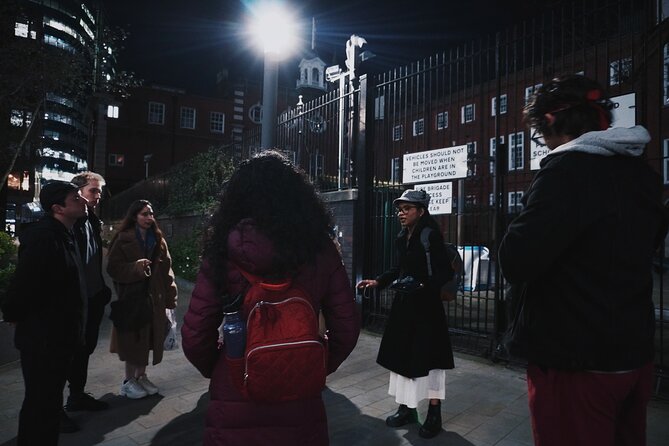
Jack the Ripper is a famous name, but the setting gives this tour its force. Whitechapel in 1888 was marked by overcrowding, poverty, and limited options for women who needed a place to sleep or earn money. The crimes did not happen in an empty Victorian stage set. They happened in a working district where narrow lanes, dim light, and crowded housing shaped daily life.
The tour begins at St Marys Whitechapel Church Memorial, near Whitechapel. From there, you walk through streets that now mix old buildings, food spots, shops, and city traffic with traces of earlier London. The contrast matters. You are not entering a preserved crime museum. You are moving through a living neighborhood that has changed, while some street patterns and building fronts still help you picture the period.
I appreciate that the route does not rush straight to the killer. It first explains the conditions that made women vulnerable. That context gives the story more weight and avoids turning the night into a simple hunt for a villain.
The atmosphere can be strong, especially on a cool or cloudy evening. It can also be uncomfortable. You are outside for roughly 2 hours and 30 minutes, and there is little chance to sit until the end. Rain is possible, and one account describes heavy downpours throughout the walk, so waterproof clothing is more useful than a stylish coat.
More Murder Mystery Games in London:
- Interactive Jack the Ripper Night Walk: London’s Murder Mystery
★ 5.0 · 171 reviews - Colombia’s Finest Outdoor Murder Mystery London
★ 5.0 · 122 reviews - London: Murder Mystery Cruise With 3-Course Dinner
★ 4.5 · 18 reviews
Brick Lane and Princelet Street: the social setting
The first stop is Brick Lane, where you spend about 17 minutes. Today, the street is known for food, shops, and culture, but the guide turns attention back to its Victorian past. You hear about crowded housing, poverty, and the desperation that shaped life in the district.
This opening is important because it gives you a frame for everything that follows. Without it, the murder story can feel like a string of grisly facts. With it, you begin to understand why vulnerable women moved through this part of London, why refuge was difficult to find, and why police work was so limited.
Next comes Princelet Street, another 17-minute stop. The street is narrow and quiet, and the setting helps the guide talk about the area’s housing and its connection to women such as Annie Chapman. You may find this one of the more reflective sections because the focus shifts from the famous suspect to the people who lived with poverty and danger every day.
The streets are free to enter, of course, but the value comes from the guide’s explanation. Strong guides add period photographs, newspaper details, and information about nearby buildings. Kory, for example, has been praised for bringing in extra local history and old images, while Korey has used reports from the period to show how the neighborhood looked when the crimes took place.
Puma Court and the problem of the shadows
Puma Court remains close to its nineteenth-century form, according to the tour description. Its narrow shape gives the guide a useful place to explain how quickly a person could disappear from view.
This is where the walking format earns its price. A book or podcast can tell you that the area had tight passages, but standing in one helps you understand scale. You can look along the lane, note how little space there is, and think about how difficult it would have been to track movement at night.
Do not expect a dramatic attraction with displays or theatrical effects. Puma Court is a street stop. Its power depends on your attention and on the guide’s ability to explain what you are seeing. If you prefer museums, seats, and visual exhibits, this may feel spare. If you like place-based history, it can be one of the night’s strongest moments.
The group limit of 25 is helpful here. Narrow streets can make a large crowd awkward, while a smaller group lets you gather around the guide without blocking the whole passage. Still, keep close. One useful habit is to stay near the front or center of the group so you do not miss comments while crossing streets.
The Ten Bells and the human cost of the story
The Ten Bells is one of the most recognizable names on the route. The tour stops outside the pub for about 17 minutes and explains its reported connection to several victims, including the belief that some visited shortly before their deaths.
You do not need to enter the pub for the tour. The focus is on the building, its location, and the final hours associated with the women linked to it. The stop works because it brings the story into an ordinary public place. You are not looking at a remote ruin. You are outside a pub in an active London neighborhood, considering how an everyday meeting place became tied to a notorious case.
This is also where the guide’s tone matters most. The subject involves murder and violence against women, and a cheap shock tactic would quickly become unpleasant. The strongest approach is careful and restrained. Hadi, for instance, has been praised for treating the subject with respect, adding light humor only when it fit, and placing the crimes in social context.
I would book this tour for the way it gives the victims room in the story. You hear about their lives and circumstances, not only the details of their deaths. That focus makes the experience more serious and more useful than a simple serial-killer legend.
More escape games around London:
- Private Escape Room with a Zombie in London
★ 5.0 · 128 reviews - London: Food Treasure Hunt and Walking Tour
★ 5.0 · 92 reviews - One-Hour Private Capital Caper Escape Room Gaming in London
★ 4.0 · 58 reviews - One-hour Private Star Struck Escape Room Gaming in London
★ 4.0 · 43 reviews
Gunthorpe Street and the Martha Tabram question
At Gunthorpe Street, the guide discusses the murder of Martha Tabram and the argument over whether she was Jack the Ripper’s first victim. This is a good point in the walk for showing how uncertain the case remains.
The tour does not present every theory as settled fact. Instead, you examine the clues and the reasons some researchers include Tabram among the victims, while others do not. That uncertainty is part of the appeal for people who enjoy crime history. You are not just receiving an answer. You are weighing evidence and asking how much can really be known.
The route also turns the case into a kind of group puzzle. You visit the locations, hear the chronology, and compare theories as the night moves along. Guides often leave time for questions at the end, and Tyson and Kory have been praised for continuing discussions about possible suspects and competing ideas after the formal walk.
Still, keep your expectations realistic. You will not solve the case in a definitive way. The mystery has survived because the evidence is incomplete and the original investigation had serious limits. The pleasure comes from understanding the competing explanations, not from receiving a final reveal.
Goulston Street and the disputed clue
Goulston Street brings one of the most famous pieces of evidence into the story: a bloody piece of apron connected to Catherine Eddowes. Nearby, a chalk message added another layer of confusion and later debate.
The guide explains why the clue mattered and why the message led to controversy. This section is especially useful if you know the broad Jack the Ripper story but have never sorted out which details are documented, disputed, or shaped by later speculation.
I like this stop because it shows how crime stories grow. A piece of physical evidence can be important, but its meaning depends on timing, police decisions, and interpretation. The chalk message adds a reminder that even at the time, authorities had to decide what to preserve, what to erase, and what might mislead the public.
The stop is outdoors, so visibility and sound can affect it. On a wet night, the group may bunch together under limited shelter, and city noise can compete with the guide. If you have trouble hearing, say so early. One reported weakness of the tour was that a guide was sometimes hard to hear when looking away from the group. That is a practical issue, not a reason to reject the tour, but it is worth managing.
St Botolph without Aldgate and a wider view of Victorian London
At St Botolph without Aldgate, the guide discusses the church as a place connected with vulnerable women seeking refuge. This is one of the route’s most reflective stops.
The church gives the guide a chance to ask a larger question: what support existed for women who lacked money, stable housing, or protection? The answer helps explain why the victims are more than characters in a mystery. Their choices were shaped by a society that offered few safe options.
This stop also gives the evening some balance. The tour is still about a murder case, but it does not let the killer dominate every minute. I find that approach more satisfying. You leave with a better sense of Victorian London and the lives of the women involved, not just another favorite suspect.
The guide may also compare Jack the Ripper with another killer active at the same time, helping explain why the Whitechapel murders became the better-known story. That extra context is useful for separating the cultural legend from the wider pattern of violence in the district.
A route built around good storytelling
The route lasts about two and a half hours, with each named stop taking roughly 17 minutes. The remaining time goes to walking between sites, gathering the group, and connecting one part of the story to the next.
The best guides use the movement to build suspense without turning the experience into a stage show. Tyson has been praised for keeping spirits up in bad weather, while Dougal has been praised for painting a detailed picture of nineteenth-century life. Kody has been noted for remembering names, dates, and locations, and Anahita and Lisa have also led well-organized tours.
Your guide is not guaranteed to be one particular person, so book this for the route and format rather than for a specific name. Still, the range of strong guide feedback suggests that storytelling is a major part of what you are paying for.
The chronology is another real strength. When the guide follows the sequence of events, you can see how the investigation developed and why certain clues became important. That is easier to follow than a tour that jumps between victims, suspects, and theories without a clear timeline.
Price, pace, and group size
At $22.93 per person, this is a fair London price for a guided walk lasting around 150 minutes. You are paying for local research, route planning, and live storytelling rather than entry to an attraction. The seven locations are free, but the guide is what turns them into a connected experience.
The maximum group size is 25. That is not tiny, but it is manageable for a street tour and much better than a large crowd that constantly loses people. The guides have been praised for waiting when needed, checking that everyone stays together, and handling unexpected transport problems.
The walk is offered in English and includes a mobile ticket. Service animals are allowed, and most people can take part. Free cancellation is available until 24 hours before the start time. Within that final 24-hour period, the payment is not refunded, so keep the cutoff in mind when weather or transport plans may change.
The tour ends at Mitre Square in the City of London. The supplied tour information describes this as the place where Mary Jane Kelly met her end, though the case details associated with the named victims are complex and worth treating carefully. The practical point is that you finish away from the starting point, so plan your onward route rather than expecting a return to Whitechapel.
Who should book this night walk
I would recommend it to you if you enjoy:
- Victorian social history and true crime
- Guided walks with real locations rather than indoor exhibits
- Unsolved cases and competing theories
- Storytelling that gives attention to victims
- Evening activities with a darker tone
- Exploring East London on foot
I would think twice if you dislike graphic subject matter, long outdoor walks, or standing in one place while listening. This is not a polished theater performance, and the mood depends on weather, group behavior, and the guide’s delivery.
Families should consider the subject carefully. The tour is aimed at people interested in murder and dark history, and some details may be upsetting. The activity information says most people can participate, but it does not promise a fully accessible route or seating at every stop.
Should you book the Jack the Ripper night tour?
Book it if you want a well-priced evening walk that combines Whitechapel history with an unresolved mystery. The strongest reason to go is not the chance to identify Jack the Ripper. It is the chance to walk the streets, understand the conditions of the time, and hear the victims treated as people with lives and names.
The tour is at its best with a strong storyteller, and the available guide feedback points to Tyson, Kory, Dougal, Hadi, Kody, and others bringing care, humor, and solid case detail to the route. Dress for cold or rain, wear shoes you can walk in, stay close enough to hear, and allow a little extra time at the end before your next plan.
If that sounds like your kind of London evening, $22.93 buys a memorable and thoughtful way to see Whitechapel after dark.
FAQ
How long does the Jack the Ripper walking tour last?
The tour lasts approximately 2 hours and 30 minutes, including the walking time between stops.
Where does the tour start?
The meeting point is St Marys Whitechapel Church Memorial on Unnamed Road, London E1 1FE.
Where does the tour end?
The tour ends at Mitre Square, London EC3A 5DE.
Which places are included on the route?
The route includes Brick Lane, Princelet Street, Puma Court, the Ten Bells, Gunthorpe Street, Goulston Street, and St Botolph without Aldgate.
How many people can join the tour?
The maximum group size is 25 people.
What is the cancellation policy?
You can cancel at least 24 hours before the start time for a full refund. Cancellations or changes made within 24 hours are not accepted for a refund.
New puzzles around London
- London: British Food Treasure Hunt With Gourmaze★ 5.0 · 4 reviews
- London: Murder Mystery Cruise With 3-Course Dinner★ 4.5 · 18 reviews
- Immersive London Treasure Hunt Adventure – Outdoor Escape Room★ 5.0 · 11 reviews
- London Charles Dickens Puzzle Questo and Self-Guided Tour★ 5.0 · 6 reviews
- London’s Crown Secret: Self-Guided Royal Puzzle Quest★ 4.5 · 8 reviews
- London (Covent Garden) Scavenger Hunt and Sights Self-Guided Tour★ 5.0 · 7 reviews
- London Scavenger Hunt and Highlights Self-Guided Tour★ 4.0 · 4 reviews
- Private Bespoke Scavenger Hunts★ 5.0 · 26 reviews
Murder Mystery Games, head to head.
Branson Murder Mystery- Branson’s Original #1 Murder Mystery
Read our review →

WhoDunnit Hoedown – Branson’s Best Murder Mystery Dinner Show
Read our review →
Paris: Palais Garnier Mystery Game with Entry Ticket
Read our review →
Athens: Ancient Greek Theatre Murder Mystery Experience
Read our review →
Interactive Jack the Ripper Night Walk: London’s Murder Mystery
Read our review →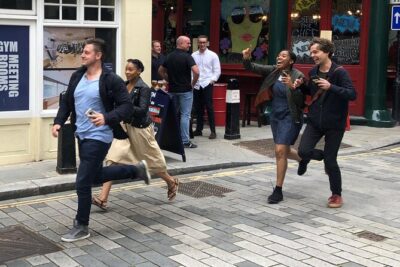
Colombia’s Finest Outdoor Murder Mystery London
Read our review →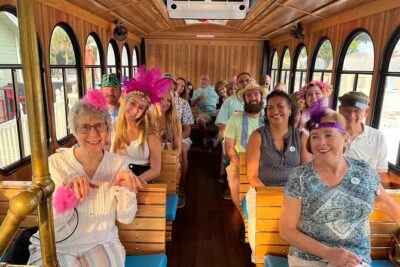
Murder Mystery Trolley: Who Killed The Circus Queen?
Read our review →Other lists this game appears in