
Review · LONDON
London Charles Dickens Puzzle Questo and Self-Guided Tour
Charles Dickens is your guide in spirit on this self-guided puzzle walk through Holborn and the City of London. You follow clues from his former home on Doughty Street to Fleet Street, uncovering links to Oliver Twist, Samuel Johnson, old theaters, churches, libraries, and historic pubs.
I like the freedom to start whenever you want and pause whenever you please. I also like the price: at $8.33 per person, this is a low-cost way to add a literary walk to your London day. The tradeoff is clear: there is no human guide to explain the streets, answer questions, or keep you moving.
Key points to know before you go
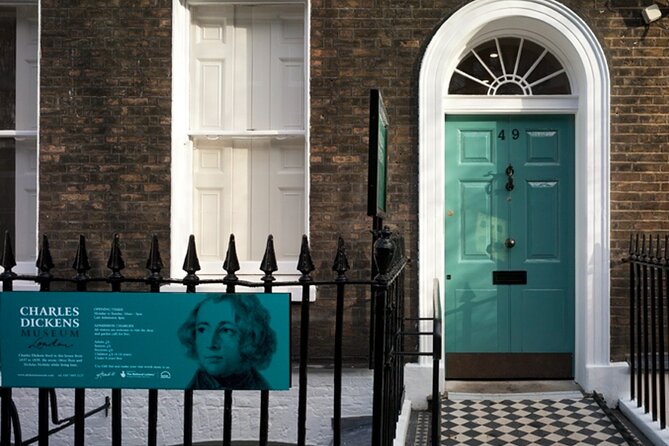
- Charles Dickens Museum begins the route: Start at 47 Doughty Street, beside the author’s former home at 48 Doughty Street.
- The clues shape the walk: You search each location for an answer before the next stop appears.
- A genuinely flexible format: Start at any hour, take breaks, and return to the game later.
- Several stops reward history lovers: Staple Inn, Dr Johnson’s House, Ye Olde Cheshire Cheese, and the Maughan Library all add depth beyond Dickens.
- The route ends on Fleet Street: The finish is at 145 Fleet Street, with St Dunstan-in-the-West among the final landmarks.
- Best for independent explorers: You need a smartphone, but the game can be played offline and only your own group takes part.
Dickens begins at Doughty Street
The route opens at 47 Doughty Street, with the Charles Dickens Museum at number 48. Dickens lived in this Georgian terraced house from March 1837 until December 1839, during the early years of his marriage. That short period matters. It connects the grand literary figure with an ordinary London home where his life and career were taking shape.
Your first task is to look around and find the answer to the opening challenge. This is not a museum tour with a person leading you from room to room. The puzzle sends you toward details at each stop, then gives you the story behind the place once you solve the clue.
The museum itself is a useful starting point even if you do not enter. You get an immediate sense of Dickens’s connection to Holborn, and the walk begins with a clear literary anchor rather than a random street corner. If you want to visit the museum properly, plan that separately, since the puzzle price does not include an admission ticket or a museum guide.
This opening also tells you what kind of experience to expect. You will need to pay attention to signs, buildings, and small details. The clues are designed to be solvable without being completely obvious. That makes the route more engaging than a simple list of addresses, though it also means you should not rush.
More Self-Guided Games in London
- London’s Crown Secret: Self-Guided Royal Puzzle Quest
★ 4.5 · 8 reviews - London (Covent Garden) Scavenger Hunt and Sights Self-Guided Tour
★ 5.0 · 7 reviews - London Scavenger Hunt and Highlights Self-Guided Tour
★ 4.0 · 4 reviews
Vine Street and Dickens’s working London
The next stop takes you to Vine Street, a lane laid out around 1686. In the 18th century, it ran from Piccadilly toward Warwick Street, and its properties included a brewery and a carpenter’s yard.
The connection here is less about one famous Dickens building and more about the old city around him. Dickens wrote about working people, trade, poverty, ambition, and crowded urban life. A street with a brewery and carpenter’s yard gives you a small, concrete glimpse of the commercial world that helped shape London’s character.
You will again search for an answer before moving on. This repeated pattern keeps the tour active, but you should know that the route is not a lecture. If you enjoy learning through short historical notes and observation, the format works well. If you prefer a guide who fills every pause with explanation, it may feel thin.
The ability to stop is useful here. You can take a moment to read the surroundings, check the next clue, or simply let the city pass by before continuing.
The Three Cripples and Oliver Twist
One of the most Dickens-specific stops is an inn dating to 1759. Its literary fame came in 1838, when Dickens changed its name to the Three Cripples in Oliver Twist and used it as Bill Sykes’s preferred watering hole.
This is exactly the sort of connection that gives the puzzle its purpose. You are not only seeing an old pub. You are seeing a real place that Dickens reshaped in fiction, turning a London business into part of the dark world of Oliver Twist.
The stop should appeal to readers who like tracing fiction back to actual streets. It also helps break up the route with a place where you can pause for a drink if it suits your schedule. One person who completed the game enjoyed stopping at several pubs along the way, which is a sensible use of this flexible format.
Just keep the timing in mind. The complete experience is advertised at about one hour, but pub stops will make it longer. That is not a problem, since the game lets you take a break and resume later. It simply means the one-hour figure is a guide, not a strict timetable.
Staple Inn and old London survival
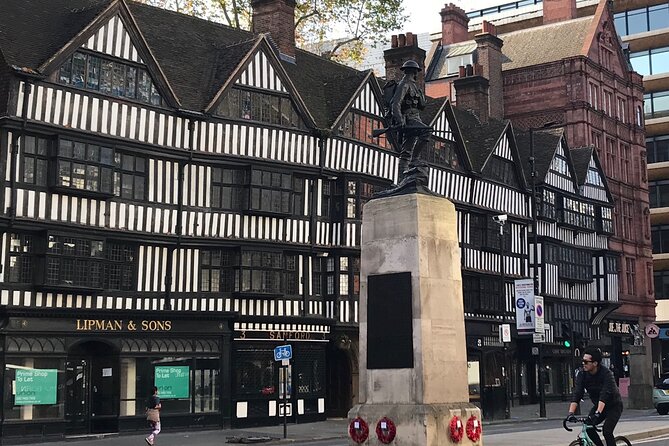
Staple Inn dates from 1585 and began as a wool staple, where wool was weighed and taxed. It survived the Great Fire of London, then suffered major damage from a German Luftwaffe bomb in 1944 before being restored.
This stop broadens the story beyond Dickens. London’s past is not a straight line from old to new. Buildings were rebuilt, damaged, altered, and repaired. Staple Inn gives you a physical example of that long process, with the puzzle asking you to study the site rather than simply walk past it.
For you, the value is in the contrast. Dickens lived in the 19th century, but this building reaches back to Tudor London. The route keeps showing how many different periods sit close together in central London.
Because the game depends on finding details, take your time at locations like this. A quick glance may not be enough to identify the answer. The best approach is to keep your phone ready, read the challenge carefully, and look at the building before guessing.
More Self-Guided Games in the UK
- Scholars & Secrets of Cambridge: Self-Guided Puzzle Adventure
★ 3.5 · 19 reviews - Inverness Quest: Self Guided City Walk & Immersive Treasure Hunt
★ 4.0 · 5 reviews - Letchworth Garden City: Self-Guided History Puzzle Walk
★ 5.0 · 5 reviews - Chester Quest: Self Guided City Walk & Immersive Treasure Hunt
★ 4.0 · 5 reviews
Lincoln’s Inn Fields and the lost theater
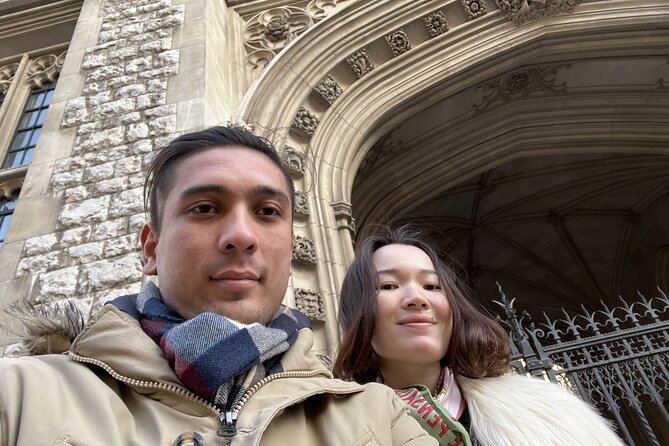
Lincoln’s Inn Fields was home to a theater from 1661 to 1848. It began as the Duke’s Theatre, created by converting Lisle’s Tennis Court in 1695, and was later demolished.
Today, you do not see the theater itself. That absence is part of the appeal. The puzzle leads you through places where the past is sometimes preserved in buildings and sometimes survives only through records and stories.
This is also a reminder that London’s cultural history is not limited to the sites with grand facades. A theater can disappear, while its effect on the city remains. For anyone interested in drama, Dickens, or the way public entertainment developed, this is a worthwhile stop.
The drawback is that a vanished building can be harder to appreciate without a guide or a clear on-site marker. The game provides the historical context, but you may need to use your imagination more than you would at a surviving museum or pub.
The Maughan Library’s Victorian setting
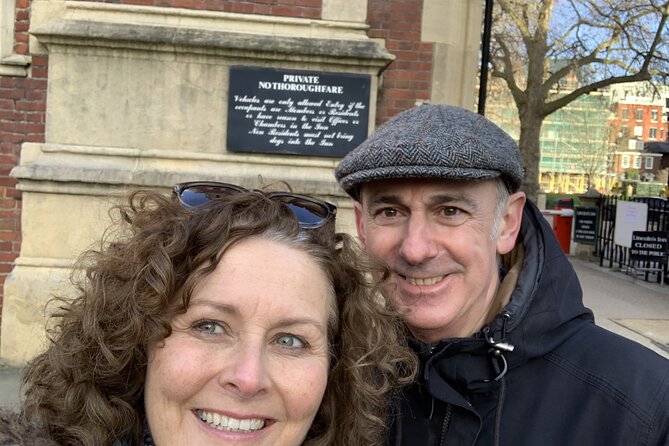
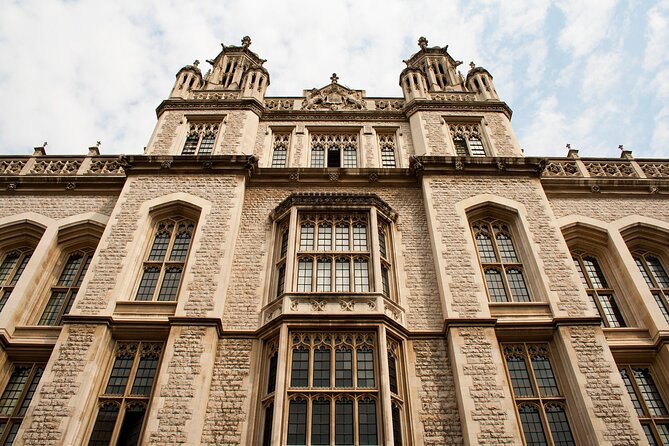
The Maughan Library occupies a Grade II* listed building designed by Sir James Pennethorne. Construction began in 1851, with later additions made between 1868 and 1900. After a £35 million renovation by Gaunt Francis Architects, it became the largest new university library in the United Kingdom since World War II.
This stop gives the route a more polished Victorian feel. The building’s history connects architecture, education, and London’s continued reinvention. You are still following a Dickens-themed game, but the sights keep changing enough to prevent the route from feeling repetitive.
The library also demonstrates why the experience works better as a city puzzle than as a narrow author biography. You receive Dickens connections, but you also get a sampler of institutions and buildings that help explain the character of central London.
Access inside may not be part of the game, so treat the exterior as the main point unless you confirm otherwise. The puzzle asks you to look around and solve a challenge, not to join a scheduled library visit.
Dr Johnson’s House and London literary life
Dr Johnson’s House was probably built for a City merchant. Samuel Johnson, one of the major figures in English literary history, rented it from 1748 to 1759.
Dickens is the headline name, but Samuel Johnson makes this route feel like a walk through London’s wider writing tradition. Johnson’s years here overlap with the period when he worked on his dictionary and gathered around him a circle of writers and thinkers. The stop gives you a second literary voice, separated from Dickens by a century but connected to the same city.
I particularly like this change of focus. It prevents the experience from becoming a string of Dickens facts and gives you another reason to look closely at the streets around Fleet Street and Holborn.
The house is also a good example of the route’s scale. You are moving between intimate addresses and major public buildings. That variety helps you understand how writers lived and worked within the same dense central London district.
Ye Olde Cheshire Cheese after the Great Fire
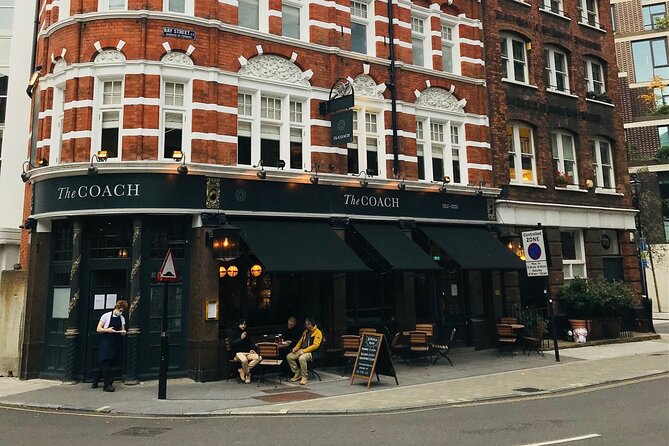
Ye Olde Cheshire Cheese was first built in the 1530s, but the original pub disappeared in the Great Fire of London in 1666. The current building dates from 1667 and was among the first London structures rebuilt after the disaster.
This is one of the strongest stops for a short break. The pub gives you a place to connect several strands of the tour: old London, fire and rebuilding, literary culture, and the city’s long habit of gathering around food and drink.
You can pause here without breaking the experience. Since the game can be stopped and resumed, you are not forced to choose between solving clues and enjoying the pub. That flexibility is a real advantage over a fixed walking tour.
You should still watch the clock if you are aiming for the advertised one-hour duration. A meal or drink will naturally make the outing longer. For many people, that is part of the point, not a flaw.
The basilica-style church and changing communities
Another stop is a church consecrated on April 16, 1863, as the Church of St Peter of All Nations. At the time, it was the only basilica-style church in the United Kingdom. Its organ was built in 1886 by the Belgian maker Anneesen.
The church also carries a difficult wartime story. During World War II, Italian immigrants were interned, and Irish Pallottines used the church. That detail places the building within London’s changing immigrant and religious communities.
This stop adds a quieter note to the route. It is not only about famous writers or attractive old buildings. You also encounter the institutions that served different groups in the city.
You should be respectful here, since it remains a religious site. The experience asks you to look for an answer, but that does not make the building a playground. Keep your voice low and follow any posted rules.
The Royal College of Surgeons
The Royal College of Surgeons traces its earliest origins to the 1540s, when the Company of Barbers and the Fellowship of Surgeons joined to form the Company of Barber-Surgeons. By the 1700s, medicine had become an academic discipline, and surgeons sought greater recognition for their expertise.
This stop shifts the theme again, from literature to professional London. It shows how trades and practical skills gradually gained academic status. That change would have been part of the wider society Dickens observed and wrote about.
The location also suits the puzzle format because it rewards attention to institutional history. You are asked to find an answer on site, then receive enough background to understand why the building matters.
Do not expect a medical tour or museum visit as part of the $8.33 experience. The Royal College of Surgeons is one stop in a broader walking game, not a separate guided attraction.
St Dunstan-in-the-West and the Fleet Street finish
The route finishes at 145 Fleet Street, with St Dunstan-in-the-West among the final locations. The church shares its building with the Romanian Orthodox community, whose chapel is dedicated to St George. The chapel’s iconostasis came from Antim Monastery in Bucharest and was dedicated in 1966.
This is a fitting end because it brings several London stories together in one place. You see an English church building used by another Christian community, with an interior feature connected to Romania. The stop is a reminder that central London has never belonged to only one group or one era.
The church’s chapel is closed off by an iconostasis, so your view may be limited. Still, the detail gives the final clue a strong sense of place. You end not with a grand Dickens memorial, but with another layer of London’s religious and cultural life.
The finish on Fleet Street is practical too. You are in a central part of London, close to public transport and surrounded by other historic streets. The exact route between stops may take longer than the puzzle itself if you linger, photograph buildings, or stop for refreshments, so allow extra time if you have another appointment.
What the $8.33 price really gets you
At $8.33 per person, this is inexpensive for London. You are paying for a private, self-guided activity rather than a person’s time, transport, museum entry, food, or drinks.
That low price makes sense for a first afternoon in London, a rainy-day backup, or a small add-on to a sightseeing plan. Group discounts may make it even better value when several people play together.
The main value comes from the route design. You get a reason to move between eleven locations, a sequence of clues, and short historical stories that give purpose to streets you might otherwise pass without noticing.
The price is less attractive if you want detailed storytelling, personal recommendations, or help with every question. A human guide can add context, adapt to your interests, and handle wrong turns. This game cannot do that.
Timing, group size, and phone use
The experience takes about one hour at a brisk pace, but you control the actual length. You can start any time between midnight and 11:59 p.m., every day, and take breaks whenever you choose.
You play with your own group, and no one else joins you. The game can be played offline, which is helpful if your mobile signal is weak or you want to avoid using data. You will need your phone to access the game and solve the challenges.
The route is offered in English. Confirmation arrives at booking, and service animals are allowed. The starting point is 47 Doughty Street, and the ending point is 145 Fleet Street.
The route is near public transportation, and most people can take part. Still, the supplied information does not give a precise accessibility assessment for every pavement, entrance, or stop, so contact the provider if you need specific mobility details.
Who should choose this Dickens puzzle
I would choose this for you if you enjoy literary connections, historic pubs, self-guided walks, and small challenges. It also suits families or friends who like solving clues together rather than listening quietly to a guide.
It is a good fit for independent planners. You can place it between other London activities, pause for lunch, or wait for better weather without losing a scheduled departure.
I would be more cautious if you want a full Charles Dickens biography or an expert-led walk. The experience offers a route and a story, but not sustained commentary from a person. You must bring some curiosity and patience.
The strongest feature is the freedom. One sunny day can become a relaxed walk with pub stops, while a tighter schedule can keep the puzzle close to its one-hour estimate. The clues are intended to be neither too easy nor too difficult, so you get a sense of achievement without needing specialist knowledge.
Should you book it?
Book this Charles Dickens puzzle if you want a low-cost way to explore Holborn, Fleet Street, and several literary and historic sites at your own pace. The mix of Dickens, Oliver Twist, Samuel Johnson, old pubs, churches, libraries, and professional institutions gives you more variety than the title first suggests.
Skip it if you need a physical guide, wheelchair-specific route information, or a deep, continuous explanation at every stop. For everyone else, $8.33 buys a flexible hour of London history, with room to stretch it into a leisurely afternoon.
Free cancellation is available if you cancel at least 24 hours before the start time. Within 24 hours, the payment is not refunded.
FAQ
How long does the London Charles Dickens puzzle take?
The experience lasts approximately one hour, though you can make it longer by taking breaks, visiting pubs, or spending more time at the stops.
Where does the experience start?
It starts at 47 Doughty Street, London WC1N 2LW, near the Charles Dickens Museum at 48 Doughty Street.
Where does the route finish?
The route ends at 145 Fleet Street, London EC4A 2BU.
Is there a physical tour guide?
No. This is a self-guided experience played through a mobile device, so no physical guide accompanies you.
Can I start the game at any time?
Yes. It is available every day, around the clock, and you can start at any hour.
Do I need an internet connection while playing?
No. The game can be played offline.
Can I cancel for a full refund?
Yes, if you cancel at least 24 hours before the experience start time. Cancellations made within 24 hours are not refunded.
New puzzles around London
- London: British Food Treasure Hunt With Gourmaze★ 5.0 · 4 reviews
- London: Murder Mystery Cruise With 3-Course Dinner★ 4.5 · 18 reviews
- Immersive London Treasure Hunt Adventure – Outdoor Escape Room★ 5.0 · 11 reviews
- London’s Crown Secret: Self-Guided Royal Puzzle Quest★ 4.5 · 8 reviews
- Private Bespoke Scavenger Hunts★ 5.0 · 26 reviews
- Public BucketRace – Scavenger Hunts with a Twist★ 5.0 · 32 reviews
- London (Covent Garden) Scavenger Hunt and Sights Self-Guided Tour★ 5.0 · 7 reviews
- London Scavenger Hunt and Highlights Self-Guided Tour★ 4.0 · 4 reviews
Self-Guided Games, head to head.




Sibiu Old Town Exploration Game and Self-Guided Tour
Read our review →


Other lists this game appears in