
Review · PARIS
Discover the Marais (:) An Outdoor Detective Adventure
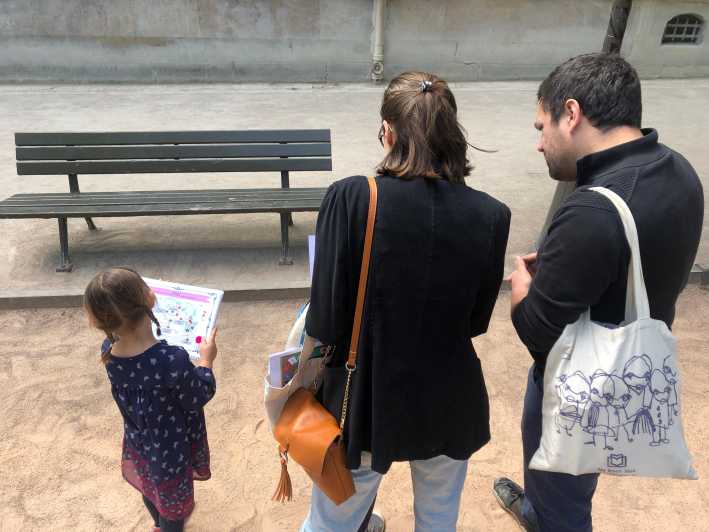
The best thing about this Marais walk is that it gives you a reason to look closely. Instead of simply following a guide from one monument to the next, you use a detective booklet to solve clues in front of churches, mansions, streets, and museums. The neighborhood becomes a giant outdoor puzzle.
I like the mix of history and play, especially the booklet’s short cultural notes, which help when the game gets busy. I also like the small-group format and the guide’s relaxed approach. Marion, one of the guides, is described as kind and ready to help when a riddle slows you down. The main caution is that some puzzles can be difficult, and the guides openly say they are not professional historians.
Key points to know before you book
- A Marais mystery on foot: Follow clues from Saint-Paul Saint-Louis to the Pompidou Centre.
- Booklet-based puzzles: Each stop includes historical information and a riddle linked to the place around you.
- Best for readers aged eight and up: Younger children may join, but adults will need to help with the roadbook.
- A flexible two to two-and-a-half hours: The group moves at the pace of the slowest team.
- English or French guidance: The local guide explains the area and helps when the clues prove stubborn.
- A useful neighborhood introduction: You pass through the Marais’s aristocratic, Jewish, and gay quarters in one compact walk.
Why the Marais works so well for a detective game
Paris can sometimes feel like a city of famous façades viewed at walking speed. The Marais rewards a slower eye. Its streets bring together grand private mansions, busy cafés, old religious buildings, shops, and a strong mix of communities. That variety gives a puzzle walk plenty to work with.
This activity combines two familiar formats. You get the movement and commentary of a walking tour, along with the small triumphs and mild frustration of an escape game. You are not locked in a room, and there is no timer pressing you to panic. Instead, you stop in front of a sight, read the clue, inspect the setting, and work out the answer with your group.
I especially like this format for people who find standard guided walks a little passive. You have something to do with your hands and eyes. The guide still supplies context, anecdotes, and help, but the booklet keeps the visit from becoming a one-way lecture.
The tone is deliberately informal. From Paris with Fun explains that its guides are not professional Paris historians. That is worth taking seriously. You should expect useful local information and facts gathered while creating the treasure hunt, not the depth of a specialist museum guide. For many people, that is a fair trade for a more playful outing.
More Murder Mystery Games in Paris:
- Paris: Palais Garnier Mystery Game with Entry Ticket
★ 4.3 · 400 reviews - Paris Murder Mystery: Death on the Seine Quest and Tour
★ 4.0 · 42 reviews - Branson Murder Mystery- Branson’s Original #1 Murder Mystery
★ 5.0 · 1,513 reviews
Starting at Saint-Paul Saint-Louis Church
The investigation begins at Métro Saint-Paul, near Paroisse Saint-Paul Saint-Louis at 97 Rue Saint-Antoine. The meeting point can vary with the option you book, so check your confirmation before setting off.
Saint-Paul Saint-Louis is a good first clue location. The church gives the group a clear landmark, and the opening puzzle helps explain how the roadbook works. You will likely spend about five minutes passing by the church rather than taking a full interior tour. If you want to see more of the building, plan a separate visit before or after the activity.
The first riddle gets everyone involved quickly. Children can read the clues, adults can inspect details, and the guide can steer the group without simply handing over the answer. This opening also lets you see how difficult the game feels. The puzzles are intended to be fun, but some may require careful reading and a bit of patience.
Bring comfortable shoes. The route is a walking activity, and the time can stretch from two hours to two and a half depending on how long the group spends walking and solving.
Place des Vosges and the Marais mansions
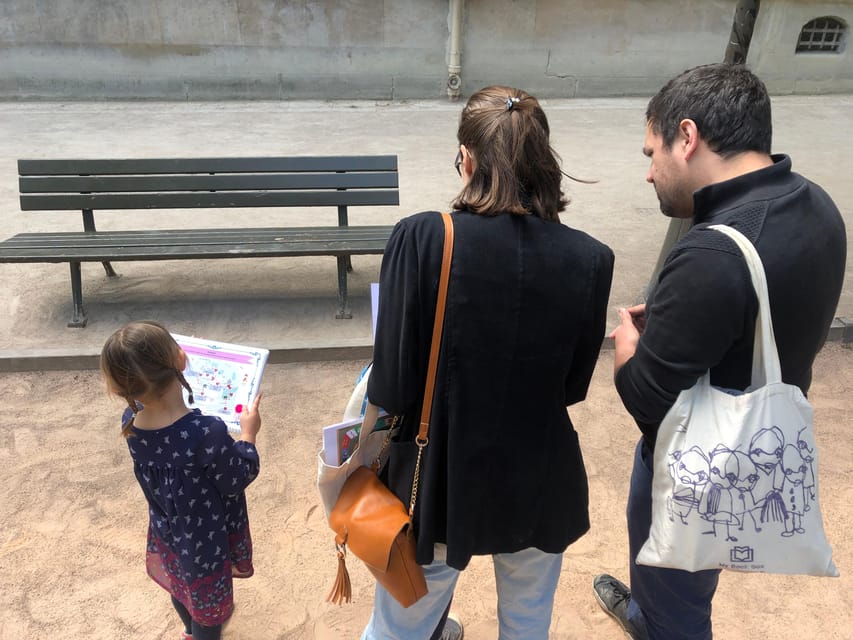
From Saint-Paul, the route continues toward Place des Vosges, one of the Marais’s most recognizable squares. You pass through this area for about 20 minutes, using the surroundings for another part of the investigation.
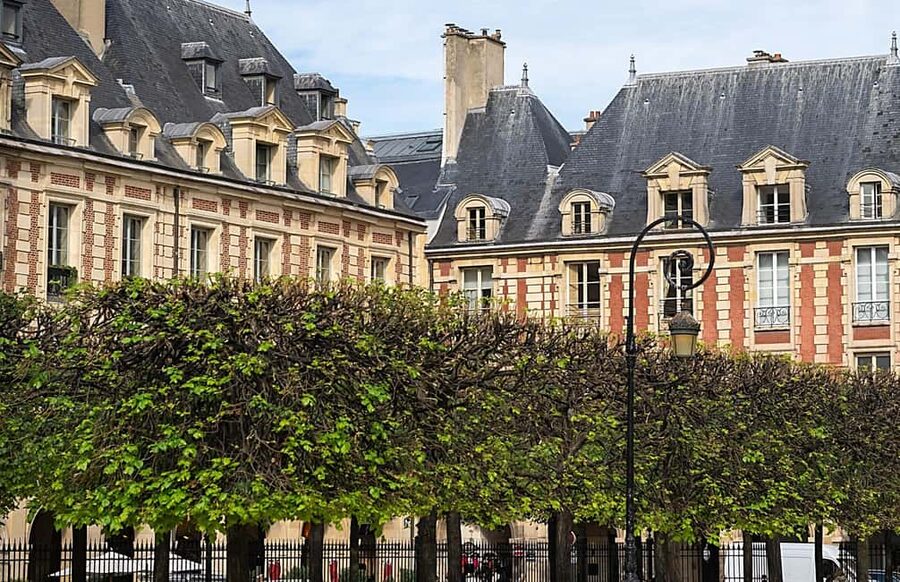
Place des Vosges is important because it shows the district’s more formal, 17th-century side. The square is known for its ordered arcades and handsome brick buildings, and the surrounding Marais includes former private mansions built for Paris’s wealthy residents. The activity uses this setting to connect the puzzle with the people and buildings around you.
This is where the walk can feel more rewarding than a standard photo stop. You are asked to notice architectural details instead of simply taking a quick picture and moving on. The booklet’s cultural page gives you a short reference point, while the riddle gives you a practical reason to inspect the square.
The drawback is that the whole group must stay together. If one team solves its clue quickly while another needs more time, the pace follows the slower group. That is helpful for families and mixed-age parties, but impatient adults may find the waiting less exciting.
Reading the Marais through the Carnavalet area
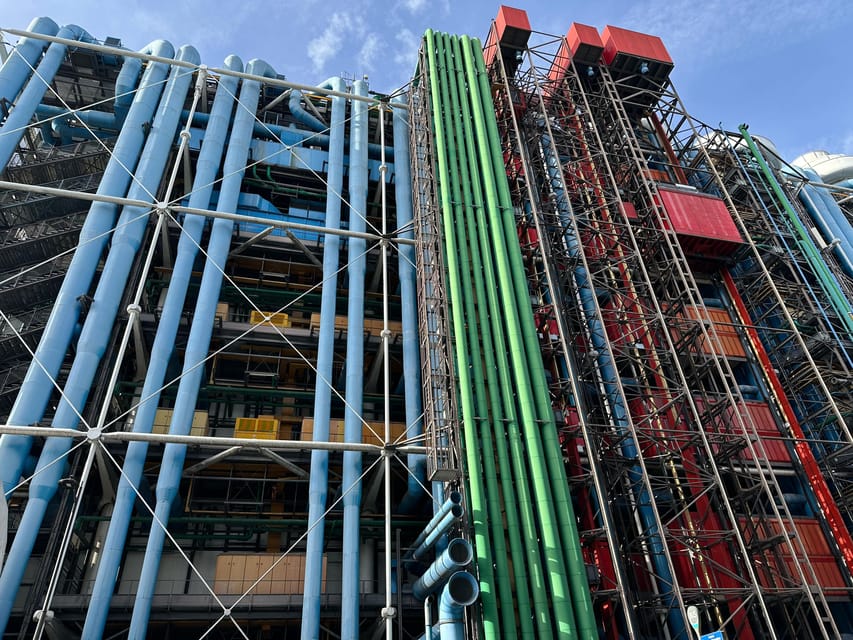
The route passes by the Carnavalet Museum for around 15 minutes. The museum is one of the district’s key cultural landmarks, but this activity does not include an indoor museum visit or admission. You see the area as part of the walking investigation.
That distinction matters when you compare this outing with a museum tour. You will get a brief piece of context and a clue connected with the surroundings, not a detailed look at the museum’s collections. If Carnavalet is high on your Paris list, you may want to return separately with more time.
Still, the stop gives the booklet a useful job. Each cultural and historical page is designed as a backup as well as a prompt. The organizer notes that a guide can become focused on the game and forget to give every detail, so the written material helps keep the visit informative. That is a practical touch, especially when you want to remember what you saw later.
The guide remains available throughout. You can ask for help with the puzzle or ask questions about Paris. The information may be conversational rather than academic, but the personal exchange can make the route feel less scripted.
More escape games around Paris:
- Who Killed Victor ? Escape Game at Père Lachaise Cemetery
★ 4.8 · 258 reviews - Escape game in Montmartre
★ 5.0 · 247 reviews - Escape Hunt Paris, Escape Game
★ 4.5 · 122 reviews - Escape game on the Île de la Cité
★ 5.0 · 112 reviews
The Jewish quarter and Rue des Rosiers
The investigation then moves toward the historic Jewish quarter and Rue des Rosiers. You have roughly 20 minutes here for walking, passing by sights, and free time.
Rue des Rosiers is one of the Marais’s best-known streets, and its importance comes from the community and traditions tied to this part of Paris. The route gives you a chance to see a different side of the district from the grand mansions around Place des Vosges. Instead of presenting the Marais as one single style, the walk shows how several identities share the same neighborhood.
For me, this is one of the most valuable parts of the route. A good neighborhood tour should explain more than pretty buildings. Here, the path connects architecture, community life, and the changing character of the Marais. The puzzle format also encourages you to pay attention to street signs and visible details.
The 20-minute stop is not a food tour, and snacks and drinks are not included. If you want something to eat, plan to buy it independently before or after the walk. The activity description does not promise tastings, restaurant stops, or time for a full meal.
From the Jewish quarter to the Marais gay district
The route continues through the Marais gay district, adding another layer to the neighborhood’s modern identity. The walk does not present this as a separate lecture or a specialized LGBTQ history tour. Instead, it forms part of the broader path through an area known for varied styles, cultures, and communities.
That broad approach will suit you if you want an introduction to the Marais rather than a deep study of one subject. You see how close together different parts of the district are, and the guide can add anecdotes or answer questions along the way.
The booklet keeps the focus on observation. You solve a riddle at or near an attraction, then move on. This makes the activity active without turning the streets into a stage set. You remain in a real neighborhood, so the experience can include ordinary city distractions such as traffic, pedestrians, and busy public spaces.
That is also part of the tradeoff. The walk is not a private, controlled escape room. You may need to pause, regroup, or read a clue twice. If you enjoy figuring things out with other people, that creates energy. If you want a quiet, uninterrupted history walk, a traditional guided tour may suit you better.
Finishing near the Pompidou Centre
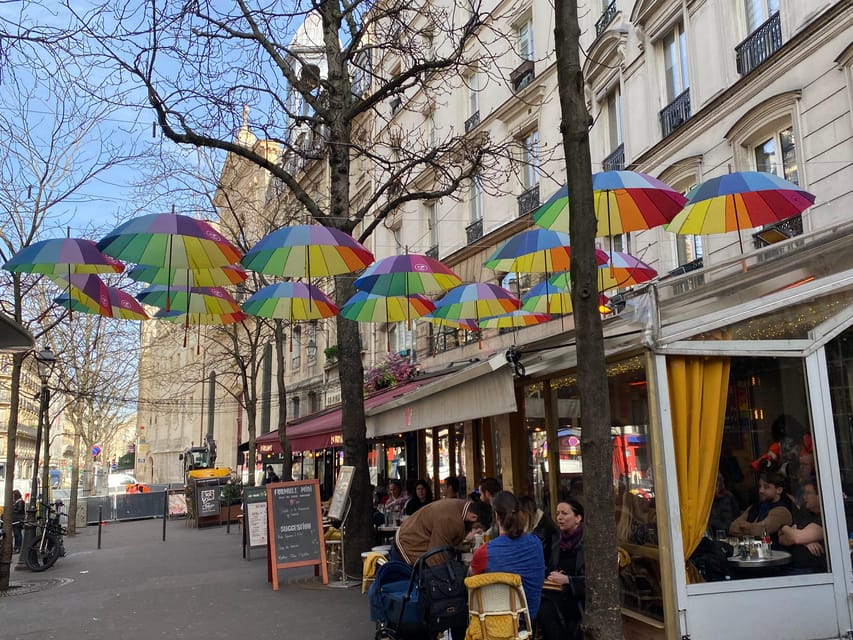
The investigation ends near the Georges Pompidou Museum, with the drop-off location listed at Fontaine Stravinsky, 1 Place Igor Stravinsky. This is a lively and visually distinctive place to finish, and it gives you a clear point from which to continue exploring Paris.
The route does not include entry to the Pompidou Centre. You are visiting the outside area and ending the game there. The fountain and the surrounding square make a practical meeting point for the final findings, photos, or onward plans.
A finish near the Pompidou Centre also leaves you well placed for more Marais walking. You can continue toward the Hôtel de Ville area, return to nearby cafés, or use the Métro. Those onward options are not part of the paid activity, but the end point is convenient for extending your afternoon.
How difficult are the riddles?
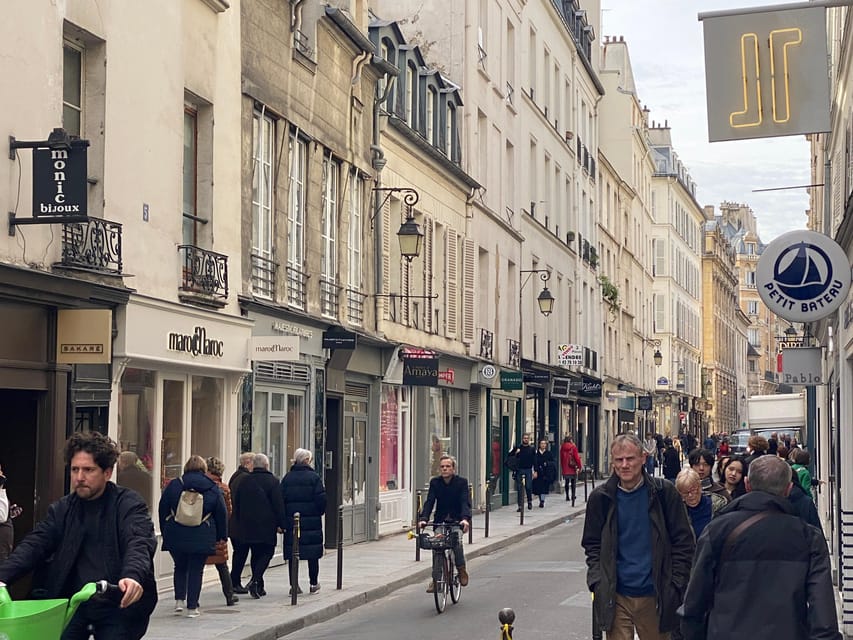
The puzzles are not described as simple children’s games. One review specifically notes that some riddles can be quite difficult, which is useful information if you are booking for a family. Children aged eight and older are recommended because they need to read the roadbook to enjoy it fully.
Younger children may still come along, and children under six do not pay. However, adults should expect to read clues, explain wording, and help with answers. The game is therefore best for a mixed group in which older children and adults can share the work.
I would also avoid treating the activity as a race unless you have booked the whole tour for a private group. The organizer can arrange a competition for team-building events or groups that reserve the entire experience. For a regular small-group departure, the goal is shared problem-solving, not beating another team.
The guide can offer hints when needed. That keeps a difficult clue from stopping the whole walk, though it also means the level of challenge depends partly on how much help you request.
Group size, languages, and access
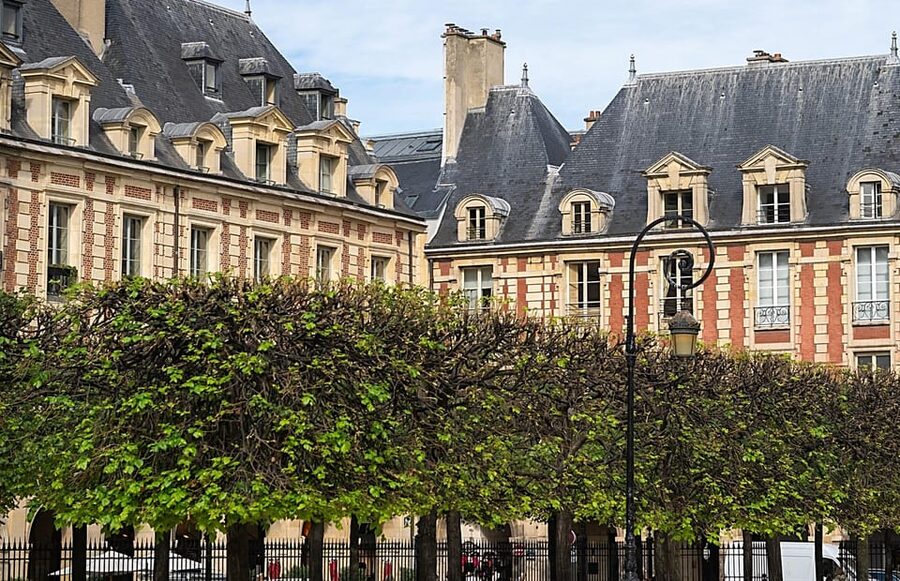
The tour runs in a small group, which is important for this type of activity. A clue is easier to discuss when you can hear the guide and see the booklet without being lost in a crowd. The group adjusts its pace to the slowest team, with special care when families with children are present.
Guidance is available in English and French. If you book the English version, you should be able to follow the instructions and historical notes in that language, but the roadbook still requires comfortable reading.
The activity is listed as wheelchair accessible. Because this is an outdoor city walk, the exact ease of every pavement, crossing, or stop may vary, but accessibility is part of the stated offering. Contact the provider if your group needs specific route details.
Do not bring luggage or large bags. A small day bag is more practical, and comfortable shoes are strongly advised.
Is $35 a fair price?
At $35 per person, the price is reasonable if you want both a guided walk and a structured game. You are paying for roughly two hours of local guidance, the game booklet, and help with the riddles. There is no separate museum ticket, meal, or drink included.
Compared with a basic free walk, the extra cost buys you a planned activity and a tool that keeps the group engaged. Compared with a private guide, it is less expensive, but you also share the pace and attention with other participants.
The value is strongest for families, couples, and friends who enjoy solving clues together. If you mainly want expert architectural or historical commentary, the organizer’s honest note about its non-professional guides is important. In that case, you may prefer a specialist walking tour and explore the Marais independently afterward.
The free cancellation policy allows you to cancel up to 24 hours before the start for a full refund. You can also reserve and pay later, which helps if your Paris schedule is still shifting.
Who should book this Marais mystery?
I would choose this activity for a family with confident readers, a pair of puzzle fans, or a small group that wants to see the Marais without sitting through a long talk. It is also a good first-day neighborhood introduction because the route covers several different parts of the district in a compact period.
It may not be right for children under eight who cannot read independently, people carrying large luggage, or anyone seeking a detailed professional history lecture. The two-hour length is manageable, but you are still on your feet and working through clues.
The strongest feature is the balance between sightseeing and participation. You do not simply collect facts. You notice details, compare ideas with your group, and earn each next stop by solving the puzzle.
Should you book Discover the Marais?
Book it if you want a friendly, hands-on walk and like the idea of mixing Place des Vosges, the Jewish quarter, Rue des Rosiers, and the Pompidou area with riddles. Marion’s helpful approach and the guide’s availability matter when a clue becomes tricky.
Skip it if you want a formal historian, museum admission, or a food-focused tour. For most families and puzzle-loving adults, though, $35 is a fair price for an active introduction to one of Paris’s most varied districts.
FAQ
How long does Discover the Marais last?
The activity is described as lasting about two hours, though it can take between two and two and a half hours depending on walking time and how long the group spends solving riddles.
Where does the tour start?
The investigation starts at Métro Saint-Paul, near Paroisse Saint-Paul Saint-Louis at 97 Rue Saint-Antoine. The exact meeting point may vary according to the option booked.
Where does the tour finish?
The listed drop-off point is Fontaine Stravinsky at 1 Place Igor Stravinsky, near the Georges Pompidou Museum.
Which languages are available?
The live guide offers the activity in English and French.
What is included in the price?
The price includes the game booklets and a local guide.
Are food and drinks included?
No. Snacks and drinks along the route are not included.
Is the activity suitable for children?
It is recommended for children aged eight and older because they need to read the roadbook. Younger children may join, but adults will need to help them.
Do children under six pay?
Children under six do not pay for the tour.
Is the tour wheelchair accessible?
Yes, the activity is listed as wheelchair accessible.
Can I cancel for a refund?
You can cancel up to 24 hours before the activity for a full refund. The experience also offers a reserve-now, pay-later option.
New puzzles around Paris
- Paris: Treasure Hunt & Walking Tour “Secret Weapon X”★ 4.8 · 17 reviews
- Paris: Virtual-Reality Escape Room Adventure★ 4.8 · 27 reviews
- Paris: Virtual-Reality Escape Room Adventure★ 5.0 · 4 reviews
- Paris Louvre : Private Treasure Hunt for Families or groups★ 3.9 · 14 reviews
- Paris: escape game in Montmartre★ 4.6 · 18 reviews
- Paris: escape game on Île de la Cité★ 5.0 · 2 reviews
- Montmartre: Private Treasure Hunt for Families and Kids★ 3.7 · 3 reviews
- Scavenger Hunt in Paris: Madeleine, Opéra & Place Vendôme★ 5.0 · 16 reviews
Murder Mystery Games, head to head.

Branson Murder Mystery- Branson’s Original #1 Murder Mystery
Read our review →

WhoDunnit Hoedown – Branson’s Best Murder Mystery Dinner Show
Read our review →
Paris: Palais Garnier Mystery Game with Entry Ticket
Read our review →
Athens: Ancient Greek Theatre Murder Mystery Experience
Read our review →
Interactive Jack the Ripper Night Walk: London’s Murder Mystery
Read our review →
Colombia’s Finest Outdoor Murder Mystery London
Read our review →
Murder Mystery Trolley: Who Killed The Circus Queen?
Read our review →Other lists this game appears in